


BMW Fault Code Reader – A complete guide for those who want to keep their car in top condition
Seeing the engine light illuminate in your BMW can cause worry and uncertainty – what has happened and how serious is the fault? With a fault code reader adapted for BMW, you can quickly and easily take control of your car's diagnosis, identify problems, and prevent expensive repairs. Whether you are a passionate car owner or just want to avoid unexpected expenses, the right diagnostic tool is key to safer and more affordable car ownership.
In this article, we guide you through everything you need to know about fault code readers for BMW – from benefits, types, and top models to smart buying tips and frequently asked questions. You'll get expert advice on how to choose the best tool for your car and how to use it step by step, while also providing insights into the market's newest features and how to get the most out of your investment. Let us help you maximize the value of your BMW – and avoid unnecessary workshop visits!
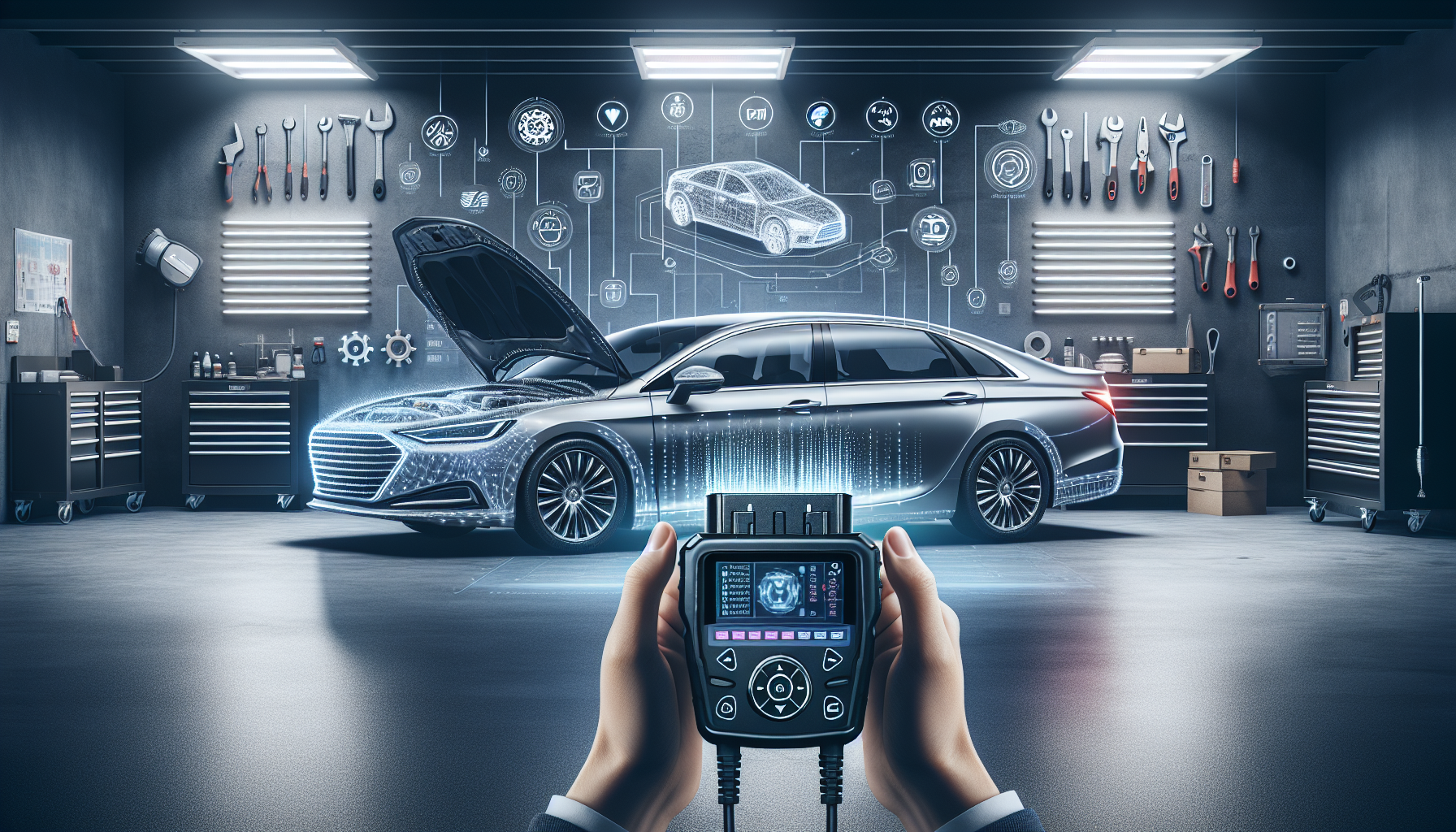
Understanding what a fault code reader is and why it's so central for BMW owners is the first step towards safer and smarter car ownership. A fault code reader is a diagnostic tool that connects to the car's OBD or OBD-II system and reads electronic fault codes. By quickly identifying faults and deficiencies in the car's system, the tool helps you save both time and money, and extends the car's lifespan. For BMW, with its advanced electrical and control system, the right diagnostic tool becomes crucial for detecting everything from engine failures to problems with safety features.
How do the OBD and OBD-II systems work?
- OBD (On-Board Diagnostics) is the car's own troubleshooting system that registers and stores fault codes for deviations and problems.
- OBD-II is standard in all BMW models from 2001 onwards and provides access to significantly more data than previous systems.
- The fault code reader connects to the OBD-II port under the dashboard and allows you to directly read both general and BMW-specific codes.
By using a fault code reader, you can find out why an engine light or other warning indicator has come on, long before major problems arise. Examples of faults that are quickly detected include fuel mixture errors, lambda problems, misfires, and faults in the ABS system – things that would otherwise lead to costly workshop visits.
Early troubleshooting and preventive maintenance
With a fault code reader, you are not only better equipped for acute fault situations, but you can also work preventively. Many electrical problems and sensor faults are detected at an early stage, giving you the chance to rectify them before they develop into bigger concerns. Early diagnosis helps you avoid chain reactions in the car's electronics, which is particularly important in modern BMW models where many systems are integrated. In addition to increasing the safety and lifespan of the car, this also means that you avoid unnecessary costs for major repairs.
Investing in an effective fault code reader is therefore not just a path to more secure BMW ownership – it is also an intelligent way to protect the car's value and get the most out of the car's performance over time.
Different types of fault code readers – From simple models to advanced diagnostic tools
Choosing the right type of fault code reader for BMW is crucial for the effectiveness of your troubleshooting and maintenance. The market today offers several different solutions – from very simple handheld devices to sophisticated diagnostic tools that integrate via computer or mobile device. Depending on your needs and experience level, there is a fault code reader that suits you.
Handheld readers and OBD-II scanners
-
Handheld fault code readers are compact and easy to use. They are ideal for quick checks and basic troubleshooting. Many of today's inexpensive OBD-II readers offer basic functions that allow reading and clearing of fault codes and display of simpler live data. Perfect for those looking for something uncomplicated for recurring checks of engine health.
-
OBD-II scanners usually provide more in-depth information, such as live data from various sensors and more advanced diagnostics, such as resetting service indicators. They are available both as dedicated units and as adapters for mobile/tablet.
-
Diagnostic software for computer or tablet provides access to advanced analysis with graphs, data logging, and sometimes deeper system access – such as ABS, airbag, and transmission. This requires more technical knowledge, but you potentially get access to the same information that workshops use.
-
Bluetooth-based OBD devices offer wireless diagnostics via apps, providing maximum flexibility and ease of use with your smartphone.
Depending on whether you solely want to read and clear fault codes, or if you want full access to the in-depth systems in your BMW, your need for features and complexity will vary.
Combined solutions and the right model for you
Many BMW owners appreciate the advantages of combined solutions – for example, OBD-II adapters coupled with mobile applications that provide both ease of use and access to advanced features. Here it is important to match the tool's capacity with your ambitions: a simple fault code reader is sufficient for the everyday driver, while enthusiasts and DIYers often get more value from a more advanced solution.
In short – always choose diagnostic tools based on your knowledge and what you want to be able to troubleshoot. Technology is evolving rapidly and today there are solutions in all price ranges, giving even beginners the opportunity to take control of their car's well-being without having to visit a workshop for every light that illuminates on the dashboard.
Top models on the market – Features, strengths, and weaknesses
For those looking for the best fault code reader for their BMW, there is today a wide range of advanced and specially adapted models – all to suit different needs and skill levels. Top-ranked products such as iCarsoft CR MAX, Foxwell NT301, Foxwell i50PRO, and iCarsoft BMW V1.0 are among the favorites of both professionals and enthusiasts thanks to their robust features and user-friendliness. Choosing the right tool is about matching your troubleshooting ambition and budget with the right technology.
Features that really make a difference
The most reputable fault code readers for BMW cars typically offer the following features:
-
Read and clear fault codes: Enables quick identification and reset of active and stored fault codes in all of the car's systems.
-
Live data display: Real-time data from the engine's sensors, fuel system, transmission, and other electronics.
-
Advanced tests: Ability to perform functional and actuator tests via the diagnostic menu – for example, service reset, electronic parking brake, and DPF regeneration.
-
Broad protocol support: Support for both old OBD systems and newer OBD-II/EOBD standards, meaning you can use the same device on multiple BMW generations.
-
Updatable software: To keep up with the car's development, models like iCarsoft and Foxwell can be easily updated for new models and diagnostic functions.
For example: iCarsoft CR MAX has a large, clear touchscreen, extensive model support, and is very popular among BMW owners with multiple cars or a need for in-depth troubleshooting. Foxwell NT301 is perfect for those looking for an affordable, fast, and easy-to-use scanner for basic troubleshooting and live data. Foxwell i50PRO takes the technology level even higher, including report export and testing of the unit's components.
User reviews and recommendations for the right choice
When choosing a fault code reader, it's important to weigh practical experience as highly as technical specifications. Many BMW enthusiasts attest that it's worth investing a little extra in a model with both live data and updatable software. Combined units with Bluetooth support have become increasingly popular and make troubleshooting smoother directly via mobile or tablet. Consider how often you troubleshoot yourself – simpler models (like Foxwell NT301) are perfectly adequate for the average car owner, while more advanced diagnostic tools make a difference for the active home mechanic or workshop.
Make your choice based on how in-depth diagnostic capabilities you really need and how much you want to be able to develop your tool as both your BMW and technology evolve.
How to use a fault code reader on your BMW – Step by step
Using a fault code reader on your BMW doesn't have to be complicated or time-consuming. By having the right tools and following a few simple steps, you can quickly identify problems, read fault codes, and in some cases even fix minor faults right in your driveway. Early diagnosis can save both time and money and extend your car's lifespan. Top-ranked guides show that it is entirely possible for many BMW owners to take control of troubleshooting themselves with basic knowledge and the right guidance.
Locate and connect to the OBD-II port
-
Locate the OBD-II port: On most BMW models, the diagnostic socket is located on the driver's side, often under the steering wheel or near the fuse box. You might want to lie on a mat to more easily find the connector.
-
Connect the fault code reader: Connect the tool to the OBD-II port with a cable or via Bluetooth/WiFi depending on the model.
-
Turn on the ignition: Put the car in ignition mode without starting the engine.
-
Follow the instructions: The specific procedure varies depending on whether you are using a handheld reader, app, or diagnostic software – always follow the manufacturer's instructions for your specific model.
Many fault code readers automatically show which fault codes are stored in the car's system. Read the codes and write them down before you eventually clear them after rectification. Also, keep in mind that some codes will reappear if the fault persists in the car.
Troubleshooting, interpretation, and next steps
-
Interpretation aid: Use fault code registers or online databases to understand what different codes mean. Many fault code readers also have built-in code interpretation.
-
Self-repair or workshop: Minor faults such as broken sensors or lights can often be easily replaced yourself. For more complex faults, especially those related to the engine or safety, you should consult an authorized BMW workshop.
-
Common mistakes: Never disconnect the fault code reader during ongoing diagnosis. Also, make sure your BMW has enough battery power to avoid unnecessary electrical faults.
Being able to read and, in some cases, rectify fault codes yourself gives you a lot of control over your BMW ownership. By regularly checking the car's electronics, you detect problems early and avoid expensive surprises later on. Always combine your own troubleshooting with professional help when needed for the best results and safety.
Smart buying tips – How to choose the right fault code reader for your BMW
Finding the right fault code reader for your BMW is crucial for both problem-solving and long-term cost-effectiveness. The market offers a wide selection, from simpler models for beginners to advanced diagnostic tools with features such as live data, multi-car support, and programming capabilities. But how do you know which fault code reader is right for your BMW and your needs? Here we gather practical tips, insights from major retailers, and valuable information about smart online purchasing options.
How to find the right tool for your car and needs
- Model-specific compatibility: Ensure that the fault code reader supports your BMW model and year. Some tools, such as iCarsoft BMW V1.0, are developed exclusively for BMW and Mini, while others like Foxwell NT301 have broader support but may lack advanced BMW features.
- Functionality and future-proofing: In addition to reading and clearing fault codes, live data, component activation, and service functionality are important features, especially if you want to use the tool on future cars or hybrid models.
- Price level and value: Cheaper fault code readers are often simpler and suitable for quick troubleshooting, while premium alternatives like iCarsoft CR MAX offer in-depth analysis, software updates, and support.
-
Shop smart online: At retailers like Felkodslasare, you can order online for convenient two-hour in-store pickup – ideal for urgent needs. Online shopping also often offers a better overview, more options, and easier comparisons.
Practical advice for long-term satisfied purchases
Invest in diagnostic equipment that can keep up with technological developments. Choose a fault code reader where the software can be upgraded, to keep pace with new BMW models and electrified powertrains. Read reviews and practical testimonials – many users share concrete experiences on how the tool works in different BMW models and situations. Also, consider access to Swedish support and warranty, especially for online purchases.
With smart choices, the fault code reader becomes not just a one-time investment, but a reliable partner for the entire BMW lifespan. The ability to easily fix minor faults and perform simpler service steps yourself can, in the long run, save thousands, while also keeping an eye on the car's health and resale value.
Fault code readers and future car technology – Is your fault code reader ready for upcoming BMW models?
The development of BMW's model range is progressing rapidly – electrification, smart driver assistance, and increasingly advanced electronics place new demands on both the car and the tools we need for maintenance. Many wonder if their existing fault code reader for BMW will continue to work when they switch to an electric car or hybrid, or if software updates are required to read the complexity of the new systems. Choosing a fault code reader that is ready for the future can save you both headaches and costs.
Future-proof diagnosis – what is required?
Today's and tomorrow's BMW models often come with extra communication protocols and battery-related diagnostics that older fault code readers may miss. Therefore, it is important to:
-
Choose a fault code reader with broad protocol support, preferably "futureproof" labeled and designed for OBD-II as well as the latest SAE and ISO standards. Several models, such as iCarsoft CR MAX and Foxwell i50PRO, offer updates directly via the internet to ensure compatibility with new BMW cars.
-
Keep track of software updates from the manufacturer. Make sure the fault code reader is easy to update via computer or phone, and check that support is available for your upcoming BMW model, whether it is an electric car, plug-in hybrid, or internal combustion engine.
-
Use communities and online support groups, where many users quickly share experiences regarding new technology, bugs, or tips after the launch of new BMW models.
Remember that choosing a future-proof fault code reader is often a smart investment for those who want to keep their BMW in top shape even a few car generations ahead.
Electric cars, hybrids, and digitalization – concrete advice
In summary, it is recommended to always opt for a fault code reader that can be regularly updated and has official BMW compatibility for both old and new models. With the industry's development towards more digitized vehicles, the value of tools that can handle both safety systems and electric powertrains increases.
By being proactive, you protect both your investment and ensure smooth car ownership even as technology changes. See it as a way to be one step ahead of problems – whether you drive a fossil, hybrid, or all-electric BMW!
Frequently asked questions about BMW fault code readers
Choosing and using a fault code reader for your BMW often raises many questions, especially given the wide range of models and technical features. In this section, we answer the most common concerns among BMW owners, partly based on experience and partly through insights from leading retailers and user reviews.
Quick answers to important questions
- How quickly is a fault code reader delivered and what about the warranty? Most retailers, for example, Biltema, offer fast delivery and the possibility of in-store pickup within 2 hours. Warranty periods vary, but usually, at least a 1-year warranty is included – please check the terms where you buy the tool.
- Which fault codes are common for BMW and what do they mean? Examples: P0171 (lean mixture), P0420 (catalyst efficiency), and electronic problems in the ABS or airbag system. Having access to an updated fault code register is invaluable for correct troubleshooting.
- What do I do if my fault code reader finds no faults? Check that the fault code reader is compatible with your BMW model and that the connection to the OBD-II port is correctly connected. In some cases, an interruption in the car's battery or related fuses can temporarily disrupt communication with the diagnostic tool.
-
What applies to the use of cookies and why are disclosures shown on e-commerce sites? Cookies improve the user experience and allow online stores to customize offers, log in users, and handle quick purchases. Make sure you allow necessary cookies to ensure a smooth shopping experience.
It is always wise to read the manual and consult support or forums if you encounter unusual problems.
Tips for effective problem solving
To help you quickly move forward, we recommend:
- Test the diagnostic tool on another car if you suspect there is a problem with the OBD-II port.
- Always use the latest software for your fault code reader for the best possible results.
-
Utilize the right of return and warranty if the tool does not work as described.
By taking advantage of both product information and others' experiences, you create the best possible conditions for smooth car ownership and avoid unnecessary workshop visits.
Frequently Asked Questions
Q: What is the most important thing to consider when buying a fault code reader for BMW?
A: The most important thing is to ensure that the fault code reader is compatible with your BMW model and can handle the systems (engine, transmission, ABS, airbag, etc.) that you want to read. Many fault code readers are universal, but BMW has its own protocols and advanced systems, which require specific functions and sometimes dedicated BMW tools. Also, check if the product supports future updates, especially if you have or plan to buy a newer BMW, electric car, or hybrid.
Q: How quickly can I receive my fault code reader and what about delivery and warranty?
A: At well-established retailers such as https://www.felkodslasare.se/, you can often shop online and pick up the product in-store within two hours – perfect if you need a solution quickly. For home delivery, the delivery time is usually 1–3 business days. Warranty conditions vary, but most reputable players offer at least 12 months warranty. Make sure to save your receipt and register your purchase.
Q: What common fault codes often appear on BMWs and what do they mean?
A: Some of the most common fault codes on BMWs include, for example, P0171 (lean fuel mixture), P0420 (catalyst system efficiency below threshold), as well as ABS and airbag-related codes. Many BMW fault code readers show both generic OBD-II codes and manufacturer-specific descriptions, which helps you quickly understand what the fault is about. By Googling the fault code along with your BMW model, you can usually find detailed interpretations.
Q: What do I do if the fault code reader doesn't find any faults or doesn't work?
A: First, check that the diagnostic socket (OBD-II port) is fully and correctly connected. Some fault code readers require the ignition to be switched on before they can connect to the car's systems. If the reader still doesn't find faults, the car may have stored "pending codes" or temporary faults that have been automatically reset. Double-check that your fault code reader has the correct software for your specific BMW model year and that you have followed the instructions carefully.
Q: How do I get started using a fault code reader on my BMW?
A: Start by locating the OBD-II port (usually under the steering wheel or near the fuse box). Connect the fault code reader, turn on the ignition, and follow the instructions on the screen or in the app. Read the fault codes and note any codes or descriptions. Reset the fault codes after taking action and go for a test drive – if the fault reappears, you should consider seeking help from an authorized workshop.
Q: What resources and forums are recommended for interpreting fault codes and getting help?
A: In addition to official BMW forums and Facebook groups for BMW enthusiasts, websites like prylstaden.se and prylteknik.se are full of guides and user reviews of fault code readers. Many retailers offer "support chat" and clear product descriptions online. Remember to read reviews and share your own experiences to help other BMW owners in the same situation.
Invest in your BMW's future with the right fault code reader
Choosing the right fault code reader for your BMW is a crucial investment for both preventive maintenance and long-term driving pleasure. By regularly reading and interpreting fault codes, you gain invaluable insight into your car's health, which minimizes unexpected workshop costs and extends the lifespan of important components. The market offers everything from advanced analysis tools to simpler handheld models, so there is something for every BMW owner's needs and ambition level.
Now is the time to take control of your BMW's well-being – compare different fault code readers, utilize smart online services for quick delivery, and take advantage of loyalty programs like Mitt Biltema for even more benefits. With proactive diagnosis, you save both time and money, while taking care of your car in the best possible way. Make a smart choice today and secure a better future for you and your BMW!