
Finding Error Codes on Electric Cars – How to Use Felkodsläsare.se Correctly
Is a warning light illuminated in your electric car, but you have no idea what's wrong? You're far from alone. Modern electric cars are packed with advanced electronics, battery management, and software – and when something goes wrong, fault codes often appear that seem completely incomprehensible. Being able to find, read, and understand fault codes on electric cars has therefore become a key skill for safe and cost-effective EV owners.
In this guide, we'll show you how to go from uncertainty to control with the right EV fault code reader – and smart use of felkodslasare.se. You'll get a practical overview of diagnostic systems, tools, code interpretation, safety, common faults, costs, and how to work preventatively. The goal is for you to be able to make better decisions: when you can fix it yourself, when you need a workshop, and how to avoid unnecessary expenses.
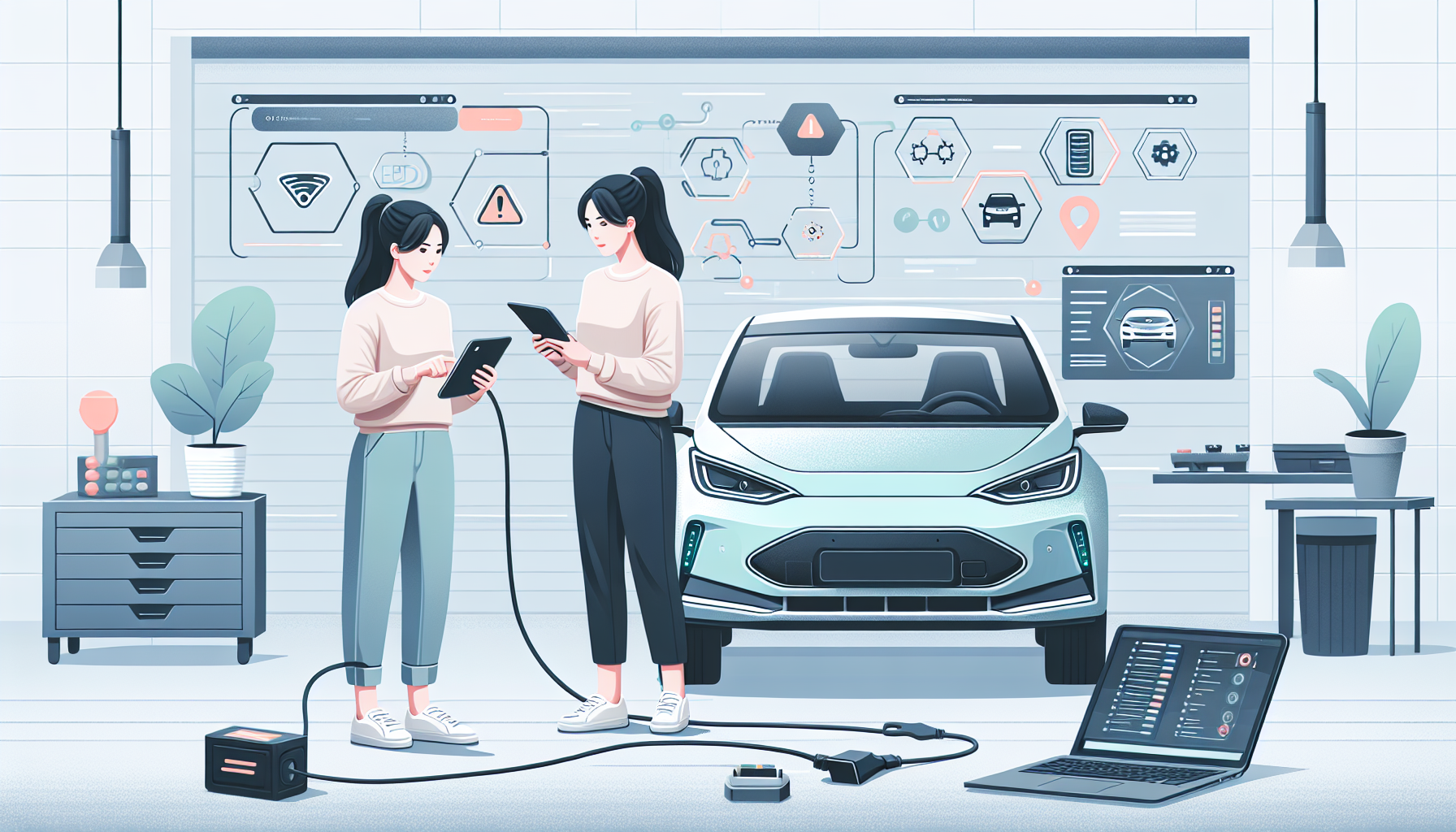
Fault and warning messages in an electric car are more than just annoying lights on the dashboard – they are the car's own safety system. With the help of fault codes, the car tells you exactly which system is unwell, from high-voltage battery and charging to cooling and powertrain. To correctly interpret these signals, you need to understand the basics of OBD-II and manufacturer-specific DTC codes, something many top articles only touch upon superficially.
OBD-II and DTC – The Foundation for Fault Codes on Electric Cars
In all modern cars, including electric cars, OBD-II (On-Board Diagnostics) is used as the standard for diagnosis. When a fault occurs, a DTC (Diagnostic Trouble Code) is stored in a control unit. The code tells you: which system, what type of fault, and sometimes how serious it is.
- Standardized OBD-II codes: for example, P0xxx for powertrain, which applies regardless of car brand.
- Manufacturer-specific codes: specific to, for example, Tesla, VW, Kia or Volvo and require better fault code readers.
- Examples of EV-specific codes:
- P0A0D – related to high-voltage relay/contactor.
- P1A10 – fault in Battery Management System (BMS).
-
U-codes – communication problems between modules (e.g., charging module and BMS).
Unlike many fossil fuel cars, a large part of an electric car's critical functions are software-controlled. This makes the fault codes more detailed – but also harder to interpret without the right tools, such as those you find via felkodslasare.se.
Why Fault Codes are Especially Crucial on Electric Cars
In an electric car, fault codes affect not only comfort, but directly safety, range, and battery health. A seemingly "minor" error message can mean that the car limits power to protect the battery, or that charging is stopped to prevent overheating. At the same time, several fault codes can have the same root cause, for example, poor contact in a sensor that triggers both BMS and charging faults.
By understanding what fault codes actually are – and how they differ from traditional gasoline and diesel cars – you lay the foundation for making smart decisions: can you continue driving, do you need a workshop, or is it enough to troubleshoot yourself with the help of the right fault code reader and guides on felkodslasare.se?
How the Diagnostic System in an Electric Car Works (Simple Overview)
The diagnostic system in an electric car is the brain that constantly monitors the battery, powertrain, charging, and safety systems – and which generates the fault codes you can then read out with a fault code reader. To interpret fault codes intelligently, you need to understand the basics: which control systems exist, how they "talk" to each other, and when a warning is actually stored as a code in the car.
The Electric Car's Central Control System – More Than Just the "Engine"
In a modern electric car, several crucial control units interact:
-
BMS (Battery Management System): Monitors each battery cell, temperatures, state of charge (SoC), and state of health (SoH). Most battery-related fault codes originate here.
-
Inverter and powertrain: Controls the power flow between the battery and electric motor, manages power, torque, and regeneration. Faults here can lead to reduced power or limp mode.
-
Charging module/Onboard Charger: Communicates with the charging station or fast charger, controls voltage, current, and safety protocols.
-
Climate control and heat pump: Cools and heats both the cabin and the battery – critical for range and battery life.
-
ADAS and comfort systems: Driver assistance, braking systems, steering, and infotainment, which also generate their own fault codes.
All these systems are connected via CAN bus, a communication network that allows control units to share data in real-time. When something deviates from the expected values, a fault is flagged and a DTC (Diagnostic Trouble Code) is created.
When and How Fault Codes are Stored in an Electric Car
What many articles miss is that fault codes don't always appear immediately at the first minor deviation. Often, the fault needs to recur a certain number of times, under specific driving conditions, before it is logged as an active code.
-
Intermittent faults: Temporary disturbances, such as a short communication interruption in the CAN bus or a voltage dip during cold start. These can be stored as "pending" or "historical" codes and disappear if they do not recur.
-
Permanent faults: More serious or persistent problems, such as a fault in a battery cell, a defective cooling pump, or recurring insulation faults in the high-voltage system. These often remain even after deletion until the root cause is addressed.
-
Conditional codes: Some faults are only registered in specific scenarios, e.g., DC fast charging or under high load at highway speeds.
For you as an EV owner, this means that the same car can behave "healthy" one day and throw a warning the next, even if the underlying problem has existed for some time. With the right fault code reader – such as those you find via felkodslasare.se – you can see history, patterns, and timestamps, making it much easier to understand if you have a real technical fault or just a temporary communication glitch. It is this complete picture that differentiates effective EV diagnostics from guesswork.
Types of Fault Codes on Electric Cars – From Engine Light to High-Voltage System
Electric cars use the same basic OBD‑II structure as fossil fuel cars, but the fault codes cover many more specialized systems – especially around the battery, charging, and high voltage. To truly understand what your fault code reader is showing, you need to know how different code types relate to each other and why some warnings are significantly more serious than others.
Overview: OBD‑II Codes and EV-Specific Systems
-
P‑codes (Powertrain): Most common even on electric cars. Here you'll find codes for the powertrain, inverter, electric motor, regenerative braking, and sometimes charging systems.
-
B‑codes (Body): Relate to the cabin, comfort, and body functions, e.g., climate control, central locking, doors, and seat belts.
-
C‑codes (Chassis): Cover braking systems, ABS/ESP, suspension, and sometimes steering, often linked to ADAS functions on modern electric cars.
-
U‑codes (Network/Communication): Indicate communication failures between control units, common in network disruptions, software bugs, or voltage drops.
-
EV-specific HV‑codes: E.g., codes for high-voltage systems, insulation faults, contactors, battery temperature, cell imbalance, and DC/AC charging, which many simpler guides fail to explain in detail.
Many top articles mention the P/B/C/U structure but rarely delve into how these codes are practically linked to the electric car's unique components. By combining information from felkodslasare.se with the car's own documentation, you can quickly pinpoint which system is actually malfunctioning.
Warning, Fault, and Limp Mode – How Serious is the Problem?
It's not enough to just see the fault code itself – you also need to understand the level of the warning:
-
Warning: Yellow symbols or informational messages. The car can often continue driving, but something deviates from the normal, e.g., slightly limited charging speed or reduced climate control.
-
Fault: Red or flashing symbol, often accompanied by severe functional impairment, e.g., no fast charging, reduced power, or disabled heat pump.
-
Emergency mode / "limp mode": The car limits power, top speed, or only allows short drives to protect the battery, high-voltage system, or drivetrain. Here, one or more HV-related fault codes are often in the background.
An important insight often missing in simpler guides is that a root cause can create a whole "cascade" of subsequent fault codes. A simple example is a problem in the battery's cooling system which first gives a temperature warning, which in turn triggers power reduction, limited charging, and communication errors with the BMS. Instead of chasing every single U-code, you need to start with the earliest and most central code, often linked to the HV or battery system.
When you learn to interpret the level (warning/fault/emergency mode) and the connections between codes, you gain a completely different level of control over the diagnostics – and can use felkodslasare.se more accurately to find the right information, tools, and remedies. This is key to avoiding unnecessary workshop visits or expensive parts that don't solve the underlying problem.
Why Traditional Fault Code Readers Often Aren't Enough for Electric Cars
Many EV owners start their troubleshooting with a simple, cheap OBD-II reader – the same type that works reasonably well on older gasoline and diesel cars. But on modern electric cars, this is often not enough. Large parts of the high-voltage system, battery, and charging are "hidden" behind manufacturer-specific protocols that simpler readers simply cannot communicate with. The result is that you see a few generic codes, while the truly important EV signals are missing.
Limitations of Simple OBD Readers on Electric Cars
-
Only shows generic OBD-II codes: Many budget readers only read engine-related codes (P-codes) and miss, for example, BMS, charging, and comfort modules.
-
No access to EV-specific systems: High-voltage battery, insulation monitoring, heat pump, and inverter often require manufacturer-specific diagnostics.
-
Limited live data: For electric cars, real-time data such as cell voltages, temperatures, SoC/SoH, and charging status are crucial for serious troubleshooting – something simpler readers rarely handle.
-
No service and adaptation functions: Functions such as calibration, resetting service lights, or checking the charging module are often only supported by more advanced tools.
This means that as an EV owner, you risk making decisions based on incomplete information. Top-rated guides often highlight this, but underestimate how quickly the difference grows between "OK" tools for fossil fuel cars and what is actually required for electric cars. This is where specialized recommendations, like those on felkodslasare.se, play an important role.
Risks of Simply Deleting Fault Codes Without Proper Diagnosis
Simply "turning off the light" by deleting fault codes without understanding the root cause is especially risky on electric cars. You might temporarily get rid of the warning, but:
-
Safety-related HV faults can be masked until the problem becomes critical, e.g., insulation faults or cooling problems in the battery.
-
Charging problems can worsen over time if you ignore early warning codes from the charging module or contactor.
-
Warranty issues can become more complicated if logs are missing or faults have been repeatedly deleted without remedy.
A better approach is to use a fault code reader that can truly communicate with all the electric car's modules, document the codes, and then seek guidance from knowledgeable sources – for example, by matching car model, system, and code via felkodslasare.se. This makes the diagnosis both safer, cheaper, and significantly more accurate than with a traditional OBD reader.
Choosing the Right Fault Code Reader for Your Electric Car – What to Consider
Choosing a fault code reader for an electric car is not the same as buying a simple OBD dongle for an older gasoline car. Electric cars have more advanced control systems, high-voltage components, and battery diagnostics that require the reader to truly "understand" your specific car model. Therefore, the right tool is absolutely crucial if you want to be able to find, interpret, and resolve fault codes safely and cost-effectively.
Key Features for a Modern EV Fault Code Reader
When comparing fault code readers for electric cars, you should pay particular attention to the following features:
-
Support for EV models and high-voltage systems: Check that your car (make, model, year) is included, and that the reader can communicate with the BMS, inverter, charging module, and climate system – not just "engine control."
-
Live data and battery diagnostics: The ability to read cell voltages, temperatures, SOC/SOH, and charging status in real time provides completely different insights into battery health than just a simple fault code.
-
Service and special functions: For example, resetting service intervals, calibrations, cooling system bleeding, or updating certain modules – functions often missing in simpler consumer readers.
-
User-friendliness and language: An app or software in your language, clear fault code interpretations, and the ability to save logs make a big difference in everyday use.
Many underestimate the usefulness of good live data until they start troubleshooting elusive faults, such as intermittent charging problems or power reduction in cold weather. In such cases, a more advanced reader quickly becomes worth the investment.
Bluetooth Dongle, Handheld Reader, or Professional Tool?
Which type of fault code reader is right for you depends on how you use your car and how much you want to be able to do yourself:
-
Simple Bluetooth dongles: Cheap, convenient, and sufficient for basic reading of generic OBD-II codes. Often limited on electric cars and cannot access all control modules.
-
Advanced consumer readers/handheld devices: Better support for specific brands, more systems, more detailed battery data, and often dedicated EV functions. Good balance for serious private individuals.
-
Professional workshop-level tools: Very broad coverage, deep customizations, and programming. Expensive but sometimes justified for smaller workshops or enthusiasts with multiple cars.
Here, felkodslasare.se plays an important role by allowing you to filter by, for example, Tesla, VW, Kia, Hyundai, Volvo, or BMW and see which tools actually work well in practice – including information on OTA updates, licensing models, and subscriptions that affect long-term costs.
Future-Proofing and Total Cost of Ownership
One aspect often overlooked in other guides is future-proofing. Electric cars are heavily software-controlled, and a fault code reader that cannot be updated risks quickly becoming obsolete. Therefore, it is best to choose a tool that:
-
Offers regular software updates for new models and systems.
-
Has a clear licensing and subscription structure, so you know what it will cost over time.
-
Has active support and documentation, preferably with a focus on electric cars.
By weighing functions, compatibility, and future-proofing – instead of just going for the lowest price – you get a fault code reader that can stay with you through several years of EV ownership and provide maximum benefit every time a warning light comes on. Here, felkodslasare.se is a smart starting point for comparing alternatives side by side before making a decision.
felkodslasare.se – The Hub for Finding the Right Fault Code Reader for Your Electric Car
When you start looking for a fault code reader for your electric car, you are quickly met by a sea of products, technical terms, and promises of "full compatibility." This is where felkodslasare.se comes in as a practical hub: a specialized portal that helps you weed out the wrong tools and find the reader that actually works with your specific electric car and your needs.
How felkodslasare.se Helps You Choose the Right One
Instead of browsing generic product descriptions, on felkodslasare.se you can start from how you actually use your car:
-
Filtering by car make, model, and powertrain: Choose, for example, Tesla Model 3, Kia e-Niro, or Volvo XC40 Recharge and see which tools are proven to support these specific systems.
-
Selection by function: Filter by battery diagnostics, live data, service reset, DTC reading for all control units, etc.
-
Compare EV-specific functions: Clearly see which readers can handle high-voltage related modules, BMS data, and charging faults – something often missing in simpler OBD readers.
In addition to pure product listings, there are in-depth guides, step-by-step articles, and reviews that explain the pros and cons of different solutions from an EV perspective, not just a general OBD perspective.
Why Choose a Niche Knowledge Portal Over a Regular E-retailer?
Large e-retailers prioritize a wide range and price – but rarely correct diagnostic compatibility. On a specialized site like felkodslasare.se, the focus is instead on:
-
Correct matching between car model and function, based on tests and accumulated experience.
-
Ongoing updates when new EV models and software versions are released.
-
Practical recommendations: e.g., which tool is best suited for home use, enthusiasts, or semi-professionals with multiple EVs in the family or company.
The result is that you reduce the risk of incorrect purchases, save time in troubleshooting, and get a tool you can actually grow with. For EV owners who want to take control of their fault codes, felkodslasare.se therefore becomes a natural starting point before pressing the "buy" button elsewhere.
Step-by-step – how to read fault codes on your electric car
Reading fault codes on an electric car is simpler than many people think – but it requires doing things in the correct order and with respect for the car's high-voltage system. Here, we go through a practical step-by-step process similar to what professional workshops use, but adapted for you who want to troubleshoot at home with the help of a compatible fault code reader that you can find via felkodslasare.se.
Preparation and safe connection
Before connecting anything to the car, you should prepare both the vehicle and the equipment:
-
Park safely: Level ground, parking mode/handbrake engaged, preferably under cover if it's very cold or hot.
-
Check charge level: Preferably have over 20–30% battery so that control units do not go into power-saving mode in the middle of diagnostics.
-
Turn off/keep the vehicle in "ready" according to the manufacturer's recommendation: Some brands require ignition on, others do not – check manual or guide on felkodslasare.se.
-
Locate the OBD port: Usually under the dashboard near the driver's seat, sometimes behind a small plastic cover.
Once you have found the port, connect your fault code reader or Bluetooth dongle, start the app or computer program, and let the device identify the car model and control units. Wait until the connection is fully established before proceeding.
Read, save, and document fault codes
Now it's time to retrieve the actual fault codes – and here many private individuals make an important mistake: they delete the codes immediately. Instead, do this:
-
Read all control units: Not just "engine," but also BMS, charging module, climate control, brake system, ADAS, etc.
-
Save logs: Most reputable apps and readers allow you to export reports as PDF or text files. Save these in a folder with the date.
-
Note symptoms: Link the fault codes to what you are experiencing – e.g., "not charging on home box," "range reduced," "yellow warning symbol in instrument cluster."
By documenting everything before taking any action, you create a "before" state. This is invaluable both if you later need help from a workshop and when you want to follow up on whether an action has actually solved the problem.
When can you clear fault codes – and when should you refrain?
As a rule of thumb, you should not clear fault codes immediately if:
- Warning lights for battery, high-voltage system, or brakes are red
- The car has entered limp mode or refuses to go into "ready"
- You suspect a mechanical or electrical fault that could affect safety
However, you can sometimes clear codes after documentation if it concerns clearly harmless events, such as a temporary communication disruption or a known software bug that has already been fixed with an update. Then drive the car for a while and read again – if the codes return, there is an underlying cause that needs further investigation.
By following this structured process, and combining it with guides and tool recommendations on felkodslasare.se, you will get a significantly more accurate and safe diagnosis than if you just "try things out."
Understanding fault codes – how to interpret messages correctly
Reading fault codes on an electric car is relatively easy with the right fault code reader – the real challenge is to interpret the codes correctly. Many articles fall short here, even though the interpretation itself determines whether you make a simple, inexpensive fix or chase errors for weeks. In this section, we go deeper than standard lists and show you how to connect fault code, symptom, and background data using, among other things, felkodslasare.se.
How a fault code is structured – more than just letters and numbers
A modern EV fault code usually follows the OBD-II structure, e.g., P0A0D or U0293. To interpret correctly, you need to understand the whole picture, not just the heading on the display:
-
First letter (P/B/C/U): Indicates system – e.g., P for powertrain, U for communication between control units.
-
First digit (0 or 1): 0 = generic OBD-II code, 1 = manufacturer-specific code with often more advanced meaning.
-
Remaining digits: Specifies exact component or functional area, e.g., high-voltage disconnect, cooling pump, charge communication.
-
Status (active/historic/pending): Shown in your fault code reader and determines how urgent the problem is.
With a good reader, you can also see freeze frame data – i.e., how the car's values looked exactly when the fault occurred. This is invaluable when chasing intermittent faults that only appear during fast charging or hard acceleration.
Combine fault code, symptom, and knowledge sources
Errors in interpretation often arise when one stares blindly at a single line of text. Instead, you should always combine several pieces of the puzzle:
-
Fault code + symptom: E.g., P0A0D (HV-interlock) together with the car not starting after a tire change can point to a loose connection to a high-voltage component rather than a "broken battery."
-
Fault code + driving situation: Does the code only occur at highway speeds, in cold weather, or when the battery is almost full? This significantly narrows down the cause.
-
Felkodslasare.se + manuals + databases: Use felkodslasare.se to find interpretations, typical causes, and which readers can show in-depth data for your specific model.
A common mistake is to rely on the first forum thread and buy expensive components unnecessarily. Professional technicians almost always start by confirming the fault in live data (e.g., temperatures, voltages, currents) before any part is replaced.
Common misinterpretations – and how to avoid them
Many top-ranked articles mention fault codes superficially but miss typical misinterpretations that cost EV owners money. Some examples you should watch out for:
-
Focusing on consequential faults: A communication code (U-code) in several modules can be due to one faulty relay or a moisture-damaged connector – not three faulty control units.
-
Interpreting "historic" codes as urgent: Older faults that do not reappear after clearing and test driving are often just traces of a temporary problem, e.g., low 12V battery voltage.
-
Ignoring patterns: Recurring pending codes for battery temperature can be the first sign of a weak sensor or incipient cooling problems – perfect to detect in time with your own fault code reader.
The key is to always view fault codes as diagnostic clues, not final verdicts. If you combine the structure of the code, the car's behavior, and quality-assured information from sources like felkodslasare.se, you'll suddenly be at the same level as an experienced troubleshooter – without leaving your driveway.
Common fault codes on electric cars and what they often indicate
When an electric car displays a fault code, it's rarely just "a little glitch." Often, the code points to a specific subsystem – charging, battery, cooling, or powertrain – where something is not functioning optimally. By understanding which fault codes are most common and what they typically mean, you can more quickly determine if a simple self-check is sufficient or if the car needs to go to a workshop immediately.
Typical problem areas and what you can check yourself
-
Charging faults (AC/DC, cable, communication)
Common symptoms are that the car does not start charging, interrupts charging, or limits power. Causes can be dirty contacts, moisture damage in the charging port, incorrect settings in the charging box, or communication problems between the car and charger. Always start by trying another cable and another charging station before suspecting the car.
-
Battery-related codes (imbalance, temperature, degradation)
Codes linked to the BMS can indicate cell imbalance, too high/low temperature, or reduced capacity. Here, it is valuable to use a fault code reader that supports electric cars to see live data: cell voltages, temperatures, and SOH (State of Health).
-
Cooling and heating systems (heat pump, cooling circuit, battery cooling)
Fault codes in the climate system and battery cooling can lead to reduced range, poorer fast charging, and sometimes power reduction. Check coolant levels, listen for unusual pump noises, and note if the fault occurs in cold/hot weather.
-
Powertrain and inverter (power reduction, overheating)
Here, the car often enters limp mode. Typical causes are overheating, sensor faults, or internal electrical faults that require workshop diagnosis.
By systematically reviewing these areas, preferably with the support of guides and databases via felkodslasare.se, you can avoid unnecessary workshop visits and get a clearer picture of the severity of the fault.
When are self-checks enough – and when is it a critical situation?
A common mistake is to ignore recurring fault codes just because the car "drives as usual." In electric cars, early warnings for, for example, battery temperature or slight insulation faults can develop into expensive damage if not taken seriously. As a rule of thumb, you can troubleshoot yourself and try restarting, another charger, inspecting wiring, and documenting fault codes. But repeated codes related to the high-voltage system, battery, or powertrain should always lead to a professional diagnosis. Here, a saved fault code log from your own fault code reader is invaluable – both for your peace of mind and for the workshop to find the right cause faster.
When you can fix it yourself – and when you must go to the workshop
Being able to read fault codes on your electric car is one thing – knowing when you can act yourself and when you should hand it over to an authorized workshop is something else entirely. This is precisely where the most experienced EV owners differ from those who take chances and risk costly or dangerous mistakes. In this section, we go through a practical and safety-focused demarcation, supported by how both manufacturers and workshops recommend you work with diagnostic data.
What you can actually do yourself – safe DIY actions
There are several typical actions that are low risk but can solve many everyday problems:
-
Software update and restart: Install the latest software, perform a controlled restart of the infotainment or charging system according to the instruction manual.
-
Check cables and connectors: Inspect and replace charging cable, clean contacts (low voltage), check that connectors are properly seated.
-
Resetting simpler fault codes: Clear codes related to clearly temporary events (e.g., interrupted charging, low 12V voltage) after documenting them.
-
Adjusting settings: Change charging schedule, maximum charge level, or climate settings if the fault code points to incorrect configuration rather than a hardware fault.
With a good fault code reader that you found via felkodslasare.se, you can also see live data and confirm that an action has actually helped – for example, that charging current, temperature, or voltage return to normal values.
Here's the limit – when you should always go to the workshop
It's equally important to know when to pull the emergency brake. You should not try to repair it yourself when:
- The high-voltage system (HV battery, contactors, inverter) is involved, or fault codes mention insulation, HV-leak, "service HV system," or similar.
- The car enters emergency mode/limp mode, loses power significantly, or displays red warning symbols related to battery, brakes, or steering.
- Fault codes reappear immediately after clearing or occur together with odors, heat generation, or unusual noises.
Here's the big advantage of having read the codes before calling the workshop: you can communicate the exact fault code, symptom, and when the problem occurs. This reduces troubleshooting time and thus costs. Many workshops appreciate customers who have already logged data, and in the long run, a simple investment in the right fault code reader can save thousands – while keeping you on the right side of the safety limit.
Safety first – managing EV fault codes without risking injury
Electric vehicle fault codes are not just about comfort and range – they can also be direct safety signals. When it comes to high-voltage systems, batteries, and charging, common sense is not enough; you need to understand which warnings are urgent and what you absolutely must not do yourself. In this section, we cover safety aspects that many top articles mention, but often only superficially, and connect them to how you practically work with diagnostic tools from felkodslasare.se.
Critical high-voltage risks and what you should never do yourself
-
High-voltage components (HV cables, battery pack, inverter): May only be opened/handled by a high-voltage trained technician. Voltages up to 400–800 V can be directly life-threatening.
-
Fire and thermal risk: Fault codes related to battery temperature, cooling, or "thermal runaway" warnings require immediate action – never continue driving "because it's just a short distance."
-
Short circuit and moisture: Warning messages about insulation faults or moisture in the HV system mean the car can become live if handled incorrectly.
When you read fault codes with a fault code reader, the main rule is: you can read – but not tinker with the HV side. Use the tool to understand the seriousness, not to try to bypass safety functions. Many advanced readers listed on felkodslasare.se also show clear status flags (e.g., "critical," "drivetrain limited") that help you determine the next step.
When to stop immediately – and when you can drive carefully to the workshop
As a rule of thumb, you should stop immediately and arrange for towing if:
- A red HV warning symbol illuminates or messages about "Stop vehicle safely" are displayed
- You receive fault codes/warnings related to battery overheating, fire risk, HV insulation, or smoke/odor
- The car enters severe limp mode in combination with warnings from the battery or powertrain
You can often drive carefully to the workshop (if the car itself allows it) if:
- An orange/yellow warning symbol without limited power, e.g., minor faults in the climate control or charging communication
- Temporary communication faults that do not reappear after a restart, but are still logged as a fault code
Use the fault code reader to document all codes before driving on – screenshots or exported logs provide valuable information to the workshop. This is a significant safety advantage that many overlook: the more data the workshop has, the less they need to "try things out" on your car.
Practical safety routines for self-diagnosis
To work safely around the electric car when troubleshooting:
-
Park outdoors or in a well-ventilated area when you suspect battery or charging problems
-
Always use the original cable or quality charger for tests to avoid additional risk sources
-
Never touch orange-colored cables or marked HV components, even if the car is off
-
Read the car's instruction manual for safety procedures – especially sections on towing and emergency situations
A unique tip is to create your own "safety profile" for your car: save pictures of all warning symbols, write down how the car behaves with different faults, and link this to the fault codes you read via your fault code reader. The next time a light comes on, you'll know immediately if it's something you've seen before – or if it's a new, potentially more dangerous scenario. In this way, you use technology not only to save money but also to actively raise your safety level as an EV driver.
In-depth: fault codes related to battery health and range
The battery is the heart of your electric car – and the car's diagnostic system monitors it meticulously. Fault codes concerning battery health and range are therefore some of the most important you can understand, both for safety and for your wallet. With the right fault code reader and support from felkodslasare.se, you can detect problems early that might otherwise lead to expensive battery replacements or significantly reduced range.
How BMS works and what fault codes arise
-
BMS (Battery Management System) monitors each battery cell – voltage, temperature, charging, and discharging – and generates fault codes when something deviates from the normal range.
-
Cell imbalance: Fault codes indicating that some cells discharge faster than others may suggest incipient degradation, incorrect charging routines, or cooling problems.
-
Temperature-related codes: Too high or too low temperature in the battery pack affects both lifespan and temporary range. Here, fault code readers with live data can provide a more detailed picture than the car's own range indicator.
By comparing fault codes and live data over time, you can see trends: for example, if a certain cell group is consistently warmer, or if internal resistance increases. Such insights are rarely mentioned in simpler guides, but are invaluable if you want to maximize battery life or assess the condition of a used electric car.
The link between fault codes, range, and driving style
Malfunctions in cooling, heating, or charging strategy often first appear as "mysterious" reduced range before a clear error message pops up. With an EV-adapted fault code reader, you can:
-
Monitor SoH (State of Health) and SoC (State of Charge) more accurately than the car's percentage display
-
Detect charging-related fault codes that indicate the car is secretly limiting charging speed to protect the battery
-
Adjust your behavior – for example, avoid repeated fast charging at high battery temperatures if you see recurring temperature codes
At felkodslasare.se, you'll find tools that can log battery data over extended periods. This allows you to link fault codes to real driving conditions: highway driving in winter, frequent fast charging during holidays, or many short city trips. This kind of personal "battery journal" goes far beyond what most top articles describe and provides you with concrete documentation to bring to the workshop – and upon a potential sale of the car.
Charging problems and fault codes – how to troubleshoot smartly
Charging problems are one of the most common reasons EV owners start looking for fault codes. When the car refuses to start charging, stops mid-session, or charges extremely slowly, it's often a combination of a fault code in the car, charging station settings, and external factors causing the problem. With the right methodology, you can quickly determine if the fault lies in the car, the cable, the charging station, or the power grid itself – and felkodslasare.se is an important support in this process.
Common fault codes for home charging and fast charging
-
Home charging (AC): Typical codes involve ground faults, communication errors between car and charging station (e.g., pilot wire issues), incorrect phase, too low voltage, or overheated connector.
-
Fast charging (DC): Common codes for communication interruptions, protocol errors between car and station, battery temperature outside the allowed range, or voltage/current deviations.
-
External conditions: High or low temperature, moisture in the connectors, or poor grid quality can trigger charging-related fault codes without anything actually being "broken."
This is where better troubleshooting guides differ from simpler articles in search results: they emphasize that you should always read out fault codes both immediately after a failed charging attempt and after trying a different charging location, to be able to compare logs systematically.
Practical troubleshooting steps – with support from felkodslasare.se
A smart troubleshooting routine might look like this:
-
Step 1 – Check home charging: Look at the charging station's indicators, fuses, and any app. If the station shows an error code, note it down and compare it with the car's fault code via your fault code reader.
-
Step 2 – Try another charging location and cable: Try a public AC charger or another home charging station. If the fault disappears, it points to your installation; if it persists, the car is a more likely cause.
-
Step 3 – Read out and compare fault codes: Use a fault code reader to log codes from the charging module, BMS, and powertrain. On felkodslasare.se, you can filter for readers that offer particularly good support for charging systems and battery diagnostics.
What is often missing in existing articles is the advice to save logs from several different charging sessions. By doing so, you can see if the fault only occurs, for example, during rain, cold, or high network load – valuable information for both you and the workshop.
How to choose equipment that "speaks the right language" with your EV
Not all fault code readers can read advanced charging-related codes, especially manufacturer-specific codes in the charging module and BMS. Via felkodslasare.se, you can:
- Filter by car brand, model, and charging functions (AC/DC, battery health, temperatures).
- Compare whether the reader supports live data from charging, such as voltage per phase, current, temperature in the connector, and battery pack.
- Read independent reviews from other EV owners with similar charging problems.
By combining a well-chosen fault code reader with a structured troubleshooting method, you can avoid unnecessary workshop visits and more quickly pinpoint whether it's the car, the charging station, or the power grid that's the culprit. This leads to both higher operational reliability and lower costs over time.
Software, updates, and "ghost fault codes" on EVs
Many EV owners chase fault codes, replace components, and visit workshops – when the root cause is actually software. Modern EVs are more computer than car, and how the car is programmed affects both which fault codes are set and how they are interpreted. To understand "strange" warnings, you therefore need to see fault codes and software versions as two sides of the same coin.
Why updates affect fault codes so much
-
OTA updates (Over The Air) can change the logic for how fault codes are triggered, prioritized, or hidden
-
Software bugs can create false warnings or sensitive thresholds – typical "ghost fault codes"
-
New functions (e.g., improved charging strategy or heat pump control) can create new code types that older readers don't understand
-
Sync problems between modules arise when one control unit is updated but another remains on an old version
A unique but practical approach is to always read out and save logs before an update, and then do the same after. By comparing codes and live data, you can see if a problem is truly resolved or just masked. On felkodslasare.se, you can also choose fault code readers that can display software versions in different control units, something many simpler tools miss.
How to handle "ghost errors" and software-related warnings
Ghost fault codes often occur during rapid switching between driving modes, network glitches during connection, or during an ongoing OTA update. To avoid unnecessary workshop visits, you can:
-
Let the car "sleep" properly (locked, no app connection) before re-reading the codes
-
Check if the fault code recurs after a few driving cycles – many temporary communication errors resolve themselves
-
Verify against known bugs via the manufacturer's release notes and independent sources, while also using felkodslasare.se to see if other owners have reported similar patterns
When you document date, mileage, software version, and fault codes, you build a knowledge base that benefits both you and the workshop. This makes it easier to distinguish between actual hardware problems and pure software errors – and gives you stronger arguments if you need to make a complaint or demand an update rather than an expensive component replacement.
How to use a fault code reader for preventative purposes
Reading fault codes on an EV only when a warning light comes on is like going to the dentist only when you're in real pain. The most knowledgeable EV owners instead use their fault code reader proactively to detect problems long before they become expensive or affect range. In this section, we'll go through how you can transform your fault code reader from an "emergency solution" to a smart, preventative tool – with the right equipment and support from felkodslasare.se.
Make diagnosis part of your service plan
A structured, recurring diagnosis gives you full control over your car's health:
-
Run a complete scan at least a couple of times a year, preferably before and after the winter season (when the battery and heating system are most stressed).
-
Log live data such as battery temperatures, cell balance, charge status (SoC), and charging speed under similar conditions to compare over time.
-
Monitor communication codes (U-codes) that appear sporadically – recurring communication errors can be early signs of moisture damage, cable breaks, or weak modules.
By saving reports from each diagnosis in the app or as a PDF, you create your own "digital service book." This is a level of documentation that few workshops offer on an ongoing basis, but which you can build yourself with relatively simple means.
Detect trends and increase resale value
Once you've performed regular checks over one or more years, you'll start to see patterns in the data:
-
Rising average battery temperatures for the same type of driving can signal impaired cooling or harder load than before.
-
Increasing cell imbalance (some cells consistently higher or lower in voltage) can point to incipient degradation – long before a battery fault code is actually triggered.
-
Recurring charging limitations during fast charging can reveal the need for a software update, service on the cooling system, or replacement of the charging cable/charging station.
All this history becomes invaluable when you sell the car. Being able to show documented diagnostic logs, without serious fault codes and with stable battery health, strengthens buyer confidence and can justify a higher price than similar cars without such documentation. Here, you can use felkodslasare.se to choose a reader with good export functions and clear reports – optimal for both your own peace of mind and the EV's resale value.
The future of fault codes and diagnostics in EVs
EVs are developing at a furious pace, and so is the way fault codes are created, stored, and interpreted. What today requires a fault code reader and manual troubleshooting will tomorrow increasingly happen automatically, with the support of cloud services and AI. For you as an EV owner, this means smarter warnings, more accurate diagnosis – and an even greater value in understanding what fault codes actually mean.
Self-diagnosis, AI, and cloud-based troubleshooting
Already, we see how modern EVs can:
-
Analyze patterns in sensor data and detect deviations before a classic fault code is set
-
Send logs to the manufacturer's servers for automatic interpretation and suggested actions
-
Combine driving data, charging history, and battery status to warn early about degradation or impending faults
-
Use OTA updates to correct known bugs that would otherwise generate fault codes
Here, a new challenge arises: more and more faults and "near-faults" are handled in the background without you as the driver having full insight. A modern, EV-compatible fault code reader – selected via felkodslasare.se – therefore becomes an important complement for those who want to see what the car actually registers, not just what the infotainment screen chooses to display.
Why independent platforms are becoming even more important
As the amount of data and complexity increases, independent knowledge sources become crucial for maintaining control as a car owner. Platforms like felkodslasare.se fulfill several future-critical roles:
-
Comparing tools that can read both today's and tomorrow's EV systems
-
Gathering experiences from many brands and models, not just a single manufacturer
-
Translating technical fault codes and diagnostic data into understandable Swedish and concrete advice
-
Helping you choose the right level of equipment, from simple consumer readers to more advanced solutions
As EV self-diagnostics become more advanced, the gap between the "black box" and the user's understanding would otherwise grow. By combining the car's built-in functions with the right fault code reader and independent guides, you maintain the upper hand – and ensure that future high-tech fault codes become a tool for safer and cheaper EV ownership, not a source of frustration.
Frequently Asked Questions (FAQ)
Q: Do I need a special fault code reader for an EV, or is the one I have for my petrol car sufficient?
A: Many simpler universal OBD-II readers can read basic engine codes, but EVs have more and more advanced control systems – especially regarding the battery and high-voltage components. If you want to see battery health, charging faults, heat pump, inverter, and manufacturer-specific EV codes, you need a reader or software with specific support for your particular EV model. On felkodslasare.se, you can filter by car brand, model, and "electric/hybrid" and immediately see which tools actually work in practice, not just on paper.
Q: Can I damage the car or battery by reading or deleting fault codes myself?
A: Merely reading fault codes is harmless in itself – you are only "looking" at information already stored in the car's control units. Risks arise when you start deleting fault codes indiscriminately or try to perform advanced service functions without knowledge. As a rule of thumb: only delete when you understand the cause, have rectified the fault, and documented the codes. And never attempt functions that affect the high-voltage system if you are not trained. In that case, the workshop is the right way to go.
Q: How do I know if a fault is urgent or if I can continue driving?
A: Look at three things:
- Type of warning symbol (red = often urgent, yellow/orange = warning/monitoring)
- How the car behaves (power limitation, strange noises, smell, heat)
- Fault code description (e.g., "isolation fault", "overtemperature", "DC charge fault").
If you see high-voltage, battery, or temperature-related codes in combination with a red warning – stop driving and call for assistance. Less serious communication errors or comfort-related codes can often wait until the next workshop visit, but monitor the development with a fault code reader.
Q: Is it worth buying a fault code reader if I always go to a workshop anyway?
A: Yes, often. Your own reader allows you to:
- Verify the fault before booking an appointment (so you know how urgent it is)
- Communicate more clearly with the workshop and avoid unnecessary troubleshooting time
- Follow up after repair and see if codes or trends recur
- Inspect a used car before purchase.
Many owners recoup the cost after just 1-2 workshop visits. On felkodslasare.se, you can see budget vs. premium options and what you get for your money.
Q: How do I get started immediately if a warning light comes on today?
A:
1. Stop safely, note behavior (noise, smell, power loss, charging problems).
2. Read codes – borrow or buy a compatible fault code reader (guided via felkodslasare.se).
3. Document: take pictures/screenshots of codes and dates, preferably also battery level and temperature.
4. Seek information: compare the codes with interpretations in this guide, in the car's manual, and via reputable online sources.
5. Determine action: is it safe to continue driving, can you try a simple fix at home (e.g., another charger), or should the car go directly to the workshop?
6. Follow up regularly to see if the fault recurs or develops.
Summary: how to take control of fault codes in your EV
You have now seen how fault codes in EVs are not just cryptic messages – they are the key to safety, range, battery health, and lower ownership costs. By understanding OBD-II, EV-specific systems, common problem areas, and how software and "ghost errors" are connected, you can go from passive car owner to conscious EV manager. The article has also shown how the right fault code reader, the right working methods, and preventative diagnostics provide a peace of mind that many top articles mention but rarely concretize in practical steps.
The next step is simple: start with a thorough diagnosis of your own EV. Go to felkodslasare.se, filter for tools that suit your car brand and needs, and then save all logs systematically. Use the fault code reader continuously – not just when a warning light comes on – and you will build your own service history and detect problems before they become costly breakdowns. In this way, you get safer, smarter, and more sustainable EV ownership, with felkodslasare.se as your natural starting point whenever technology raises questions.