

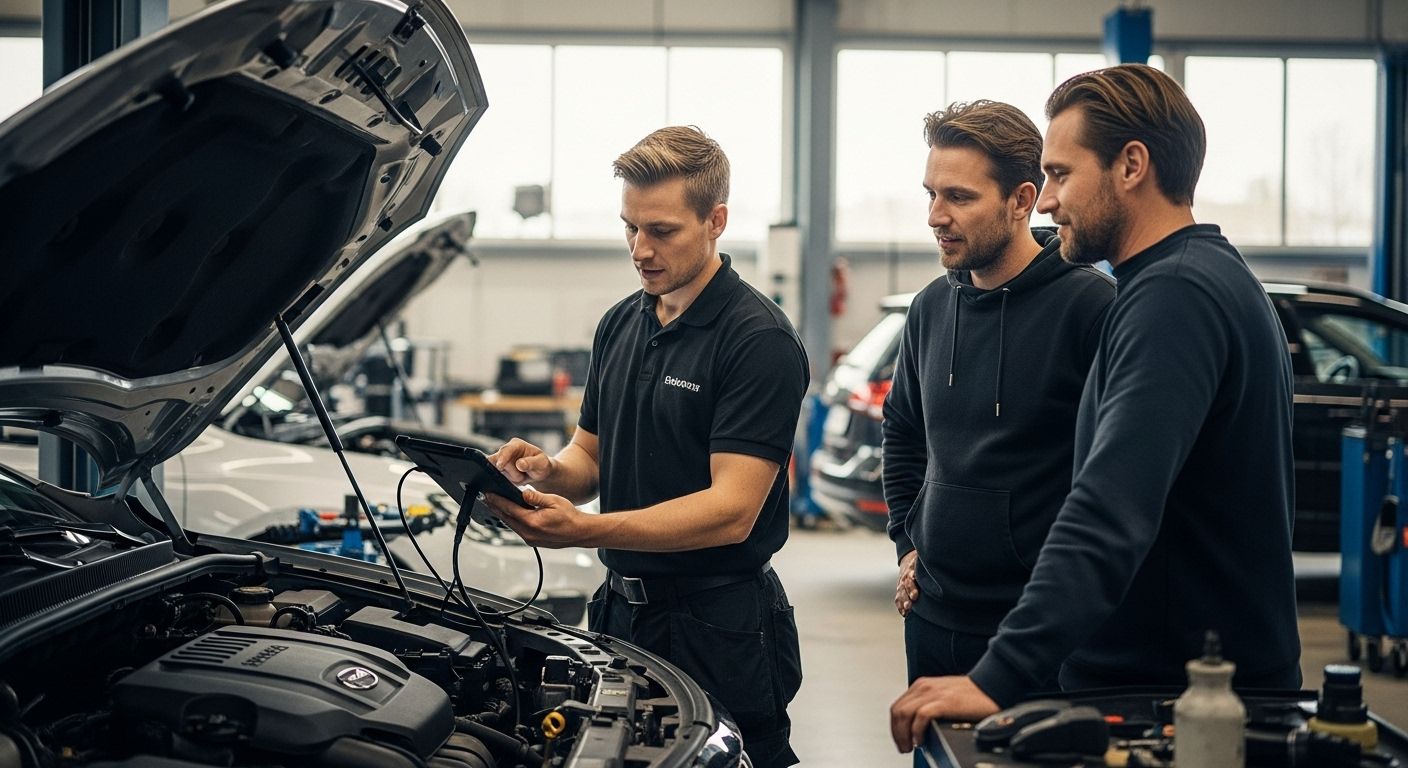
Advanced car troubleshooting might sound like something only workshops deal with, but today's cars are more than just engines and sheet metal. Imagine that a new car can contain up to 100 electronic control units that constantly communicate with each other. The unexpected thing is that the biggest challenge is no longer finding the fault, but understanding how all these systems affect each other simultaneously. What really happens when technology becomes smarter than the tools we have always relied on?
Table of Contents
- What does advanced car troubleshooting involve, and why is it important?
- Fundamentals of car systems and their function for troubleshooting
- Common techniques and tools in advanced car troubleshooting
- How modern diagnostic systems change the troubleshooting process
- The future of advanced car troubleshooting and technological trends
Quick Summary
| Key Takeaway | Explanation |
|---|---|
| Advanced troubleshooting requires special knowledge | Understanding electronic systems is crucial for effective troubleshooting and maintenance. |
| Diagnostic tools are central | Modern tools can directly communicate with the car's systems and perform complex analyses. |
| Proactive monitoring prevents problems | Anticipating and identifying problems in advance saves money and ensures vehicle functionality. |
| Artificial intelligence revolutionizes diagnostics | AI and machine learning are used to improve the accuracy of troubleshooting and maintenance. |
| Future diagnostic systems are intelligent | Upcoming technologies will optimize vehicle maintenance through continuous real-time monitoring and data analysis. |
What does advanced car troubleshooting involve, and why is it important?
Advanced car troubleshooting is about more than just reading fault codes. It's a sophisticated process that requires a deep understanding of the vehicle's technical systems and intelligent diagnostic methods. Modern car technology has made troubleshooting a complex but crucial skill to ensure vehicle performance and safety.
The complexity of technology in modern vehicles
Today's cars are no longer simple mechanical machines but advanced computer systems on wheels. Every modern car contains up to 100 electronic control units that continuously communicate and monitor various components. Advanced car troubleshooting means being able to navigate through these complex networks of sensors, computers, and mechanical systems.
The main aspects of advanced car troubleshooting include:
- Use of specialized diagnostic tools
- Interpretation of complex fault codes and signals
- Understanding the interaction between different electronic systems
Why advanced car troubleshooting is crucial
Modern vehicles require more than traditional mechanical knowledge. Diagnostic techniques have evolved to handle the increasingly complex systems in modern vehicles. By understanding the underlying technical principles, potential problems can be prevented, money saved, and optimal vehicle performance ensured.
Technological advancements in the automotive industry have made it possible to predict and prevent faults long before they become serious. Artificial intelligence and machine learning now play a crucial role in analyzing vehicle data and identifying potential problems before they arise. This means that advanced car troubleshooting is not just about repair but also about proactive monitoring and maintenance.
Mastering advanced car troubleshooting gives you, as a vehicle owner or technician, a significant advantage. You can quickly identify complex problems, understand their origin, and take appropriate action before minor issues escalate into costly repairs.

Fundamentals of car systems and their function for troubleshooting
Car systems are complex networks of interconnected components that work together to ensure vehicle performance, safety, and efficiency. Understanding these systems is crucial for effective troubleshooting and maintenance. Modern vehicles are no longer just mechanical machines but sophisticated data-driven systems with hundreds of sensors and electronic control units.
Important electronic systems in modern vehicles
The vehicle's electronic infrastructure is the brain behind its functionality. Control systems coordinate everything from engine management to safety features. For a deeper understanding of diagnostic tools, you can read our guide on ELM327 technology, which plays a crucial role in modern troubleshooting.
The primary electronic systems include:
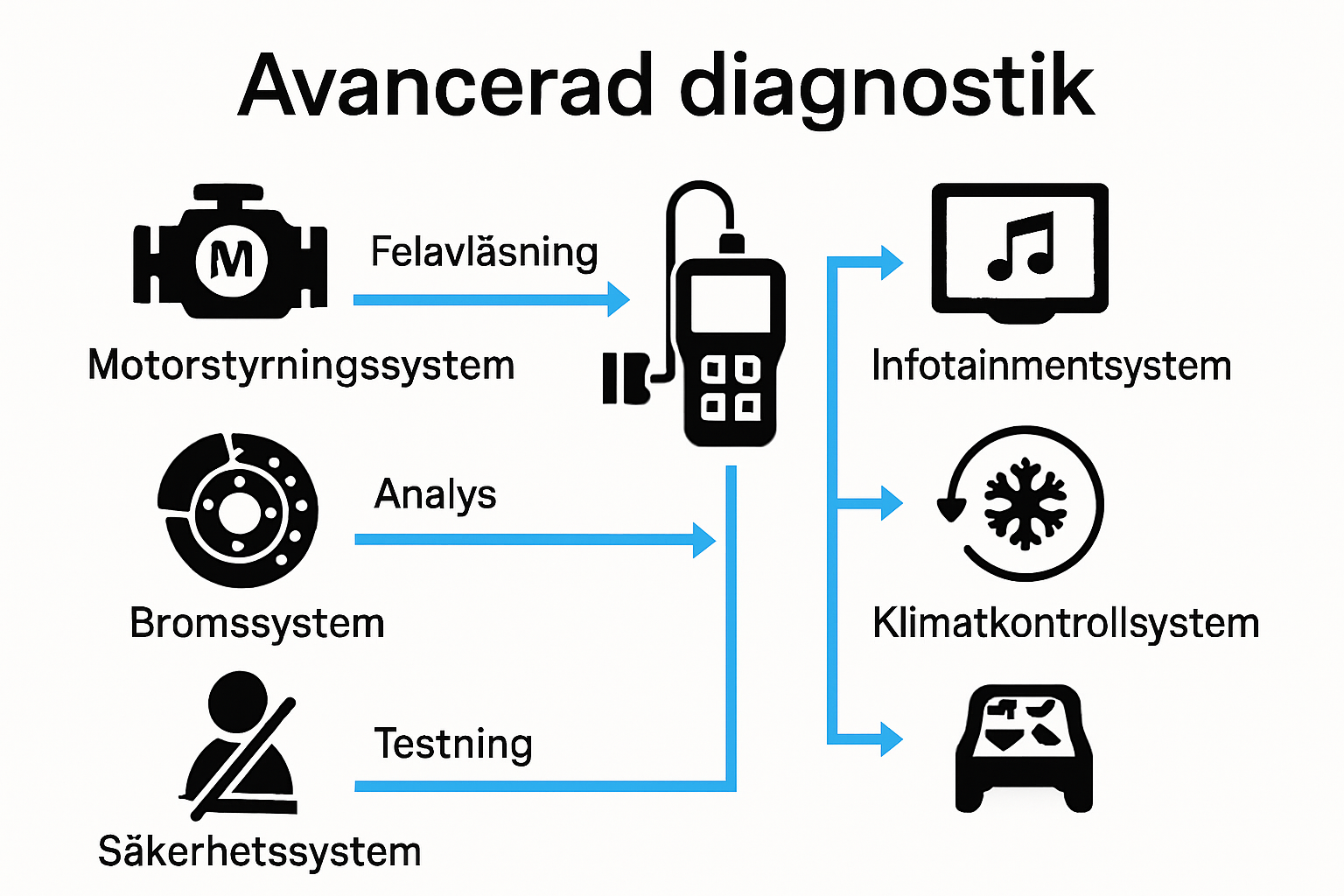
- Engine management system
- Braking system (ABS)
- Safety systems like airbags and seat belt tensioners
- Infotainment system
- Climate control system
To provide an overview of the most important electronic systems in modern vehicles, here is a summary of their function and role in troubleshooting.
| System | Function | Troubleshooting Role |
|---|---|---|
| Engine management system | Controls engine performance and emissions | Generates fault codes for engine malfunctions |
| Braking system (ABS) | Ensures safe braking | Identifies problems related to ABS function |
| Safety systems (airbag, belt) | Protects passengers in an accident | Warns of faults in safety functions |
| Infotainment system | Manages entertainment and information | Indicates electronic problems in comfort systems |
| Climate control system | Regulates cabin climate | Reveals faults in temperature or airflow |
Communication and data flow in car systems
Between these systems, continuous data communication occurs through a network called CAN (Controller Area Network). This network enables fast information transfer between different electronic components. Each sensor and control unit sends and receives signals, allowing the system to react immediately to changes.
When an anomaly is detected, the system generates a fault code that can be read by diagnostic tools. These codes provide technicians and vehicle owners with precise information about where and what type of problem has occurred. Modern diagnostic tools can not only read these codes but also perform complex analyses of vehicle data, making troubleshooting more precise and efficient than ever before.
Common techniques and tools in advanced car troubleshooting
Advanced car troubleshooting requires sophisticated techniques and intelligent tools that go far beyond traditional mechanical methods. Modern diagnostic technologies combine hardware, software, and advanced algorithms to provide accurate and detailed information about the vehicle's health status.
Diagnostic tools and their functions
Modern diagnostic tools are the heart of advanced troubleshooting. Scanners and diagnostic devices have evolved into powerful units that can communicate directly with the vehicle's electronic control system. For a deeper insight into modern troubleshooting technologies, we recommend our guide on the latest generation of fault code readers, which provides insight into the latest technical advancements.
Key tools for advanced car troubleshooting include:
- Multimeter for electrical measurements
- Oscilloscope for signal analysis
- OBD II scanners for fault code reading
- Pressure gauges for hydraulic systems
- Thermal cameras for thermal analysis
Advanced diagnostic techniques
Beyond physical tools, advanced car troubleshooting is about intelligent diagnostic strategies. Modern methods use predictive analysis and machine learning to anticipate potential problems before they arise. Technicians can now use software-based simulations and data analysis to identify complex system interactions that traditional methods would miss.
Technological advancements have made it possible to perform real-time diagnostics, where all the vehicle's systems are continuously monitored and analyzed. Artificial intelligence plays an increasingly important role in interpreting complex data signals and predicting possible future faults with astonishing precision. This means that troubleshooting is no longer just about fixing problems but also about preventing them.
How modern diagnostic systems change the troubleshooting process
Modern diagnostic systems have revolutionized the way we understand and manage vehicle maintenance. From being passive monitors, these systems have evolved into proactive intelligent networks that can predict, identify, and even prevent potential problems long before they become critical.
From reactive to predictive troubleshooting
Intelligent diagnostic systems have transformed the troubleshooting process from a reactive to a predictive strategy. Previously, vehicle maintenance was mostly event-driven, where problems were addressed only when they arose. For more detailed information on modern diagnostic techniques, you can explore our comprehensive guide on installation techniques, which provides deeper insights into the latest technological advancements.
Below is a comparison table showing the transition from traditional reactive troubleshooting to modern predictive troubleshooting and the differences between them.
| Aspect | Reactive Troubleshooting | Predictive Troubleshooting |
|---|---|---|
| Time of action | After a fault has occurred | Before faults manifest |
| Technology | Manual inspection and fault code reading | Data analysis and machine learning |
| Role of diagnostic system | Passive fault registration | Active monitoring and prediction |
| Examples of tools | OBD II scanner, multimeter | AI-based systems, real-time data analysis |
| Advantages | Easy to understand and apply | Prevents problems and saves resources |
Key features of modern diagnostic systems include:
- Real-time monitoring of vehicle components
- Automatic generation of detailed fault reports
- Data analysis with machine learning algorithms
- Ability to track vehicle history and trend patterns
- Integration with cloud-based diagnostic platforms
Technological innovations in vehicle diagnostics
Artificial intelligence and advanced sensor networks have made diagnostic systems incredibly sophisticated. Modern systems can now analyze hundreds of data points simultaneously, create complete digital representations of the vehicle's health status, and predict potential faults with astonishing precision. This means that vehicle owners and technicians can take preventative measures before minor problems escalate into costly repairs.
Advances in diagnostic systems have not only improved vehicle maintenance but also created entirely new opportunities for the automotive industry. By collecting and analyzing vast amounts of data, manufacturers can continuously improve vehicle design, identify system weaknesses, and develop more reliable and efficient vehicles.
The future of advanced car troubleshooting and technological trends
The automotive industry is undergoing a technological revolution that will radically change how we understand and manage vehicle diagnostics. Future troubleshooting technologies will not only monitor vehicle health but also predict, prevent, and optimize its performance with unprecedented precision.
Artificial intelligence and predictive diagnostics
Intelligent diagnostic systems will become synonymous with future vehicle maintenance. For a deeper understanding of the latest technological advancements, we recommend our guide on the future of car diagnostics, which provides insight into upcoming technological innovations.
Key trends in future vehicle diagnostics include:
- Autonomous self-diagnostic systems
- Cloud-based real-time monitoring
- Predictive maintenance through machine learning
- Integrated cybersecurity
- Personalized vehicle optimization
Technological breakthroughs and future visions
Future vehicle diagnostics will be closely intertwined with connected ecosystems. Advanced sensor networks, quantum computing, and artificial intelligence will enable an entirely new level of vehicle understanding. Diagnostic systems will not only identify problems but also suggest optimal solutions, predict component wear, and even schedule preventative maintenance based on individual driving profiles and usage patterns.
This technological evolution means that vehicle maintenance will become more proactive, predictable, and personalized. By combining big data analysis, machine learning, and real-time monitoring, future diagnostic systems will transform our relationship with vehicles from passive users to strategic partners in the vehicle's health and performance.
Take full control of your car troubleshooting with the right tools
Are you tired of uncertainty when a warning light comes on or when fault codes seem incomprehensible? After reading about advanced car troubleshooting, you will surely see the value in easily interpreting data from your car's complex systems. With the right diagnostic equipment, both car enthusiasts and professional mechanics can quickly identify problems, save time, and avoid expensive workshop visits. At Felkodslasare.se, you will find exactly the tools and knowledge required to understand your fault codes and act with confidence.
Experience for yourself how our fault code readers, OBD adapters, and comprehensive technical guides transform stress into control. Visit Felkodslasare.se today and discover how you can solve your car problems immediately – it's time to experience the difference with modern diagnostic tools!
Frequently asked questions
What is advanced car diagnostics?
Advanced car diagnostics involves analyzing and diagnosing complex faults in modern vehicles, including understanding electronic systems and using specialized tools to identify problems.
What tools are used in advanced car diagnostics?
Some common tools include OBD II scanners, multimeters, oscilloscopes, and pressure gauges. These tools help technicians identify and resolve electrical and mechanical problems in the vehicle.
How do modern diagnostic systems work in car diagnostics?
Modern diagnostic systems use real-time monitoring and data collection via sensors that communicate over a network, making it possible to detect faults and generate fault codes when anomalies occur.
Why is predictive diagnostics important?
Predictive diagnostics helps prevent problems before they arise. By using data analysis and machine learning, potential faults can be predicted, thereby saving time and money on repairs.