


Many believe that car troubleshooting is complicated and time-consuming. But did you know that over 70 percent of car problems can be detected early with simple checks and the right tools? This means that small efforts can actually save both your wallet and safety long before major repairs are needed.
Table of Contents
- Most common car problems and their causes
- Effective steps for quick car troubleshooting
- Practical tools and smart aids
- When should you contact a car workshop?
Quick Summary
| Takeaway | Explanation |
|---|---|
| Identify common engine problems | Look out for oil leaks and overheating. Early diagnosis can prevent serious damage. |
| Use the right diagnostic tools | Invest in an effective fault code reader to quickly read the car's system status and problems. |
| Follow a systematic troubleshooting process | Perform a visual inspection and check fluid levels before connecting the fault code reader to save time. |
| Regular inspection is crucial | Schedule regular maintenance to detect problems before they become costly repairs. |
| Seek professional help when needed | Do not ignore serious warning signs or complex problems; professional mechanics have the necessary expertise. |
Most common car problems and their causes
Car owners daily face various technical challenges that can affect vehicle performance and safety. Understanding the most common car problems helps you prevent serious damage and costly repairs. Through careful observation and early diagnosis, you can save both time and money.
Engine problems requiring attention
The engine is the heart of every vehicle, and its health is crucial for the car's overall functionality. The most common engine problems include oil leaks, overheating, and unexplained noises. Oil leaks can occur due to worn gaskets or damaged seals, which can gradually lead to serious engine damage if not addressed quickly.
Overheating is a critical problem that can occur when the cooling system is not functioning optimally. This can be due to low coolant levels, a defective water pump, or clogged radiators. Warning signs such as a rising temperature gauge or steam from the engine compartment should never be ignored. a guide on early warning signs can help you quickly identify potential problems.
Strange engine noises such as knocking, scraping, or whistling can indicate serious mechanical problems. These may indicate worn bearings, damaged valves, or fuel system issues. The sooner you identify and address these symptoms, the lower the risk of extensive damage.
Electrical systems and battery problems
Electrical failures are another common challenge for car owners. Battery problems often arise due to age, extreme temperatures, or lack of maintenance. A weak battery can cause starting difficulties, dim lighting, and disrupt the vehicle's electronic systems. Regular checks and battery replacement every three to four years can prevent unexpected breakdowns.
Starter motor problems are closely linked to battery issues. If you experience difficulty starting the car, stuttering, or failure to start at all, this could be due to worn components in the starter motor or insufficient power supply. Professional diagnostics can quickly identify the exact cause.
Brake system and tire wear
The brake system is crucial for road safety. Common problems include worn brake pads, damaged brake discs, and brake fluid leaks. Signs such as screeching noises when braking, a soft brake pedal, or vibration may indicate that the brake components need to be checked.
Tire wear is an often overlooked problem that directly affects the car's handling and safety. Uneven wear can indicate problems with wheel alignment, tire pressure, or suspension system. Regular inspections and tire rotation can extend their lifespan and improve the driving experience.
By being proactive and attentive to these common car problems, you can prevent major damage and ensure a safer and more reliable driving experience. Regular service, careful observation, and early diagnosis are key to keeping your car in top condition.
Here is an overview of common car problems, their causes, and typical warning signs. The table helps you quickly identify which system might be affected, possible reasons, and what you should pay attention to.
| Problem Area | Typical Causes | Warning Signs |
|---|---|---|
| Engine | Oil leaks, overheating, worn parts | Spots under car, hot engine, noises |
| Electrical Systems | Aged battery, faulty components | Difficulty starting car, dim lights |
| Brake System | Worn pads/discs, leaks | Screeching brakes, soft pedal |
| Tires | Incorrect tire pressure, wrong wheel alignment | Uneven wear, vibrations |
Effective steps for quick car troubleshooting
Car troubleshooting can be a challenging task that requires a methodical approach and the right tools. By following systematic steps, you can quickly identify and resolve problems before they develop into more complex and costly repairs. The goal is to understand your car's signals and act proactively.
Prepare the right diagnostic tools
Modern cars are advanced computer systems on wheels, making diagnostics more complex than before. The first and most important preparation is to have the right equipment. A modern fault code reader for car diagnostics is a crucial tool for quick and accurate troubleshooting. These devices can interpret fault codes generated by your car's computer system and provide you with exact information about potential problems.
A good fault code reader should be able to communicate with the car's OBD2 system, meaning it can read and clear fault codes, display real-time data, and perform basic system diagnostics. Invest in a quality product that supports multiple car brands and has updated software.
In addition to the fault code reader, it's smart to have access to some basic hand tools such as screwdrivers, pliers, and a multimeter. These tools can help you perform simple checks and measurements to complement the electronic diagnostics.
Systematic troubleshooting process
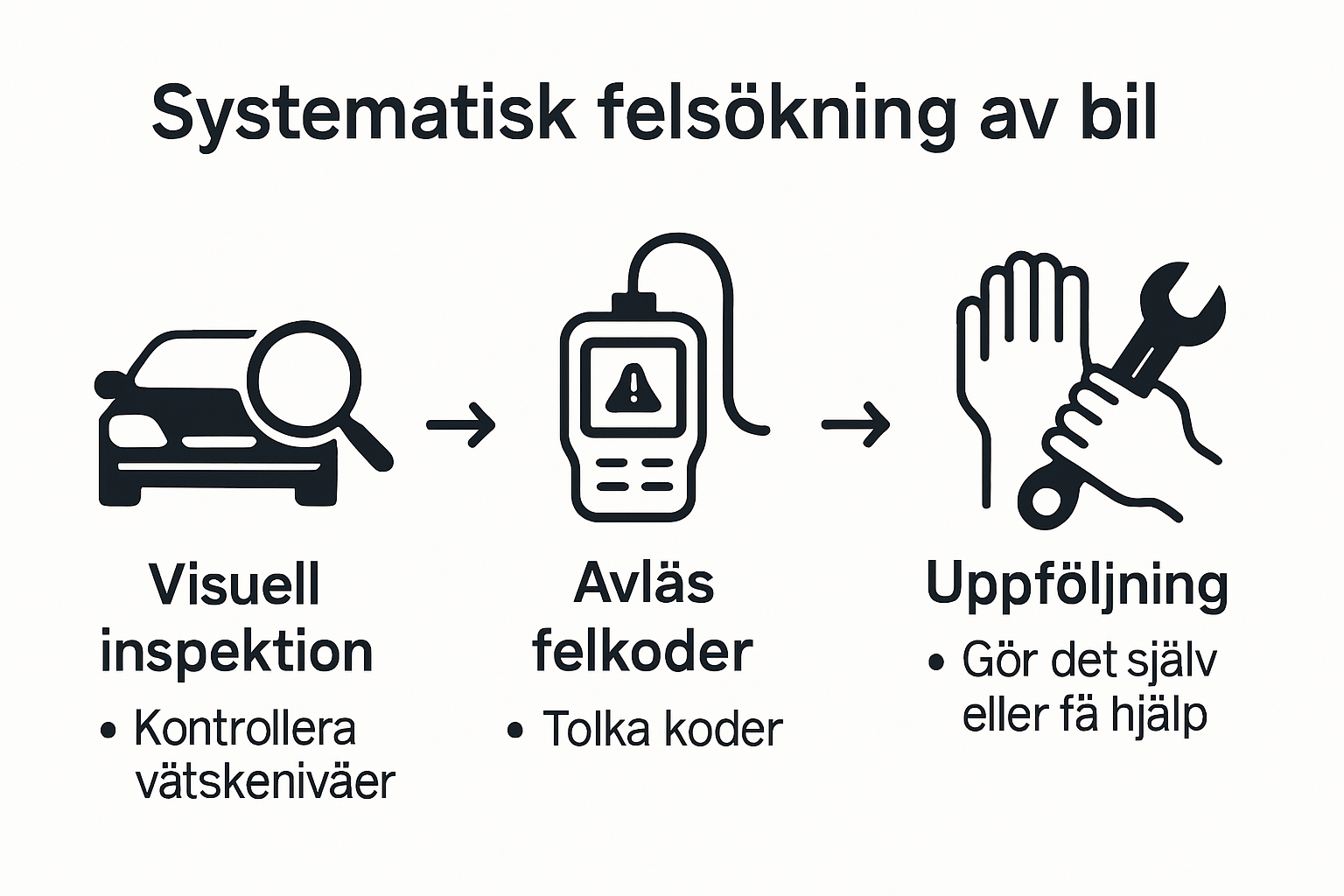
A structured troubleshooting process is key to effective diagnosis. Always start with a visual inspection. Look for obvious signs of wear, damage, or loose components. Check fluid levels such as engine oil, coolant, and brake fluid. Uneven fluid levels or signs of leakage can indicate underlying problems.
Then, connect your fault code reader and read the car's fault codes. Each fault code represents a specific problem in the car's system. Some codes may indicate less serious problems such as a loose fuel cap, while others may point to more critical mechanical failures. Document the codes and search for information about their specific meanings.
Once you have identified the fault codes, perform a series of systematic tests. This may include checking electrical systems, battery voltage, fuel pressure, and other critical components. Be methodical and document your results. If you are unsure how to interpret the results, consult a professional mechanic.
Preventive maintenance and regular inspection
Preventive maintenance is the most effective way to avoid extensive car problems. Create a regular maintenance plan that includes monthly basic checks and follow the manufacturer's recommended service intervals. This means checking tire pressure, brake wear, oil levels, and other critical systems.
Technology is evolving rapidly, and modern fault code readers are becoming increasingly sophisticated. They can now not only identify problems but also provide recommendations for potential solutions. By keeping your diagnostic equipment updated, you ensure that you have access to the latest tools for effective car troubleshooting.
In conclusion, effective car troubleshooting involves a combination of the right equipment, systematic methodology, and proactive thinking. Pay attention to your car's signals, invest in good diagnostic tools, and do not hesitate to seek professional help when needed. By following these steps, you can save time, money, and ensure a safe and reliable driving experience.
Here is a summary table of important steps for effective car troubleshooting, including purpose and examples of tools that can be used at each stage. It provides a clear overview of the process from beginning to end.
| Step | Purpose | Example of Tool |
|---|---|---|
| Visual inspection | Find obvious damage/wear | Flashlight, mirror |
| Fluid level check | Detect leaks and low fluid levels | Dipstick, measuring cup |
| Read fault codes | Identify system faults via diagnostics | Fault code reader (OBD2) |
| Electrical system test | Check battery and electrical functions | Multimeter |
| Systematic tests | Check detailed problems | Diagnostic tool, measuring instruments |
Practical tools and smart aids
The evolution of technology has revolutionized car troubleshooting, making it more accessible to both amateurs and professional mechanics. Smart tools and innovative aids have made it easier than ever to understand and diagnose car health. With the right equipment, you can now perform advanced checks and preventive maintenance directly from your smartphone or with compact diagnostic devices.
Digital diagnostic tools
Modern car diagnostic tools have become more powerful and user-friendly. detective work with fault code readers has changed how we understand the car's technical status. OBD2 scanners and advanced fault code readers can now not only read fault codes but also provide detailed explanations of the problem's origin and possible solutions.
Smartphone applications have also become an invaluable tool for car troubleshooting. Many apps can connect directly to the car's diagnostic system via Bluetooth adapters and provide real-time information about the vehicle's performance. These apps can track fuel consumption, engine status, tire pressure, and many other critical parameters.
Professional diagnostic tools now include advanced features such as real-time diagnostics, historical data analysis, and even predictive maintenance alerts. Some systems can predict potential problems before they arise, giving car owners the opportunity to take preventive measures.
Multifunctional measuring instruments
In addition to digital tools, there are several analog and digital measuring instruments that are crucial for effective car troubleshooting. Multimeters are still one of the most important tools for electrical system checks. Modern multimeters have improved accuracy and can measure voltage, current, and resistance with extremely high precision.
Diagnostic cameras and borescopes have also become more accessible to ordinary car owners. These tools allow you to inspect hard-to-reach parts of the engine, transmission, and other components without having to dismantle the entire system. Wireless versions can even send live video directly to your smartphone, making diagnostics even easier.
Pressure and temperature gauges are other critical instruments that help identify potential problems. Modern versions are compact, digital, and provide immediate feedback on the system's status. They can quickly reveal problems with the cooling system, brakes, and other critical components.
Smart accessories and mobile solutions
Technological innovations have created a new generation of smart car aids. Portable battery testers, wireless signal amplifiers, and intelligent charging systems have made car maintenance more accessible than ever. Some modern tools can even send alerts directly to your smartphone when they detect potential problems.
Even accessories like OBD2 adapters have evolved. They can now not only read fault codes but also provide detailed information about the car's performance, fuel efficiency, and driving patterns. Some advanced systems can even provide advice on how to improve your driving to save fuel and reduce wear and tear.
In conclusion, the development of technology has made car troubleshooting more democratic and accessible. From sophisticated digital tools to smart mobile solutions, there is now a wide range of aids that can help you understand and maintain your car. Invest in the right tools, stay updated on the latest technological advancements, and be proactive in your vehicle maintenance.
When should you contact a car workshop?
Knowing when to hand over your car to a professional workshop is crucial for maintaining the vehicle's safety, performance, and lifespan. While many car owners are skilled at basic maintenance, there are situations where expert help is necessary. Recognizing these occasions can prevent more expensive repairs and potentially dangerous driving conditions.
Urgent warning signs requiring immediate attention
There are certain warning signs that should never be ignored. When your car's dashboard lights up warning lights such as engine failure, brake system, or oil pressure, it's time to immediately contact a professional mechanic. a guide to critical moments in troubleshooting can help you understand the severity of these warnings.
Unusual noises from the engine, such as knocking, scraping, or whistling sounds, indicate potential mechanical problems. These can indicate everything from worn bearings to serious engine damage. The sooner you react, the lower the risk of extensive and costly repairs.
Sudden changes in the car's driving characteristics, such as jerky acceleration, reduced braking power, or abnormal steering response, are also signs that you need professional help. These symptoms can indicate problems with the transmission, brake system, or chassis components.
Regular maintenance and preventive service
In addition to urgent situations, there are planned occasions when you should visit a car workshop. Manufacturer's service intervals are not just recommendations but critical times to ensure the car's optimal performance. Regular service includes oil changes, brake inspections, wheel alignment, and replacement of key components such as belts and fluids.
Older vehicles or high-mileage cars require more frequent professional attention. Components such as fuel systems, transmission, and electrical systems become more prone to developing problems over time. An experienced mechanic can perform thorough diagnostic tests that go beyond what common troubleshooting tools can reveal.
Special situations such as preparing for long journeys, driving in extreme weather conditions, or after minor accidents also warrant a workshop visit. These occasions provide an opportunity for a thorough review of the vehicle's condition and the prevention of potential problems.
Complex Technical Problems and Special Diagnostics
Modern cars are complex computer systems with advanced electronic components. Some problems require specialized equipment and deep technical knowledge that goes beyond common diagnostic tools. Electronic failures in control systems, complex transmission problems, and advanced electrical system failures require expertise.
When your own diagnostic tools do not provide sufficient information or when fault codes are difficult to interpret, it's time to consult a professional. Certified technicians have access to brand-specific diagnostic tools and technical documentation that can identify subtle problems.
Also, pay attention to warranty terms. Some repairs and maintenance must be performed by authorized workshops to maintain the vehicle warranty. Improperly performed repairs can jeopardize the validity of the warranty.
In summary, it's about balancing your own knowledge with professional expertise. Trust your instincts, pay attention to your car's signals, and don't hesitate to seek professional help when the situation demands it. A proactive approach to car maintenance will save you both money and potential safety risks in the long run.

Frequently Asked Questions
How can I identify engine problems early?
It's important to be aware of signs such as oil leaks, overheating, and strange noises from the engine. By performing regular checks, you can detect potential problems early that can be prevented before they develop into serious damage.
What tools do I need to troubleshoot my car?
Good car troubleshooting requires the right tools such as a fault code reader, screwdrivers, pliers, and a multimeter. These tools help you perform diagnostics and basic checks on your vehicle.
When should I contact a car workshop?
If you see warning lights on the dashboard, hear unusual noises from the engine, or experience changes in the car's driving characteristics, you should immediately contact a professional mechanic. Regular maintenance and service intervals are also crucial to ensure the car's performance.
How often should I perform preventive maintenance on my car?
Regular inspection and preventive maintenance should be carried out according to the manufacturer's recommendations, usually at intervals of every three to six months. This includes checks of oil levels, tire pressure, and brake systems. Regular maintenance can prevent costly repairs in the future.
Stop Unnecessary Car Problems – Get Control with the Right Tools
Do you feel uncertain when a warning light suddenly illuminates or you hear strange engine noises? Interpreting fault codes and finding the right solution can feel overwhelming for many car owners. In this article, you will learn how simple checks and smart diagnostic tools can make your everyday life both safer and cheaper. With your own fault code reader, uncertainty decreases, and you take control of your car's health right at home in your garage. Read more about the power of fault code readers and how to get started in our guide on decoding fault codes.

Get your essential diagnostic tools at Felkodslasare.se and take the next step towards safer car ownership. Discover our smart car diagnostic solutions today and say goodbye to expensive workshop visits when you can easily troubleshoot yourself. Start by choosing the right tools – your safety and wallet will thank you.
Recommended
- Optimize Your Company's Vehicles with ELM327: A Guide for Fleets – Felkodsläsare
- Common Fault Codes and What They Mean: A Guide for Car Owners – Felkodsläsare
- How to Connect ELM327 to Your Car to Read Fault Codes Smoothly – Felkodsläsare
- A Deep Dive into Vehicle Diagnostics with Fault Code Readers – Felkodsläsare