


More and more car owners are considering handling car service themselves, and it's easy to understand why when you see the opportunities to keep money in your pocket. Unexpectedly, a simple task like changing oil, air filters, or spark plugs can actually lead to savings of several thousand kronor per year. But here's the real surprise. The greatest value may not lie in the money you save, but in how every small job increases your confidence and knowledge about the car, and can also prevent costly future repairs.
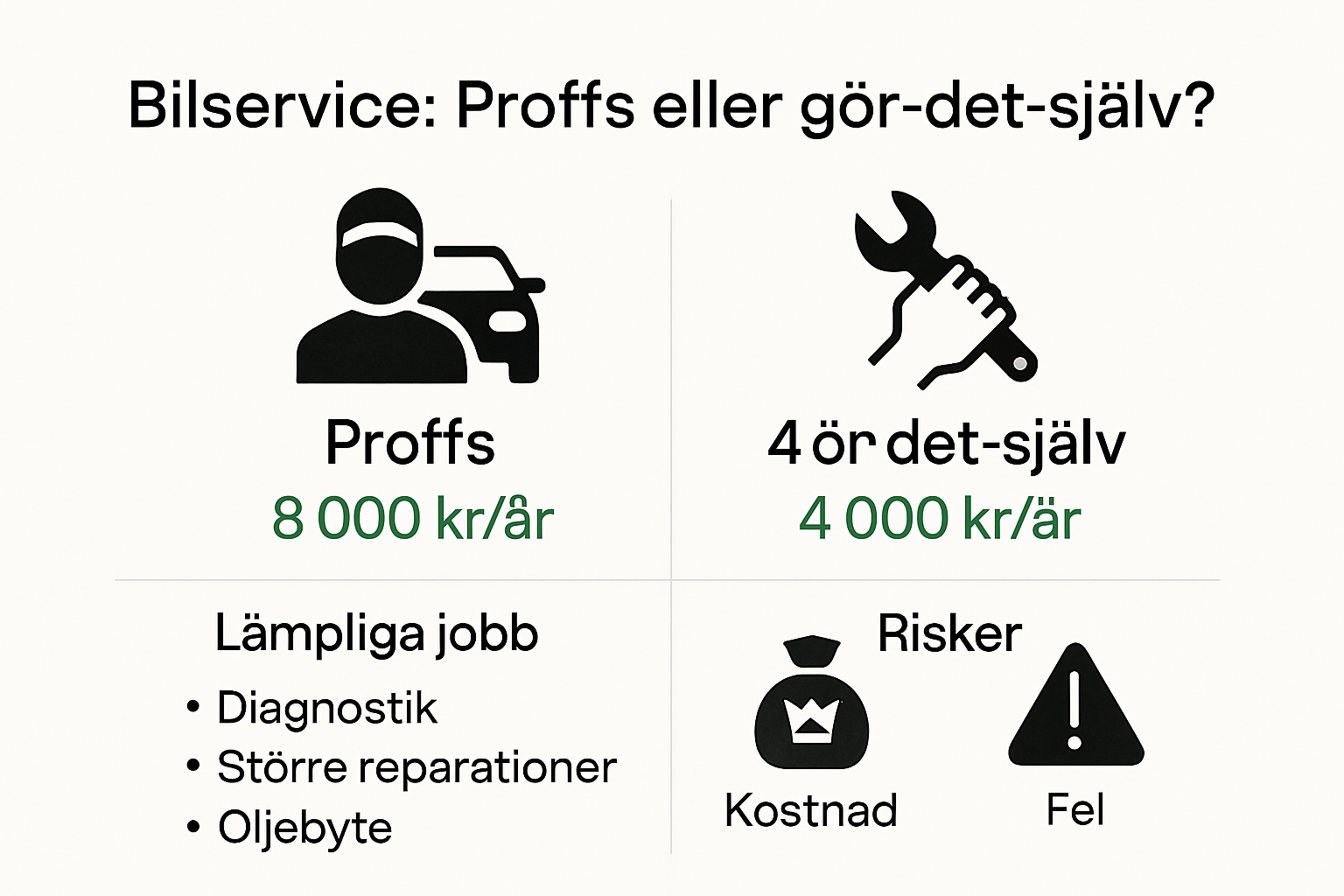
Table of Contents
- Benefits and Risks of DIY Car Service
- Tools and Equipment Needed at Home
- Common Service Jobs and Step-by-Step Guide
- When It's Smart to Hire a Workshop
Quick Summary
| Takeaway | Explanation |
|---|---|
| DIY car service saves money | Performing simple service jobs provides significant annual financial savings. |
| Right tools are crucial | A basic tool kit increases your chances of successfully servicing your car at home. |
| Know your limitations | Be honest about your technical competence to avoid costly mistakes or damage. |
| Safety first during service | Always use appropriate safety equipment and be careful with hot parts. |
| Professional help when needed | For complex problems or diagnostics, it is usually best to consult experts. |
Benefits and Risks of DIY Car Service
Car service is a necessary part of owning a vehicle, and more and more car owners are considering the possibilities of performing certain maintenance tasks themselves. Taking care of your car on your own can be both rewarding and cost-effective, but it is also important to understand the potential benefits and risks.
Economic Benefits of DIY Car Service
The most obvious advantage of performing your own car service is the financial savings. Professional workshops often charge high hourly rates for work that you could potentially do yourself. Simple tasks like oil changes, air filter replacements, and spark plug changes can be done at home with the right tools and knowledge. An average saving can amount to several thousand kronor per year, depending on the car model and type of maintenance.
But the savings are not just about direct costs. By learning basic car service, you can prevent more expensive repairs later. Regular inspection and maintenance reduce the risk of major mechanical problems that can cost many times more than preventive measures. Learn more about diagnostic tools that can help you identify potential problems early.
Risks and Challenges of DIY Car Service
Despite the financial benefits, there are significant risks associated with performing car service yourself. Modern cars are increasingly technologically complex, with advanced electronic systems that require specialized knowledge and equipment. An incorrect adjustment or installation can lead to serious damage to the vehicle or jeopardize your safety.
Another important aspect to consider is the warranty terms. Some car manufacturers may void the warranty if service is not performed by authorized workshops. This means that money saved in the short term can result in significantly higher costs if something goes wrong and the warranty is no longer valid.
In addition, DIY car service requires an investment in the right tools and equipment. Diagnostic tools, jacks, special wrenches, and other necessary instruments can be costly. For some car owners, this initial investment can eat up the potential savings.
Crucial factors to consider are your technical competence, available time, and comfort with mechanical work. Not all car owners have the knowledge or interest required to perform service themselves. It is important to be honest about your own ability and not start work that exceeds your skill level.
In summary, DIY car service offers potential for savings and personal development, but it requires careful planning, the right equipment, and a realistic assessment of your skills. Start with simple maintenance tasks, educate yourself continuously, and do not be afraid to seek professional help when needed.
Tools and Equipment Needed at Home
When you decide to perform car service at home, the right equipment is crucial for success. A well-equipped home workshop can make the difference between successful maintenance and a potential disaster. Investing in the right tools is the first step towards becoming a skilled home mechanic.
Basic Tool Kit for Car Service
There are certain core tools that every car owner should have in their arsenal. A robust toolbox with combination wrenches in various sizes is fundamental. Spanners, hex wrenches, and torque wrenches form the basis for most repairs. In addition, you will need specialized automotive tools such as oil filter wrenches, spark plug wrenches, and a solid jack to safely lift the car.
Electric tools significantly increase efficiency. A good impact wrench can save time and effort during tire changes and other heavy tasks. A battery-powered screwdriver with various bits is also invaluable for modern cars with tight fasteners and electronic components. Explore our diagnostic tool guides to understand which special tools are suitable for your specific car model.
Diagnostic Equipment for Modern Vehicles
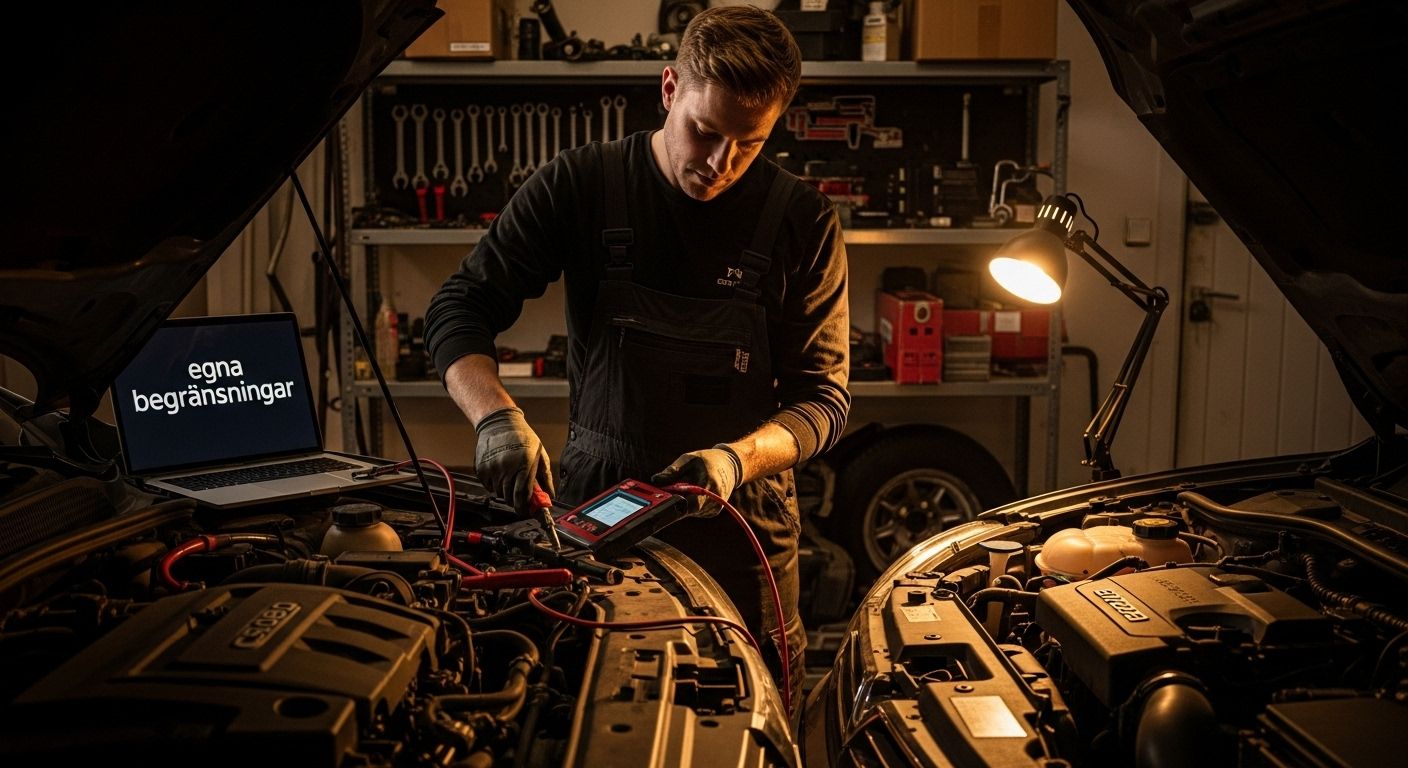
Modern cars are essentially computers on wheels, requiring sophisticated diagnostic equipment. An OBD2 scanner is now almost mandatory for serious car enthusiasts. These devices can read fault codes, monitor vehicle data in real-time, and help you understand your car's health. Prices range from simple plug-in units to advanced systems with comprehensive analysis features.
In addition to scanners, you will need multimeters for electrical tests, pressure gauges for tires and brake systems, and specific measuring instruments for various car systems. A good digital voltmeter can help you diagnose electrical problems quickly and efficiently. Some advanced models can even wirelessly transfer data to your smartphone, simplifying troubleshooting.
Safety equipment should never be neglected. Heavy-duty gloves, safety glasses, and a robust jack with jack stands are absolutely essential. You will also need dry, clean rags, oil collection pans, and protective clothing to handle fluids and dirt safely. A good rule of thumb is never to compromise on safety to save a few kronor.
Every investment in tools and equipment should be well thought out. Start with basic tools and gradually build up your arsenal. Buy quality over quantity - cheap tools can cost you more in the long run through broken parts or inefficient service. Look for brands with a good reputation in car repair and read user reviews carefully.
In summary, home-based car service requires more than just willingness and courage. It's about having the right equipment, understanding how the tools are used, and a genuine desire to learn. Invest wisely, educate yourself continuously, and do not hesitate to seek professional help when the complexity exceeds your current skills.
Common Service Jobs and Step-by-Step Guide
Performing basic car service at home can be both satisfying and cost-effective. With the right knowledge and preparation, you can carry out several routine maintenance tasks that previously seemed complex. This guide will cover some of the most common service jobs that most car owners can perform with basic tools and a little technical courage.
Oil Changes and Fluid Maintenance
Oil changes are one of the most basic and critical service tasks for your car. The process begins by gathering the right equipment: oil filter wrench, new oil, oil filter, protective gloves, and an oil drain pan. Start by briefly warming up the engine to make the oil more fluid, but turn off the engine before you start working. Place the oil drain pan under the oil drain plug and carefully loosen the plug. Let all the old oil drain completely.
Once the oil has drained, replace the oil filter by unscrewing the old one and lubricating the new filter's seal with a little clean oil. Install the new filter by hand and tighten according to the manufacturer's specifications. Add new oil through the filler neck, check the level with the dipstick, and make sure not to overfill. Learn more about diagnostic tools that can help you monitor engine health after an oil change.
Air Filter and Spark Plug Replacement
The air filter plays a crucial role in engine performance and fuel efficiency. Locate the air filter housing, which is usually located on top of the engine and is easy to identify. Remove the clips or screws that hold the filter cover in place. Note the direction of the old filter when you remove it - the new filter should be installed in the same direction.
Spark plug replacement requires a bit more precision. Work one cylinder cycle at a time to avoid confusion. Use the correct spark plug wrench to loosen and remove the old spark plugs. Check the gap on the new spark plugs with a feeler gauge and adjust if necessary. Carefully insert the new spark plugs and tighten them to the correct torque - too tight can damage the threads, too loose can cause performance problems.
Safety is paramount during all these tasks. Make sure you have adequate ventilation, wear safety glasses and gloves. Be careful with hot engine parts and make sure you have the right tools for each specific task. If anything feels unsafe or complex, do not hesitate to seek professional help.
These service jobs require patience and thoroughness. Start carefully, follow the instructions meticulously, and document your actions. Each successful maintenance increases your competence and confidence. Remember that continuous learning and practical experience are key to becoming a skilled home mechanic.
In summary, DIY car service is not just about saving money, but also about understanding and building a deeper relationship with your vehicle. With the right preparation, tools, and a willingness to learn, you can perform many routine service tasks yourself and thus both save money and increase your mechanical competence.
When It's Smart to Hire a Workshop
Despite the advantages of DIY car service, there are times when it is wise and necessary to hand over the car to professional mechanics. Knowing the line between your own skills and the need for expert help can save you both money and potential safety risks. This guide will help you identify situations where professional workshop service is the smartest choice.
Complex Electronic Systems and Diagnostics
Modern cars are more advanced than ever before, with sophisticated electronic systems that require specialized knowledge and equipment. When warning lights come on or complex fault codes appear, basic diagnostic tools are often not enough. Professional mechanics have access to advanced scanners and diagnostic systems that can identify underlying problems that are difficult for an amateur to detect. Read more about advanced troubleshooting to understand the complexity of modern vehicle diagnostics.
Safety-critical systems such as brakes, steering, and electrical systems require special attention. Incorrect repairs can lead to potentially life-threatening situations. If you are unsure about the extent of the problem or lack specific technical expertise, it is always better to consult a professional mechanic. Their training and experience ensure that repairs are carried out according to manufacturer specifications and safety standards.
Warranty Terms and Specialized Repairs
Many car manufacturers' warranties set specific requirements for service and repairs. Certain tasks must be performed by authorized workshops to maintain the warranty. Complex repairs affecting the transmission, engine, or electronic control systems should always be handled by certified technicians. In addition, some specialized vehicles, such as hybrid cars or electric vehicles, require specific expertise that goes beyond general mechanical knowledge.
Financially, it may seem tempting to try to perform advanced repairs yourself, but the risk of costly mistakes is high. An incorrect repair can lead to significantly more expensive damage than the original problem. Professional workshops also offer a warranty on work performed, which provides you with additional security.
Certain signs immediately indicate the need for professional help. Unusual noises from the engine or transmission, strong vibrations, brake problems, or noticeable changes in the car's driving characteristics are warning signs that require immediate expert assessment. Experienced mechanics can quickly diagnose and fix problems before they develop into more extensive and costly repairs.
There are also situations where technical expertise and specialized tools are crucial. Jobs that require welding, extensive disassembly of components, or precision beyond common hand tools are best suited for professionals. Modern cars have complex systems that require specific knowledge of different car brands and models.
In summary, the choice between DIY service and workshop repair is about being honest with your skills and understanding the complexity of the car. Develop your mechanical knowledge gradually, but do not be afraid to seek professional help when the situation demands it. A balanced approach that combines your own basic service with professional expertise when needed is the key to long-term vehicle health and safety.
Frequently Asked Questions
How much can one save by doing car service oneself?
Performing DIY car service can lead to savings of several thousand kronor per year, depending on the tasks you perform and the car model.
What tools are needed for DIY car service at home?
A basic tool kit should include combination wrenches, spanners, a jack, oil filter wrenches, and a spark plug wrench to perform common service jobs.
What are the most common tasks in DIY car service?
Common tasks include changing oil, air filters, and spark plugs, as well as checking and refilling fluids.
When is it better to hire a professional workshop instead of doing the job yourself?
It is better to hire a workshop for complex problems involving electronic systems, diagnostics, or if the car's warranty conditions could be affected by self-repairs.
Take control of your car's health and avoid costly mistakes
Do you want to eliminate uncertainty about fault codes and unnecessary workshop visits? With the right diagnostic tools, you open up completely new possibilities to service your car yourself and feel confident with every maintenance task. This is the key to saving money and preventing problems, just as the article describes. Here you will find smart diagnostic solutions that allow you to read fault codes, interpret what your car is really trying to tell you, and make the right decisions right at home in your garage.

Invest in your own knowledge and discover how easy it is to read fault codes and find the right spare parts before problems escalate. Visit felkodslasare.se to find products, guides, and tips that give you full control over car service and diagnostics. Start today and avoid surprises when it comes to both your car and your wallet.
Recommendation
- Discover the Differences between Various ELM327 Units – Fault Code Reader
- Fault Code Readers for Different Car Models: Find the Right Compatibility
- DIY Repair Guides with ELM327: Take Control of Your Vehicle! – Fault Code Reader
- ELM327: The Key to Smarter Agriculture with a Focus on Brake Fluid Testers – Fault Code Reader