

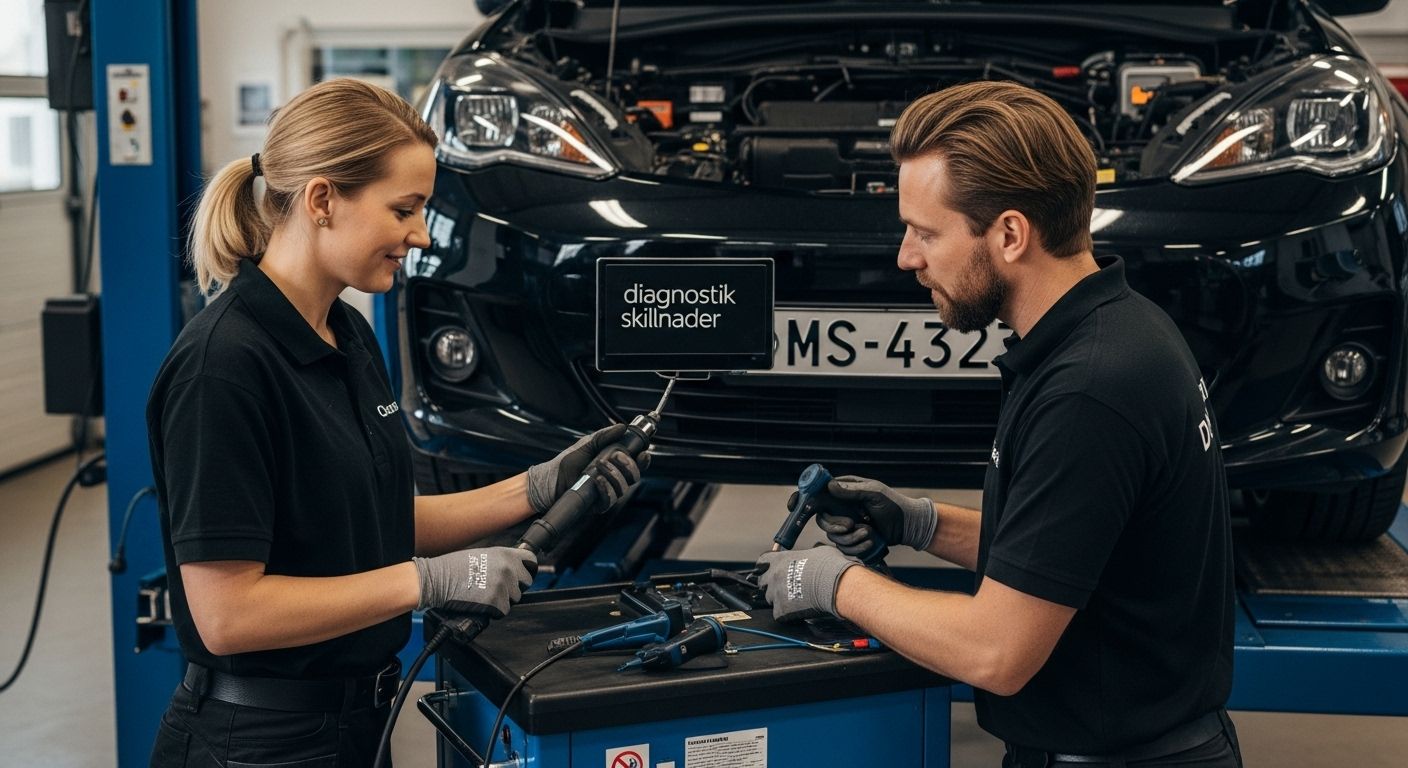
Electric cars are rapidly taking over on Swedish roads, and their technical systems are changing everything we thought we knew about car maintenance. Imagine that a modern electric car monitors hundreds of sensors and electronic components in real-time as you drive. The strange thing is that old methods and classic fault code readers are suddenly useless. Real troubleshooting requires completely new tools, and both car owners and workshops face challenges that few have been prepared for.
Table of Contents
- What distinguishes EV diagnostics from petrol cars
- Common diagnostic systems in EVs in Sweden
- Challenges and opportunities for workshops and technicians
- Tips for car owners and hobbyists when troubleshooting
Quick summary
| Takeaway | Explanation |
|---|---|
| EVs require specialized diagnostics | The advanced electronic systems of EVs mean that traditional methods are not sufficient for accurate troubleshooting. |
| Investment in new tools is essential | Workshops must invest in specialized diagnostic tools to handle modern electric vehicles. |
| Skills development is crucial | Mechanics must be trained in electrical systems to effectively work with EVs. |
| Following warning signs is important | Car owners must be attentive to warning signs to identify problems early. |
| Continuous learning improves troubleshooting | Staying updated on technology and diagnostic methods is important for effective EV troubleshooting. |
What distinguishes EV diagnostics from petrol cars
Electric cars represent a completely new generation of vehicles that require different diagnostic methods compared to traditional petrol cars. Unlike conventional vehicles with mechanical systems, EVs are dominated by advanced electronic components and software-based control systems that require specialized diagnostic approaches.
Electronic systems and complex communication infrastructure
In modern electric cars, diagnostics are heavily dependent on complex electrical networks and integrated computer systems. Under the bonnet, there are no longer mechanical components such as pistons and camshafts, but instead a sophisticated network of electrical devices that communicate continuously. These systems require specialized diagnostic tools that can communicate directly with the car's central computer system and interpret complex electronic signals.
The electric drivetrain in EVs differs fundamentally from petrol engines. Instead of mechanical components, EVs rely on electric motors and advanced battery systems that require completely different diagnostic protocols. Technicians must understand how battery health, thermal management, and charging cycles affect the vehicle's overall performance.
Specialized diagnostic protocols and software-based troubleshooting
While petrol cars have traditionally relied on mechanical troubleshooting methods, EVs largely rely on software-based diagnostics. Modern electric cars have built-in systems that continuously monitor hundreds of sensors and electronic components. Learn more about advanced diagnostic techniques that enable real-time monitoring and proactive troubleshooting.
Diagnostic tools for EVs must be able to handle:
- Battery health monitoring: Detailed analysis of battery capacity, charging cycles, and thermal performance
- Electrical system diagnostics: Identification of faults in complex electrical networks
- Software updates: Ability to perform remote diagnostics and system updates
Technicians working with EVs need specialized training and advanced diagnostic tools that can communicate with the latest electric vehicle systems. This requires a completely new skill set compared to traditional mechanical vehicle troubleshooting.
To clearly illustrate the key differences between elbil (electric car) and bensinbil (petrol car) diagnostics, the following comparison table highlights the main contrasts discussed in this section.
| Aspect | EV diagnostics | Petrol car diagnostics |
|---|---|---|
| Dominant systems | Electronic control systems, software | Mechanical components |
| Troubleshooting tools | Specialized electro-digital tools | Traditional fault code readers, mechanical |
| Communication protocols | CAN, specific EV protocols | Standardized protocols |
| Diagnostic method | Real-time monitoring, software-based | Mechanical and manual inspection |
| Competence requirements | Electronics knowledge, software updates | Mechanical knowledge |
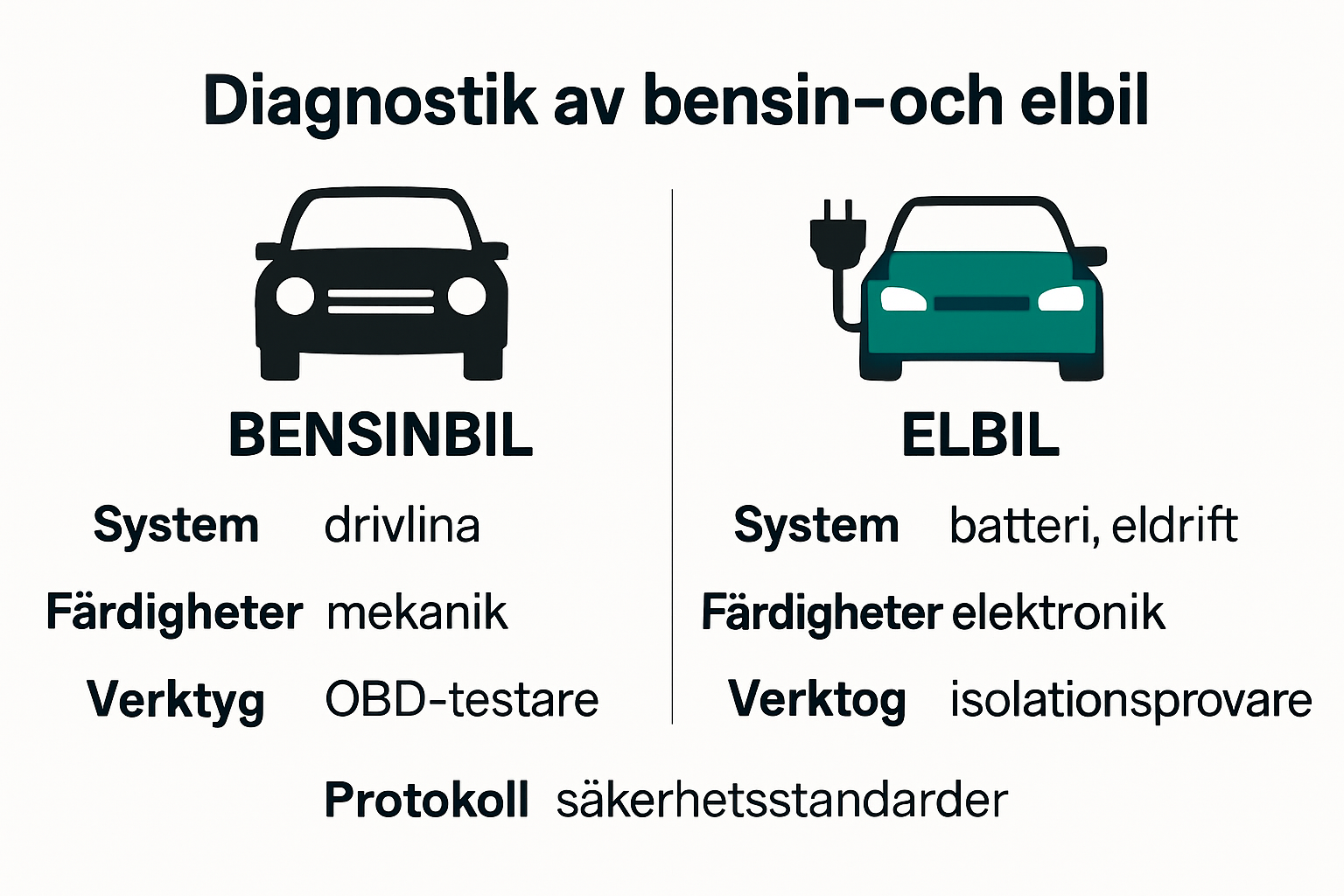
In summary, EV diagnostics represent a revolutionary change in vehicle technology. They require more sophisticated electronic diagnostic methods, a deep understanding of electrical systems, and continuous updating of technical expertise. For car owners and workshops, this means a necessary shift towards more advanced and software-based diagnostic strategies.
Common diagnostic systems in EVs in Sweden
Diagnostic systems for electric cars have developed rapidly and become increasingly sophisticated in the Swedish automotive industry. Modern EVs rely on advanced electronic systems that continuously monitor and analyze the vehicle's performance, which differs significantly from traditional diagnostic methods.
Integrated diagnostic platforms
Modern EVs in Sweden use holistic diagnostic platforms that combine several monitoring systems. These systems are designed to collect and analyze data from various electrical components in real-time. Central control systems gather information from hundreds of sensors located in batteries, electric motors, charging systems, and other critical components.
Battery diagnostics are at the core of these systems. Advanced monitoring systems continuously analyze battery health by measuring parameters such as cell temperature, voltage levels, charging cycles, and energy efficiency. Explore advanced diagnostic techniques that enable precise monitoring of EV electrical systems.
Communication protocols and troubleshooting systems
EVs in Sweden use specialized communication protocols such as CAN (Controller Area Network) and more modern protocols specifically developed for electric vehicles. These systems enable fast and comprehensive communication between various electronic components, which is crucial for effective diagnostics.
Diagnostic tools for EVs must be able to:
- Real-time monitoring: Continuous collection and analysis of system data
- Fault code interpretation: Identify and classify specific electronic faults
- System updates: Perform remote diagnostics and software updates
Technical experts and workshops in Sweden continuously invest in specialized diagnostic tools that can communicate with the latest electric vehicle systems. This requires specialized training and an understanding of complex electronic systems.
Future diagnostic systems for EVs are likely to become even more integrated and intelligent. The trend is towards more predictive diagnostics where systems can anticipate potential faults before they occur, which will improve vehicle reliability and reduce maintenance costs.
For Swedish car owners and workshops, this means continuous adaptation to new technology. Understanding these advanced diagnostic systems is becoming increasingly important as electric vehicles become more common on Swedish roads. Competence in electronic troubleshooting, battery diagnostics, and software management will be crucial for efficient service and maintenance of modern EVs.
Challenges and opportunities for workshops and technicians
The transition to electric vehicles creates a profound change for workshops and technicians in Sweden. This transformation involves both significant challenges and exciting opportunities for the industry, requiring a complete overhaul of existing diagnostic and repair strategies.
Skills transformation and training needs
Traditional mechanics must undergo extensive skills development to meet the new demands of electric vehicle systems. The difference between traditional petrol engines and electric drive systems is so vast that previous mechanical knowledge is no longer sufficient. Now, a deep understanding of electronic systems, battery technology, and advanced software-based diagnostic methods is required.
Training programs must be developed quickly to cover the new technical competencies. Technicians need to learn how to handle high-voltage systems, understand the complexity of batteries, and master specialized diagnostic tools. Learn more about technical development strategies that help workshops keep up with technological advancements.
Investments in new equipment and technical systems
Workshops face significant financial investments to adapt to EV technology. Specialized diagnostic tools, safety equipment for high-voltage systems, and software-based troubleshooting systems require substantial capital expenditure. These investments are necessary to be able to offer professional service for electric vehicles.
The most important investment areas include:
- High-voltage safety equipment: Protective gear and specialized tools
- Diagnostic systems: Advanced software-based troubleshooting tools
- Battery testing and analysis systems: Specialized equipment for battery diagnostics
Despite the initial costs, the EV market offers new revenue opportunities for forward-thinking workshops that can adapt quickly.
Technicians who successfully adapt their skills and invest in the right equipment will have a strong competitive advantage. The industry is shifting from mechanical repair to increasingly sophisticated electronic system integration and diagnostics. This requires a new mindset where software knowledge becomes as important as traditional mechanical skills.
Future workshops will resemble more advanced technical centers with high-tech diagnostic systems than traditional car repair shops. The ability to interpret complex electronic data, understand battery systems, and perform accurate software diagnostics will be crucial for success.
In summary, the transition to electric vehicles represents a profound change for the workshop industry. Those who can quickly adapt, invest in the right expertise, and understand the new technical systems will be well-positioned for future mobility solutions. Continuous training, technical curiosity, and a willingness to invest in new skills will be key to success in this rapidly changing industry.
Tips for car owners and hobbyists when troubleshooting
Troubleshooting EVs requires a different approach compared to traditional petrol vehicles. For car owners and hobbyists, it is crucial to understand the basic principles of electrical diagnostic systems and have the right tools and knowledge for effective problem identification.
Basic diagnostic tools and preparations
Modern EVs are complex electronic systems that require specialized diagnostic tools. Car owners should invest in a reliable fault code reader compatible with electric vehicles. These tools can communicate directly with the car's central computer system and provide detailed information about any system faults.
To prepare for effective troubleshooting, the following basic equipment is recommended:
To assist car owners and hobbyists in preparing for EV diagnostics, this checklist table summarises the essential basic diagnostic tools and preparations mentioned in the article and their importance.
| Tool/Equipment | Purpose | Necessary? |
|---|---|---|
| Fault code reader | Communicate with car's computer & read fault codes | Yes |
| Multimeter | Electrical measurements, voltage test | Yes |
| Safety equipment | Protection when working with high-voltage systems | Yes |
| Technical manuals | Support for troubleshooting & understanding | Rec. |
| Software updates | Ensure latest version for diagnostics | Rec. |
- Fault code reader: Specifically adapted for electric vehicles
- Multimeter: For electrical measurements and voltage testing
- Safety equipment: Gloves and insulated tools for high-voltage systems
Explore advanced diagnostic techniques that can help you better understand your EV's electronic systems.
Common troubleshooting methods and warning signs
Hobbyists and car owners must be attentive to specific warning signs that indicate potential problems in electrical systems. Battery health, charging performance, and electrical components require continuous monitoring.
Some critical troubleshooting areas include:
- Battery diagnostics: Monitor cell temperature and charging cycles
- Charging system analysis: Check charging efficiency and cable connections
- Software updates: Ensure the system is up to date
In case of suspected faults, it is crucial not to ignore warning signs. Early signs such as abnormal battery temperatures, uneven energy consumption, or recurring fault codes should be investigated immediately.
Safety is paramount when working with electric vehicles. Hobbyists must be aware of the risks associated with high-voltage systems and never attempt to perform repairs without proper knowledge and protective equipment. In most cases, it is safest to consult professional technicians specializing in electric vehicle systems.
Successful troubleshooting requires continuous learning. Technology is evolving rapidly, and car owners must stay updated by attending courses, following technical forums, and investing in education. Knowledge is the most important diagnostic tool.

In summary, troubleshooting electric cars involves combining the right equipment, technical understanding, and caution. By being proactive, attentive to warning signs, and willing to learn, car owners and hobbyists can effectively navigate the complex diagnostic systems of modern electric vehicles.
Frequently asked questions
What are the differences between EV and gasoline car diagnostics?
EVs require specialized diagnostics due to their advanced electronic systems, while gasoline cars use more mechanical troubleshooting methods. EV diagnostics are primarily software-based and involve detailed analysis of batteries and electrical networks.
What tools are needed for EV troubleshooting?
Car owners should have a fault code reader adapted for electric vehicles, a multimeter for electrical measurements, and safety equipment for working with high-voltage systems.
How can car owners identify problems with their EVs?
Car owners should be attentive to warning signs such as abnormal battery temperatures, uneven energy consumption, and recurring fault codes, which may indicate potential problems with the electrical system.
What training do technicians need to work with EVs?
Technicians must undergo training in electronic systems and battery technology, as well as learn to handle specialized diagnostic tools and software updates to effectively work with electric vehicles.
How to solve your EV problems with the right diagnostic tools
You already know that traditional methods are not enough when it comes to troubleshooting EVs. The article has clearly shown the importance of specialized diagnostic tools and the right knowledge to read battery status, interpret fault codes, and understand modern electronic systems. It can feel difficult when technology changes rapidly and even the simplest troubleshooting requires new tools and skills.
At Felkodslasare.se you will find adapted fault code readers and diagnostic tools for EVs, both for car owners, hobbyists, and workshop operators. Choose products that support advanced battery diagnostics and software updates. You can also get tips and guides on how to use, for example, ELM327 and other special tools directly in your everyday troubleshooting. Take the step today and visit Felkodslasare.se to ensure your EV never stands still due to unresolved errors!