


Cars communicate more than you think. Behind warning lights and small signals lies an advanced system that can register over 5000 unique fault codes with OBD-II. It sounds overwhelming that something so small can mean so much. But what's truly surprising is that fault codes often warn long before you notice any visible errors. Understanding these codes can make the difference between a simple fix and an expensive workshop bill.
Table of Contents
- What Fault Code Meanings Imply in Vehicles
- Common Fault Codes and Their Interpretation
- How to Read Fault Codes with OBD-II
- Tips for Quick Troubleshooting and Remediation
Quick Summary
| Takeaway | Explanation |
|---|---|
| Fault codes are important warning signals | They provide insights into the vehicle's health and potential future problems. |
| OBD-II facilitates troubleshooting | By using an OBD-II reader, you can effectively locate fault codes. |
| Powertrain fault codes are critical | These codes indicate the engine's status and can affect operational safety. |
| Systematic troubleshooting is crucial | A structured method ensures accurate diagnosis and correct problem resolution. |
| Professional help is recommended for complex codes | For difficult fault codes, you should always consider consulting a mechanic for the best results. |
What Fault Code Meanings Imply in Vehicles
Vehicle fault codes are a complex communication system that reveals in-depth information about a car's health and technical status. These digital signals act as a language between the vehicle's electronic control system and the owner, providing crucial insights into potential problems before they escalate into serious damage.
Basic Structure of Fault Codes
Diagnostic Trouble Codes, also known as DTCs, follow a specific standardized structure developed by experts in the automotive industry. According to Haynes Manuals, these codes consist of letters and numbers that provide precise information about which systems are affected. The first letter indicates which vehicle system is reporting the problem:
- P (Powertrain): Engine and transmission system
- B (Body): Body-related electrical components
- C (Chassis): Chassis-related systems
- U (Network): Communication networks and computer systems
The first digit indicates the origin of the fault code. A '0' means a standardized code that is universal for all vehicles, while a '1' indicates a manufacturer-specific code that can vary between different car manufacturers.
Here is a table summarizing the structure and meaning of the fault code's letter and first digit.
| Character | Description | Example |
|---|---|---|
| P | Powertrain (Engine/Transmission) | P0300, P0171 |
| B | Body (Body/Electronics) | B0020, B1234 |
| C | Chassis (Chassis-related) | C0035, C1230 |
| U | Network (Communication/Computer System) | U0100, U0073 |
| 0 | Standardized, universal code | P0420, B1230 |
| 1 | Manufacturer-specific code | P1135, C1234 |
Interpretation and Significance of Fault Codes
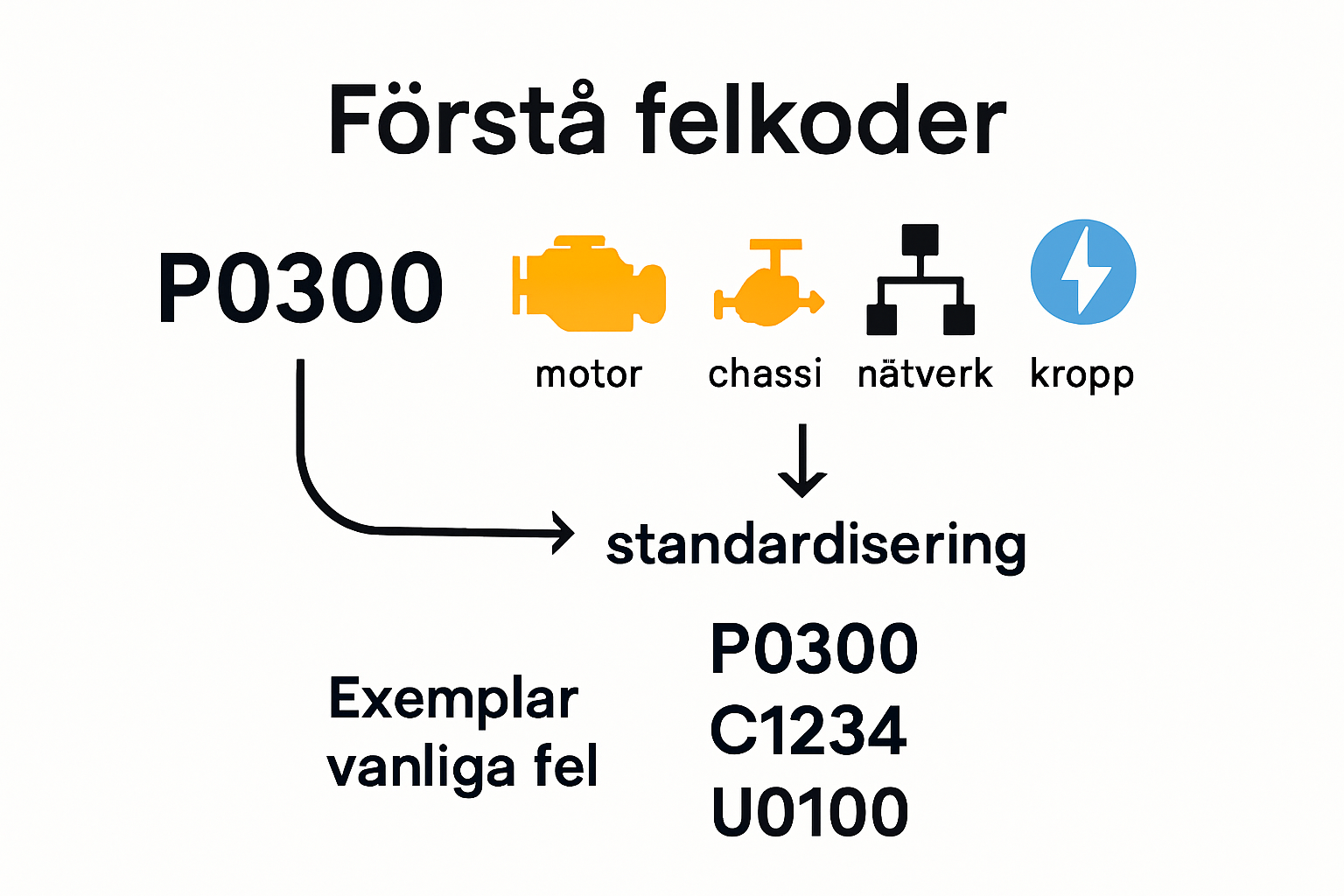
Understanding the meaning of fault codes is not just about reading a code but interpreting its complex implications. According to SAE International, the organization has developed standards that ensure uniform communication of diagnostic problems across different vehicle models.
For example, the code P0300 can signal a random or multiple cylinder misfire, indicating potential problems with the ignition system, fuel delivery, or mechanical components. Each code represents a specific diagnostic parameter that requires careful analysis and often professional evaluation.
Fault codes act as an early warning system that gives vehicle owners the opportunity to identify problems before they escalate. They represent more than just technical details; they are a language that communicates the vehicle's technical well-being.
Investing time in understanding these codes can save significant costs and prevent potential safety risks. Our guides to understanding vehicle diagnostic systems can help you navigate this technical terrain with greater confidence and understanding.
By systematically interpreting and acting on fault codes, vehicle owners can maintain their car's performance, safety, and longevity. It's not just about reading codes but understanding the story behind them.
Common Fault Codes and Their Interpretation
Vehicle diagnostic systems generate a wide range of fault codes that can indicate everything from simple electrical issues to complex mechanical challenges. Understanding these codes is crucial for maintaining vehicle performance and preventing potentially costly repairs.
Powertrain Fault Codes: Engine Health Status
According to Wikipedia, powertrain fault codes (P-codes) are the most frequent and critical signals a vehicle can generate. These codes cover a wide range of engine-related problems that directly affect the vehicle's operational safety and fuel efficiency.
Some common powertrain fault codes include:
- P0300: Indicates random or multiple cylinder misfires
- P0171-P0175: Signals problems with the fuel-air mixture
- P0420: Warns of catalytic converter efficiency issues
Each code represents a specific diagnostic parameter that requires careful analysis. For example, P0300 may indicate issues with the ignition system, fuel injectors, or mechanical components such as pistons or valves.
Electrical System and Network Fault Codes
According to AA1Car, modern vehicles also generate network and electrical system fault codes that reveal communication and sensor function problems. These codes (U-codes) are crucial for identifying complex electronic problems that can affect the vehicle's overall performance.
Typical network fault codes include:
- U0100: Communication interruption with the engine control unit
- U0073: No communication with the ABS system
- U0121: Problem with the electronic stability control
These codes signal potential communication failures between the vehicle's various electronic control units, which can lead to reduced safety and functionality.
Strategies for Fault Code Management
Interpreting fault codes requires more than just technical knowledge. For professional diagnostic equipment that can help you understand and resolve these codes, experts recommend the following strategy:
- Use a reliable OBD-II fault code reader
- Document exactly which codes are displayed
- Consult professional diagnostic guides
- Perform basic troubleshooting steps
- Consider professional mechanical help for complex codes
Vehicle fault codes are more than just technical signals; they are a sophisticated communication system that empowers vehicle owners to understand and proactively manage their vehicle's health. By learning to interpret and act on these codes, you can extend your car's lifespan, improve its performance, and prevent costly repairs.
How to Read Fault Codes with OBD-II
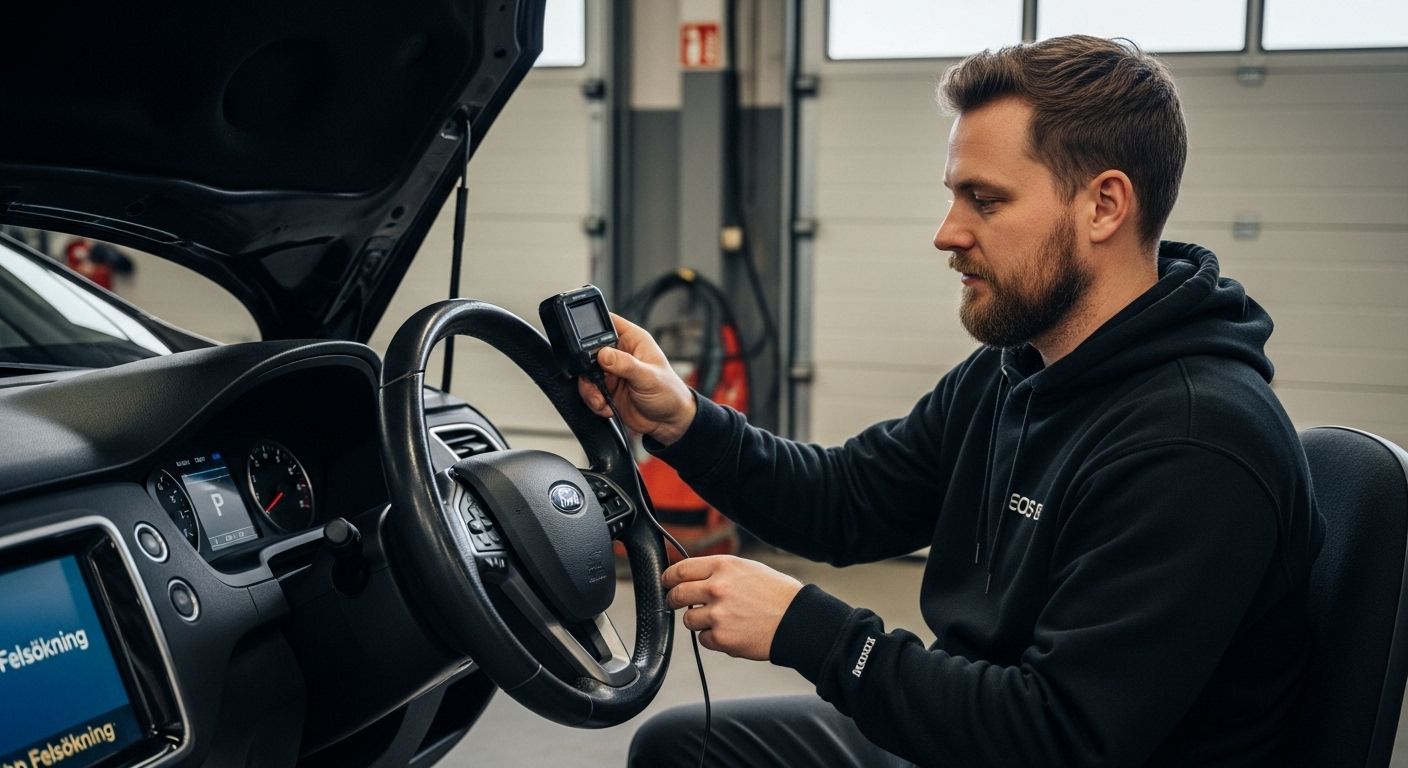
OBD-II (On-Board Diagnostics II) is a standardized system that enables detailed diagnostic communication with modern vehicles. This advanced interface provides vehicle owners and technicians with a direct channel to understand and interpret the vehicle's technical health status through simple and effective diagnostic tools.
Basic Components of the OBD-II Connection
According to the California Air Resources Board, the OBD-II system is designed to monitor vehicle components that affect emissions and generate warnings when problems are detected. The heart of the system is the standardized diagnostic connector, usually located under the dashboard on the driver's side.
To read fault codes, you will need the following equipment:
- An OBD-II compatible fault code reader
- Access to the vehicle's diagnostic connector
- Basic understanding of vehicle diagnostics
The diagnostic connector looks the same for almost all vehicles manufactured after 1996, ensuring compatibility between different makes and models.
Step-by-Step Process for Fault Code Reading
According to educational resources from California Educators Together, there is a systematic method for reading and interpreting fault codes:
- Locate the OBD-II connector in your vehicle
- Connect the fault code reader securely
- Start the vehicle's electrical system (without starting the engine)
- Activate the fault code reader
- Select the option to read fault codes
- Note down the displayed codes for further analysis
For professional diagnostic tools that simplify this process, there are modern wireless options that connect directly to your smartphone, making diagnostics even easier.
Below you will find a table that organizes the steps for OBD-II fault code reading for a quick overview.
| Step | Action |
|---|---|
| 1 | Locate the OBD-II connector |
| 2 | Connect the fault code reader |
| 3 | Turn on the vehicle's electrical system (not the engine) |
| 4 | Activate the fault code reader |
| 5 | Select "Read fault codes" on the display |
| 6 | Note down displayed codes |
Interpretation and Next Steps
Once you have obtained the fault codes, it is crucial to understand their specific meaning. Each code consists of a letter and four digits representing a specific problem. Some codes may indicate less critical problems, while others signal serious mechanical or electronic faults.
Recommended actions after reading fault codes:
- Document exactly which codes were displayed
- Look up the specific meaning of the codes in the vehicle manufacturer's manual
- Consult a professional mechanic for complex codes
- Perform basic troubleshooting steps if you feel comfortable
- Consider professional diagnostics for recurring or serious codes
The OBD-II system represents powerful technology that gives vehicle owners unprecedented insight into their vehicle's technical condition. By understanding and effectively using this system, you can prevent potential problems, save money on repairs, and ensure your car's optimal performance.
Tips for Quick Troubleshooting and Remediation
Vehicle troubleshooting requires a systematic and methodical approach that combines technical knowledge, the right tools, and a calm problem-solving ability. Quickly and effectively identifying and resolving vehicle problems can save both time and money and prevent more serious damage to your vehicle.
Basic Troubleshooting Equipment and Safety Procedures
According to O’Reilly Auto Parts, it is crucial to have the right tools and follow safety procedures when performing vehicle diagnostics. Essential equipment includes:
- Multimeter for electrical measurements
- Complete tool kit
- OBD-II fault code reader
- Protective gloves
- Safety glasses
Safety measures are critical and include:
- Park the vehicle on a level surface
- Apply the parking brake
- Turn off the engine
- Disconnect the battery for electrical work
- Work in a well-ventilated area
Systematic Problem Diagnosis
According to AA1Car, it is important to understand that a fault code is only a starting point for diagnosis. A systematic troubleshooting process should follow these steps:
- Document exactly which fault codes are displayed
- Consult the vehicle manufacturer's service manual
- Look up detailed information on specific codes
- Perform basic visual inspections
- Conduct thorough electrical and mechanical tests
- Compare test results with manufacturer's specifications
For professional diagnostic tools that simplify this process, there are modern adapters that provide detailed system information and facilitate troubleshooting.
Interpretation and Remedial Strategies
According to Wikipedia, understanding the structure of diagnostic fault codes is crucial. Each code represents specific information:
- The first letter indicates the system category
- The first digit shows the code type
- Subsequent digits specify the problem
Recommended actions:
- Perform basic troubleshooting steps yourself
- Use reliable diagnostic tools
- Document all observations
- Consult a professional mechanic for complex problems
- Consider preventive maintenance based on fault code history
Successful troubleshooting is not just about solving urgent problems but also about understanding the vehicle's overall health. By systematically approaching diagnostics and using the right tools, you can prevent breakdowns, extend the vehicle's lifespan, and ensure optimal performance.
Frequently Asked Questions
What are fault codes in cars?
Fault codes are diagnostic signals generated by cars to indicate problems with various systems, including the engine and electronics. These codes help the owner identify and rectify faults before they become serious.
How do you read fault codes with OBD-II?
To read fault codes with OBD-II, you need an OBD-II compatible fault code reader. Connect it to the vehicle's diagnostic connector, activate it, and select the option to read the codes.
What does code P0300 mean?
Code P0300 indicates a random or multiple cylinder misfire. This can be caused by problems with the ignition system, fuel supply, or mechanical components.
Why is it important to understand fault codes?
Understanding fault codes is important because they act as an early warning system. They allow vehicle owners to address problems before they lead to costly repairs and safety hazards.
Take control of your car's fault codes with the right tools
Are you worried about mysterious warning lights and incomprehensible fault codes? In this article, you have learned the importance of quickly being able to interpret and rectify fault codes such as P0300 and U0100. Often, uncertainties about your car's warning signals lead to insecurity and the risk of unnecessarily expensive repairs. Many car owners wish to avoid guessing and instead identify the problem themselves easily with the help of a reliable OBD-II fault code reader. At Felkodslasare.se, you will find exactly the tools that make home diagnostics quick, safe, and affordable.

Don't wait until the problem becomes bigger or more costly. Create your own security and ensure you can quickly read and understand your car's fault codes with the right equipment from Felkodslasare.se. Also, explore our guides and smart diagnostic products to solve problems before they escalate. Visit us today and start saving both time and money.