


Exhaust system problems can sneak up without warning, and many don't even know that unexpected noises or visible smoke can quickly lead to expensive repairs. Imagine that something as simple as an unusual vibration can actually signal that something serious is going on under the car. And yet, it turns out that a mechanical check-up just twice a year can save you from major worries and unnecessary costs.
Table of Contents
- Common signs of exhaust system problems
- Step-by-step exhaust system troubleshooting
- Preventive maintenance and tips for long lifespan
Quick Summary
| Action | Explanation |
|---|---|
| Listen for unusual noises | Loud, hissing or scraping noises can indicate serious problems with the exhaust system. Pay attention to changes. |
| Check exhaust emissions | The color of the exhaust fumes provides clues about engine problems; white, blue, or black smoke requires immediate action. |
| Conduct regular inspections | Inspect the exhaust system at least twice a year to detect damage and avoid costly repairs. |
| Operate carefully | Long drives allow the engine to reach operating temperature, reducing the risk of condensation and rust. |
| Seek professional help when needed | Hire a mechanic for thorough diagnosis and repair when you detect problems, to prevent major damage. |
Common signs of exhaust system problems
The exhaust system is crucial for your car's performance and environmental impact. Recognizing early signs of system failure can help you prevent costly repairs and ensure optimal vehicle reliability. In this guide, we will go through the most common indications that something might be wrong with your vehicle's exhaust system.
Unusual noises and vibrations
When your exhaust system starts to show problems, this will often first be noticed through abnormal noises. A functioning exhaust system should be relatively quiet and smooth. If you suddenly start hearing loud hissing, scraping, or metallic noises, this could indicate serious underlying problems. For example, a leaking exhaust pipe can create a whistling or hissing sound that becomes more noticeable when you accelerate. Strong vibrations in the floor or steering wheel can also indicate that the exhaust system has been damaged or has loose components.
A specific sign to look out for is when the sound suddenly becomes much louder than normal. This could indicate a crack in the exhaust pipe or a damaged muffler. Read more about troubleshooting exhaust system components to understand how you can diagnose these problems.
Visible signs and exhaust emissions
The appearance and color of the exhaust fumes can tell a lot about the health of your vehicle's exhaust system and engine. Normal exhaust smoke should be thin and almost invisible. If you observe thick or colored smoke, this could signal specific problems:
- White smoke: Can indicate coolant leakage into the combustion chamber
- Blue smoke: Often indicates that engine oil is burning with the fuel
- Black smoke: Usually signals inefficient fuel combustion
In addition, you should pay attention to visible damage such as rust, holes, or obvious cracks in the exhaust system components. These visual signs are direct indicators that the system needs immediate attention.
To provide a clear overview of the most common signs of exhaust system problems, we have compiled them in the table below with accompanying explanations.
| Sign | Explanation |
|---|---|
| Unusual noises | Loud, hissing, or metallic noises can indicate a crack or damage in the exhaust system. |
| Vibrations | Noticeable vibrations in the floor or steering wheel indicate loose or damaged components. |
| White smoke | May indicate coolant leakage into the combustion chamber. |
| Blue smoke | Indicates that engine oil is burning along with the fuel. |
| Black smoke | Signals inefficient fuel combustion. |
| Visible rust and damage | Rust, holes, or cracks on exhaust system parts require immediate action. |
| Reduced performance | Increased fuel consumption or poorer acceleration may be due to exhaust system faults. |
Reduced fuel efficiency and engine performance
A faulty exhaust system directly affects fuel consumption and overall engine performance. If you notice that the car suddenly consumes more fuel than usual or experiences reduced acceleration, this could be a sign of exhaust system failure. The catalytic converter, which is a critical component, can cause these symptoms when it starts to function inefficiently.
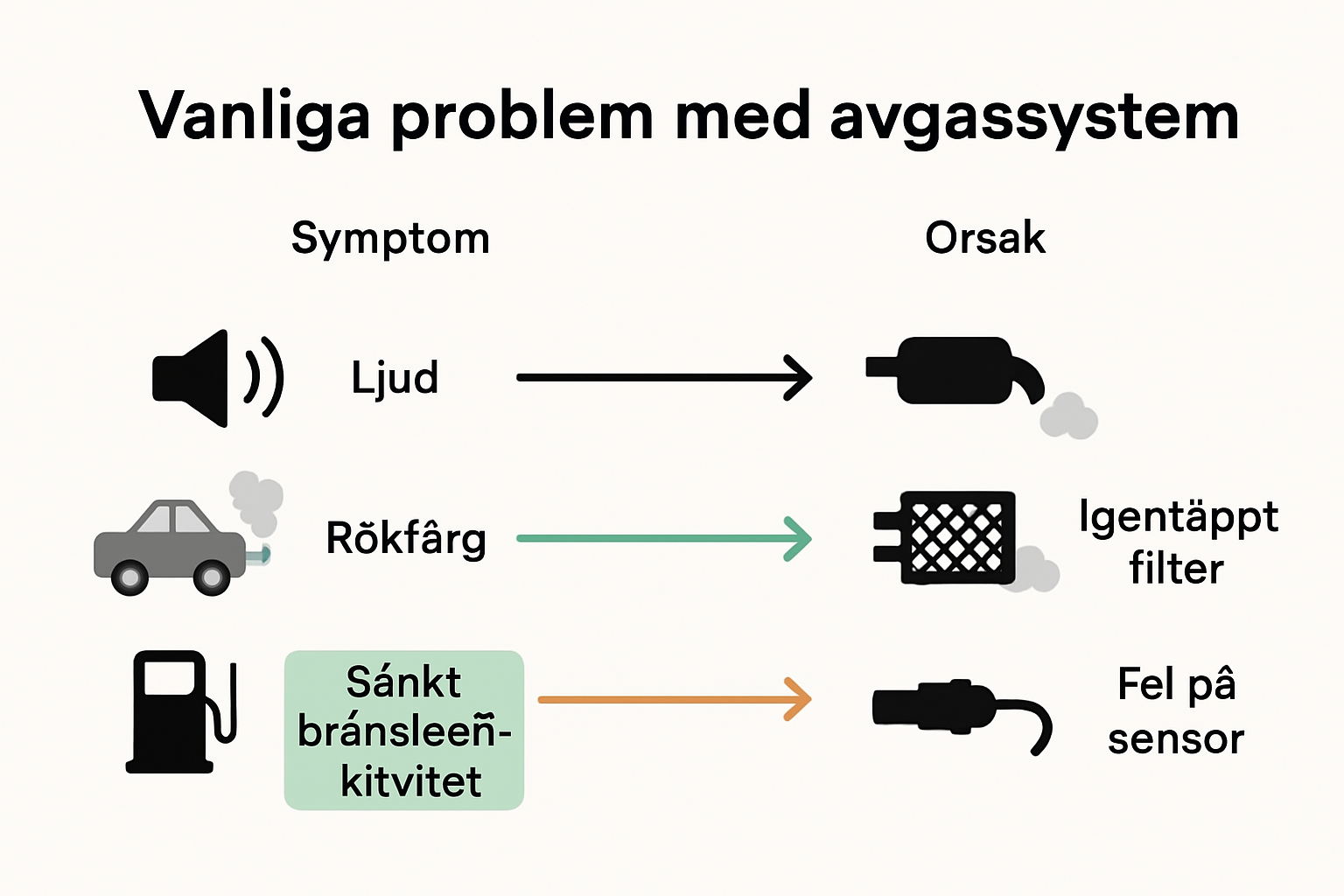
Disruptions in the exhaust system can also trigger warning lights on the dashboard. The Check Engine light is particularly important to pay attention to, as it often indicates problems directly related to the exhaust system's functionality.
Regular inspection and early identification of these signs can help you avoid more extensive and costly repairs. If you experience any of these symptoms, it is recommended to immediately consult a professional mechanic for a thorough diagnosis of your exhaust system.
Step-by-step exhaust system troubleshooting
Troubleshooting the exhaust system requires systematic and thorough investigation to identify and address potential problems. By following a structured method, you can effectively diagnose and solve most exhaust system-related challenges without unnecessary costs.
Visual inspection and initial assessment
The first phase of troubleshooting involves a thorough visual inspection of the entire exhaust system. Start by parking the car on a flat and safe surface with good lighting. Turn off the engine and let it cool completely. Use a flashlight to carefully examine the exhaust pipe, muffler, and other components for signs of damage. Look for cracks, rust, loose fasteners, or obvious holes. Pay particular attention to connection points and welds where leaks most often occur.
Any visible damage can indicate potential problems that require immediate attention. Learn more about diagnostic tools for exhaust systems to get a more precise analysis.
Sound diagnostics and functional test
After the visual inspection, the next step is to listen and feel for abnormal symptoms. Start the engine and listen carefully for unusual noises. A leaking exhaust system can create whistling, hissing, or scraping sounds. Pay attention to changes in engine noise, especially when accelerating or maintaining a constant speed. Strong vibrations or sudden changes in engine operation can also indicate exhaust system failure.
Perform a simple functional test by driving the car under different conditions. Observe fuel consumption, engine response, and any warning lights on the dashboard. A Check Engine light that comes on may indicate specific problems that require further investigation.
Detailed technical diagnostics
For more advanced troubleshooting, you need the right tools and technical knowledge. A fault code reader is invaluable for interpreting the diagnostic codes generated by the car's computer system. These codes can point to exact problems in the exhaust system, such as defective oxygen sensors, catalytic converter failures, or problems with exhaust gas regulation.
When you connect a fault code reader, you can get detailed information about the system's status. Some modern diagnostic tools provide real-time data on exhaust emissions, oxygen balance, and catalytic converter efficiency. If you do not feel comfortable with this type of technical troubleshooting, professional help is recommended.
If you discover problems during any of these phases, it is important to act quickly. Minor problems can quickly develop into more extensive and costly repairs if left unaddressed. Regular inspection and proactive maintenance are key to keeping your exhaust system in top condition and ensuring optimal vehicle performance.
Here we summarize the steps for troubleshooting the exhaust system so you can easily follow the process from start to finish.
| Step | What you do |
|---|---|
| Visual inspection | Check the exhaust system for rust, cracks, loose mounts, and other visible damage. |
| Sound diagnostics | Start the engine and listen for abnormal sounds such as whistling, hissing, or scraping. |
| Function test | Drive the car and observe engine response, fuel consumption, and any warning lights. |
| Technical diagnostics | Use a fault code reader to check codes and analyze the system if needed. |
| Action upon detecting a problem | If a problem is identified, contact a professional mechanic for repair or further diagnosis. |
Preventive maintenance and tips for long lifespan
The exhaust system is a critical component of your vehicle that requires regular attention and care. Through proactive maintenance, you can extend the system's lifespan, improve vehicle performance, and avoid costly repairs. Here we present the most important strategies to keep your exhaust system in top condition.
Regular inspection and cleaning
A systematic inspection routine is the foundation for a healthy exhaust system. Schedule detailed check-ups at least twice a year, or more often if you drive under demanding conditions such as salty roads, muddy terrain, or long distances. Focus particularly on components most exposed to wear and corrosion.
Cleaning is as important as visual inspection. Wash the exterior of the exhaust system regularly to remove salt, dirt, and other corrosive substances. Use a pressure washer carefully and make sure not to damage any delicate components. Explore professional cleaning methods for exhaust systems for more detailed advice.
Driving habits and environmental impact
Your personal driving habits play a crucial role in the health of your exhaust system. Short trips where the engine does not reach full operating temperature can cause condensation that accelerates internal corrosion. Try to regularly drive longer distances that allow the engine to warm up properly. This helps to evaporate moisture and reduce the risk of rust formation.
Also, pay attention to external environmental factors. Do not park the vehicle for extended periods in humid or salty environments. If you live in an area with a lot of salt on winter roads, it is extra important to wash the underside of the car regularly to prevent corrosion. Also, avoid driving through deep puddles or very muddy terrain that can cause damage to the exhaust system components.
Professional service and technical check
Although you can perform much of the maintenance yourself, professional inspections are invaluable. An experienced mechanic can detect subtle signs of wear that may be overlooked during a regular home inspection. Schedule a thorough inspection of the exhaust system at least once a year or every 15,000 kilometers.
Modern diagnostic tools can provide a detailed analysis of the exhaust system's status. The Check Engine light and other warning signs should never be ignored. These systems are designed to warn early of potential problems. A quick reaction can prevent more extensive damage and ensure optimal vehicle performance.
A proactive approach to exhaust system maintenance is not just about preventing problems but also about optimizing the vehicle's overall efficiency. By following these guidelines, you can extend the exhaust system's lifespan, improve fuel economy, and reduce the risk of costly repairs. Remember that every minute invested in preventive maintenance can save you significant amounts in the long run.

Frequently asked questions
What are the most common symptoms of exhaust system problems?
The most common symptoms include unusual noises (such as hissing or scraping), visible smoke (white, blue, or black), vibrations, and reduced engine performance.
How can I troubleshoot my exhaust system step-by-step?
Start with a visual inspection of the exhaust system, followed by listening for abnormal noises and noting fuel consumption. Use a fault code reader to get diagnostic codes that may indicate problems.
How often should I inspect my exhaust system?
It is recommended to inspect the exhaust system at least twice a year, or more often if you drive under demanding conditions.
What measures can I take to prevent exhaust system problems?
To prevent problems, you should regularly inspect and clean the exhaust system, drive longer distances to avoid condensation, and seek professional help for a technical check once a year.
Take control of your exhaust system troubleshooting – avoid unexpected costs
Do you feel uncertain when unusual noises, vibrations, or smoke suddenly appear from the exhaust system? Many vehicle owners hesitate on the next step when warning lights come on, and worries about expensive garage visits arise. With the right diagnostic tools, you can identify exhaust system problems yourself and act quickly before the damage becomes severe. Think about how much time and money you can save by simply reading fault codes instead of guessing your way to a solution. Feel free to read more about how you can use our diagnostic tools for exhaust system troubleshooting to get a confident start.

Do the troubleshooting yourself with a fault code reader package directly from Felkodslasare.se. You get clear fault codes, simple guides, and reliable products that help you all the way – whether it's for a catalytic converter, lambda sensor, or exhaust pipe. Visit our homepage and discover how smooth it can be to take control of your car's exhaust system today.