

Hybrid cars have taken Swedish roads by storm. Over 30,000 hybrid cars hit our streets every year, and more car owners are facing new technical challenges. Who would have thought that a simple warning light could cause so much anxiety? In fact, the most common faults are the easiest to miss – and small, early symptoms can quickly lead to expensive repairs if ignored.
Table of Contents
- Common Problems in Hybrid Cars and Their Symptoms
- Step-by-Step Troubleshooting of Hybrid Car Systems
- When to Contact a Workshop or Technician
- Tips for Preventing Faults in Your Hybrid Car
Quick Report
| Task | Explanation |
|---|---|
| Be cautious with electrical symptoms | Reduced acceleration or warning lights can signal serious electrical faults. Address these promptly to avoid costly repairs. |
| Regular maintenance is critical | Follow recommendations: check battery health and perform electrical system tests at least twice a year to ensure optimal system function. |
| Recognize critical warning signs | Signs such as sudden loss of performance or strange noises from electrical components require immediate technical expertise to ensure vehicle function. |
| Perform software updates regularly | Keep your hybrid vehicle's software updated to avoid compatibility issues and increase operational efficiency by ensuring correct system integration. |
| Plan driving habits carefully | Avoid extreme acceleration and park in temperate environments to maximize battery life and vehicle efficiency. |
Common Problems in Hybrid Cars and Their Symptoms
Hybrid cars represent advanced technology that combines the benefits of gasoline and electric motors. Despite their innovative design, these vehicles can experience specific technical challenges that require careful attention and troubleshooting.
Electrical System Faults and Battery Problems
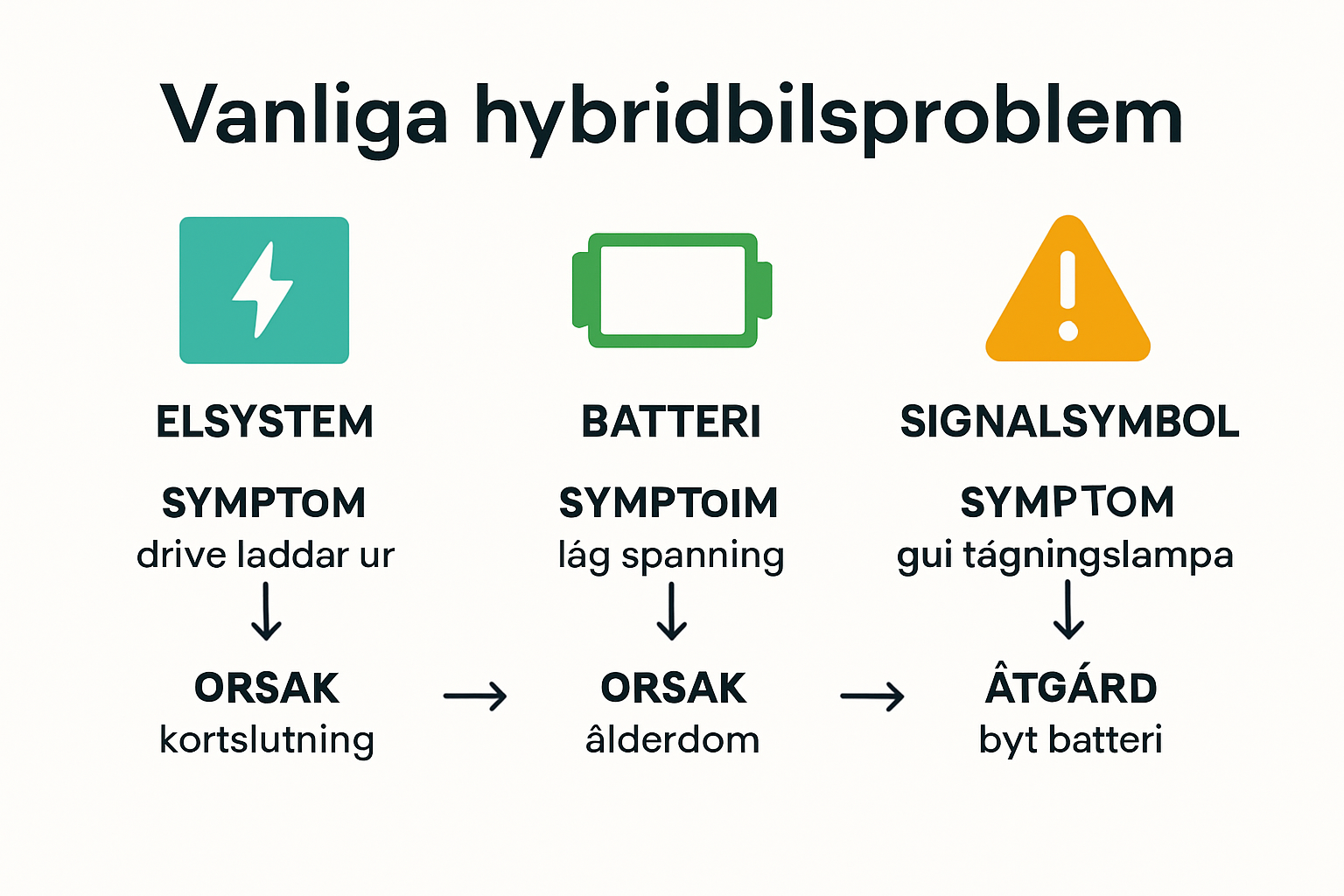
The electrical system in hybrid vehicles is complex and sensitive. Automotive diagnostics experts have identified several critical symptoms that indicate potential electrical system faults. These include:
- Reduced acceleration: A clear signal that the electrical system is not functioning optimally
- Abnormal noises: Choppy or whining sounds from the electric motor
- Warning lights: Indications of faults in hybrid components
The battery system is particularly sensitive. A Castrol research report shows that hybrid engines are at greater risk of oil contamination due to lower operating temperatures, which can affect the battery's overall performance and lifespan.
Mechanical Integration Challenges
The unique design of hybrid vehicles creates specific mechanical challenges. Unlike traditional vehicles, the electrical and mechanical components work intimately together, requiring precision and continuous communication between different systems.
The most common mechanical problems include:
- Communication interruptions between electric and mechanical motors
- Uneven power transmission
- Wear and tear on integrated system components
It is crucial for vehicle owners and mechanics to understand these complex interactions for effective troubleshooting. Our guide on OBD diagnostics can help you better understand and manage these technical challenges.
Maintenance and Preventive Measures
To minimize the risk of system failures, regular and thorough maintenance is required. Experts recommend:
- Regular electrical system diagnostic tests
- Checking battery health at least twice a year
- Using specialized oil products developed for hybrid vehicles
By being proactive and attentive to early warning signs, hybrid car owners can ensure optimal performance and prevent costly repairs. Continuous education and awareness of the latest technological advancements are key to successful hybrid car operation.
Step-by-Step Troubleshooting of Hybrid Car Systems
Troubleshooting hybrid cars requires a systematic and methodical approach that differs from traditional vehicles. Modern hybrid vehicles have complex electrical and mechanical systems that require specialized knowledge and the right diagnostic tools.
Initial Diagnostic Steps
The first phase of troubleshooting involves understanding the system's current status. Experts from EPA's advanced vehicle analysis recommend the following initial steps:
- Connect a professional OBD2 diagnostic device
- Read fault codes from both the electrical and mechanical systems
- Document exactly when and how the symptoms occur
Each fault code represents a specific system deviation that must be carefully investigated. Modern hybrid cars can have complex fault reporting systems that require in-depth interpretation.
Systematic Troubleshooting Methodology
According to the Alternative Fuels Data Center, a structured troubleshooting process is crucial for hybrid vehicles. The process includes:
- Identify the exact system component exhibiting the fault
- Perform thorough electrical and mechanical tests
- Verify the origin of the symptoms through multiple testing methods
Special tools such as our OBD2 extension cable can help technicians perform more detailed diagnostic investigations and ensure accurate system analysis.
Safety Procedures and Special Equipment
Troubleshooting hybrid vehicles requires specific safety protocols. High electrical voltages and complex integrated systems entail potential risks that require:
- Use of insulated protective gloves
- Specialized measuring instruments for high-voltage systems
- Complete understanding of the vehicle's electrical architecture
Technicians must be trained in specific hybrid vehicle technology and have access to the manufacturer's latest technical documentation. Each hybrid vehicle model may have unique troubleshooting procedures that require specific knowledge.
Implementing systematic troubleshooting requires patience, technical skill, and the right equipment. By following these structured steps, both car owners and workshops can effectively diagnose and fix problems in modern hybrid vehicles.
To provide a clear overview of the structured troubleshooting process for hybrid cars, the steps are summarized below:
| Troubleshooting Step | Purpose |
|---|---|
| Connect OBD2 device | Access system fault codes |
| Read fault codes | Identify electrical and mechanical deviations |
| Document symptoms | Time and describe faults more precisely |
| Locate faulty component | Isolate the component causing the problem |
| Perform detailed tests | Confirm the source of the faults through various testing methods |
| Rectify and verify | Repair and ensure the system is functioning correctly |
When to Contact a Workshop or Technician
Hybrid cars represent an advanced technological platform that requires specialized knowledge for troubleshooting and repair. Determining when professional help is necessary can be crucial for the vehicle's performance and safety.
Critical Warning Signs Requiring Immediate Professional Help
According to the U.S. Department of Energy, there are specific situations where immediate technical expertise is absolutely necessary. These include:
- Constant warning lights related to the hybrid system
- Sudden loss of electrical performance
- Abnormal noises from electrical components
- Noticeable reduction in battery capacity
- Unexplained vibrations or jerks during driving
These symptoms can indicate complex system faults that require advanced diagnostic equipment and specialized expertise. Ignoring these warning signs can lead to more extensive and costly damage.
To facilitate the identification of critical warning signs and related actions, the table below provides a structured overview:
| Warning Sign | Action Required |
|---|---|
| Constant hybrid system warning light | Immediate contact with workshop |
| Sudden loss of electrical performance | Immediate technical diagnosis |
| Abnormal noises from electrical components | Immediate technician inspection |
| Reduced battery capacity | Thorough battery check |
| Vibrations/jerks while driving | Professional troubleshooting |
Safety Aspects of Hybrid Vehicle Service
Experts from the Massachusetts Office of Technical Assistance emphasize the potential dangers of improper handling of hybrid vehicles. High-voltage systems pose significant risks that require:
- Specially trained personnel with specific hybrid vehicle knowledge
- Use of insulated protective equipment
- Access to specialized diagnostic tools
Amateur repair attempts can result in serious electrical damage or personal injury. Our OBD2 diagnostic cable can help technicians safely and effectively diagnose complex system faults.
Preventive Maintenance and Professional Consultation
While some minor adjustments can be performed by experienced car owners, experts recommend regular professional inspections for hybrid vehicles. This includes:
- Annual reviews of electrical systems
- Battery health checks
- Updating vehicle-specific software
- Comprehensive system diagnostics
Professional technicians have access to manufacturer-specific information and advanced diagnostic tools that go beyond standardized OBD2 systems. They can identify potential problems before they develop into serious system faults.
Being proactive and responsive to your vehicle's signals is key to long-term performance and safety. Do not hesitate to seek professional help when you are unsure about the severity or complexity of a symptom.
Tips for Preventing Faults in Your Hybrid Car
Hybrid cars represent an advanced technological solution that requires specific and careful maintenance. Preventive maintenance is crucial to ensure long-term performance, minimize the risk of system failures, and maintain the vehicle's efficiency.
Regular Electrical System Maintenance
According to the U.S. Department of Energy, preventive maintenance is critical for hybrid vehicle electrical systems. Experts recommend the following strategic measures:
- Perform regular battery health checks
- Monitor battery charging and discharging cycles
- Avoid extreme temperatures that can affect battery performance
- Keep the battery cooling system clean and functional
The battery system is the heart of a hybrid car. By being proactive, you can prevent potential system failures and extend battery life. Our OBD2 extension cable can help you effectively monitor and diagnose battery status.
Software Updates and System Checks
Modern hybrid vehicles are essentially computer-driven machines. Regular software updates and system checks are crucial for optimal performance. This includes:
- Ensuring the latest firmware versions
- Performing regular system diagnostic tests
- Checking communication between electrical and mechanical components
- Updating the vehicle's electronic control system
Technological advancements in hybrid vehicle technology are happening rapidly. By keeping your vehicle's software updated, you can prevent potential compatibility issues and ensure optimal system integration.
Driving Habits and Environmental Considerations
Your driving habits play a crucial role in preventing hybrid vehicle faults. Experts recommend:
- Avoid extreme acceleration and braking
- Plan drives to maximize electric driving
- Perform regular longer drives to keep the battery system active
- Park in temperate environments
- Use ECO modes when possible
- Maintain tire pressure for optimal energy efficiency
With the right approach and proactive care, you can significantly extend your hybrid car's lifespan and prevent costly system failures. Continuous education, attentiveness, and regular maintenance are key to successful hybrid vehicle management.
Frequently Asked Questions
What are the most common problems with hybrid cars?
The most common are electrical system faults, battery problems, and mechanical integration challenges. Early symptoms include reduced acceleration, warning lights, and abnormal noises.
How do I troubleshoot my hybrid car?
Start by connecting an OBD2 diagnostic device to read fault codes. Document symptoms and locate the faulty component for further testing.
When should I contact a workshop for my hybrid car?
```Contact a workshop if you experience constant warning lights, sudden loss of performance, or abnormal noises from electrical components. These can indicate serious faults.
How can I prevent faults in my hybrid car?
Through regular maintenance of the electrical system, software updates, and being aware of your driving habits, you can minimize the risk of faults and extend the car's lifespan.
Take control of your hybrid car's troubleshooting – avoid expensive surprises
If you're reading this guide on hybrid car troubleshooting, you know how stressful unknown fault codes, warning lights, and technology you can't interpret yourself can be. Small electrical problems can quickly become large and costly if you don't have the right tools and knowledge. At Felkodslasare.se, you'll find specially adapted diagnostic tools and accessories that make it easy to find and understand the sources of errors in your hybrid's complex system. Our solutions help both car owners and workshops save time, avoid unnecessary workshop visits, and make quick decisions when it matters.
Stop frustrating guesswork and get a complete overview of your hybrid's health today. Learn more about our popular diagnostic products and OBD2 accessories so you can troubleshoot yourself – or provide the workshop with better information. Discover how easy it is and get access to guides, customer support, and the right diagnostic equipment at Felkodslasare.se – your partner for smoother hybrid car troubleshooting.