


Many worry when the engine suddenly sounds strange or the car loses power. It feels like advanced technology and even more advanced problems have taken over under the hood. But consider this: More than 60 percent of all engine failures are actually caused by simple things like lack of lubrication or dirty oil. The big mystery is thus more often trivial than dramatic – and the right routine can save both the engine and your wallet.
Table of Contents
- Common Causes of Engine Problems
- Step-by-Step Troubleshooting for Engine Problems
- Effective Tools and Methods for Troubleshooting
- When to Contact an Expert?
Quick Summary
| Commitment | Explanation |
|---|---|
| Check oil levels regularly | Lack of lubrication can lead to damage and engine failure. Ensure levels are correct and oil is clean. |
| Listen for unusual noises | Unusual engine noises can indicate mechanical problems that require attention. Always pay attention to sounds during operation. |
| Use the right diagnostic tools | Effective tools like OBD-II scanners help identify problems quickly and accurately. Invest in professional aids. |
| Pay attention to warning lights | Checking engine warning lights provides important information about potential problems that need immediate attention. |
| Seek help for complex problems | If engine problems cannot be resolved on your own, it is best to contact an expert to avoid further damage. |
Common Causes of Engine Problems
Engine problems can arise for several different reasons and can cause significant disruptions to a vehicle's performance. Understanding the most common causes is crucial for effective troubleshooting and preventive maintenance.
Lack of Lubrication and Oil-Related Problems
One of the most critical causes of engine failure is insufficient lubrication. Engine oil plays a vital role in reducing friction between moving parts and preventing overheating. According to a study from KTH Royal Institute of Technology, low oil levels or contaminated oil can lead to serious damage to engine components.
When engine oil becomes old and degraded, its lubricating properties decrease. This can result in:
- Increased component wear. Metal parts rub directly against each other without sufficient lubricant.
- Reduced fuel economy. Increased friction leads to higher fuel consumption.
- Risk of complete engine failure. Prolonged lack of lubrication can cause permanent damage.
Electrical System Failures and Sensor Functions
Modern vehicles rely heavily on electronic systems and sensors for optimal engine performance. Research from Chalmers University of Technology shows that electrical system failures can cause serious engine problems.
Common electrical problems include:
- Defective oxygen sensors. Affects the fuel-air mixture and engine efficiency.
- Faulty spark plugs. Can cause rough idling and poor acceleration.
- Malfunctioning fuel injectors. Disrupts fuel delivery and engine balance.
The Importance of the Cooling System for Engine Health
Overheating is a serious risk that can lead to extensive engine damage. A properly functioning cooling system is crucial for regulating engine temperature and preventing thermal stress.
When the cooling system does not function optimally, the following problems can arise:
- Blocked cooling channels. Prevents efficient heat dissipation.
- Leaking coolant. Reduces the system's cooling capacity.
- Broken thermostat. Can prevent proper temperature regulation.
By paying attention to these common causes of engine problems, you can take preventive measures and ensure a longer lifespan for your engine. Regular inspection and maintenance are key to preventing serious failures and costly repairs.
For an overview of the most common causes of engine problems, see the table below:
| Cause | Type of Problem | Possible Consequence |
|---|---|---|
| Lack of lubrication | Low or old oil | Increased wear, engine failure |
| Dirty or contaminated oil | Deposits, reduced lubrication | Worse fuel economy, damage |
| Electrical system failures | Sensor faults, faulty spark plugs, injectors | Rough idling, power loss |
| Cooling system failures | Blocked channels, leaking fluid, thermostat problems | Overheating, damage |
Step-by-Step Troubleshooting for Engine Problems
Troubleshooting engine problems requires systematic and thorough investigation. By following a structured method, you can identify and resolve potential engine failures efficiently and cost-effectively.
Initial Diagnostic Inspection
The first phase of troubleshooting involves gathering basic information and performing a thorough initial inspection. According to Hoover Automotive, it is crucial to pay attention to specific symptoms that may indicate underlying engine problems.
The following steps are critical during the initial inspection:
- Listen for unusual noises. Knocking, scraping, or abnormal engine sounds can indicate mechanical problems.
- Check warning lights. The engine control light can provide important diagnostic information.
- Assess fuel economy. Suddenly increased fuel consumption can signal an underlying fault.
Use of Diagnostic Tools
Modern diagnostic tools have revolutionized the troubleshooting process. Automotive Quest emphasizes the importance of using the right equipment for accurate problem identification. [With our diagnostic equipment] you can perform a detailed analysis of the engine's condition.
Important diagnostic tools include:
- OBD-II scanner. Reads fault codes and provides specific information about engine status.
- Multimeter. Tests electrical components and electrical systems.
- Pressure gauge. Evaluates engine compression and identifies potential mechanical problems.
Systematic Troubleshooting Methodology
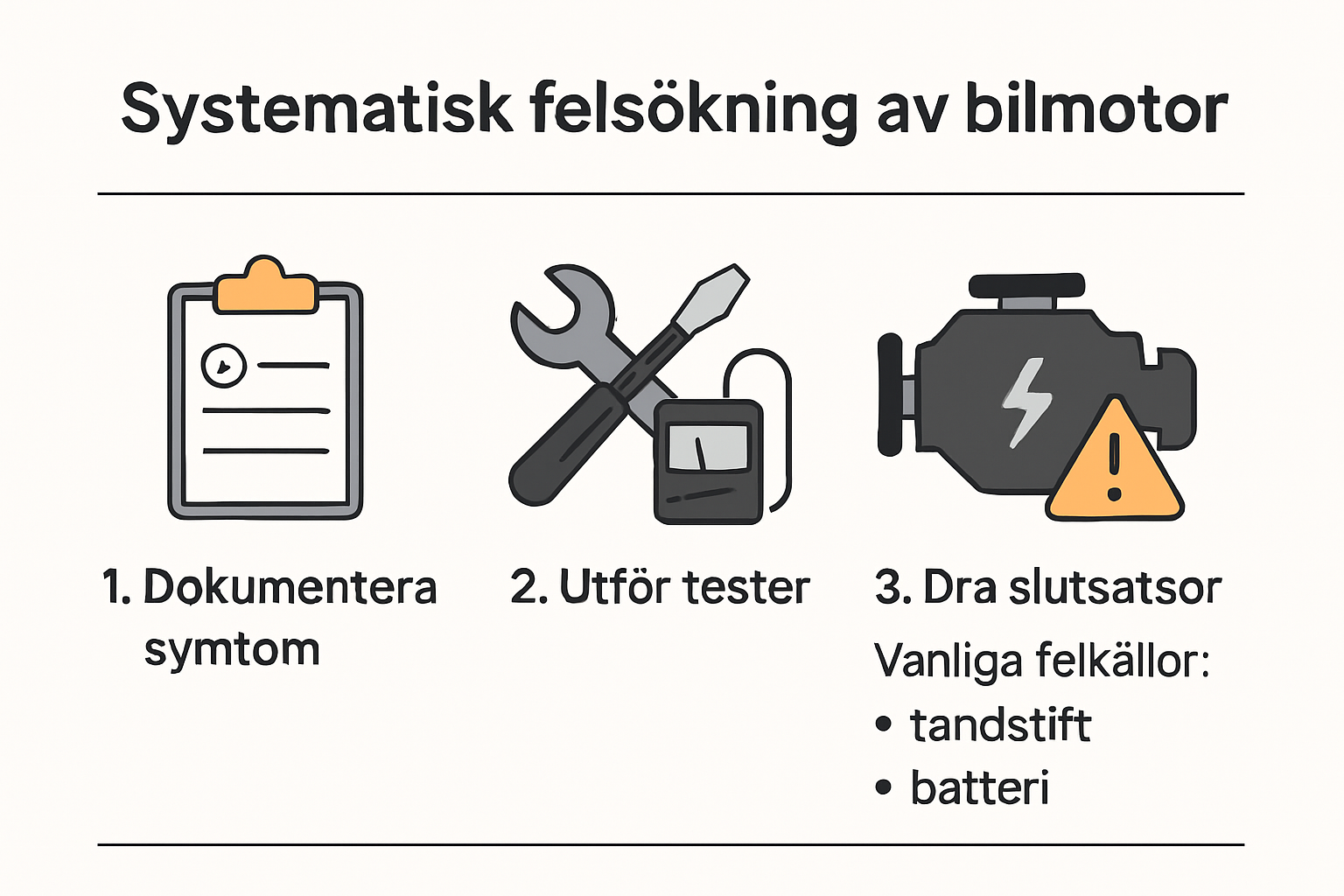
A structured methodology is essential for successful troubleshooting. Follow these basic principles for effective problem diagnosis:
- Document symptoms. Note exactly when and how the problem occurs.
- Perform thorough tests. Conduct systematic tests for each suspected component.
- Compare results. Analyze test results against vehicle manufacturer specifications.
Every engine problem is unique and requires individual assessment. By being methodical, using the right tools, and being patient, you can successfully troubleshoot and resolve most engine problems. Do not hesitate to seek professional help if the problem seems complex or beyond your technical expertise.
To quickly compare which diagnostic tools and methods are used for different types of inspections, see the table below:
| Troubleshooting Method | Tool/Equipment | Area of Application |
|---|---|---|
| Initial inspection | Sight, hearing | Detect sounds, lights, visible symptoms |
| Electronic diagnosis | OBD-II scanner | Fault code reading, advanced engine control |
| Electrical troubleshooting | Multimeter | Check voltage, current, resistance |
| Mechanical test | Pressure gauge | Check compression and mechanical problems |
| Visual inspection | Flashlight, mirror | Identify wear, leaks, deposits |
Effective Tools and Methods for Troubleshooting
Troubleshooting engine problems requires specialized tools and systematic methods to effectively diagnose and address complex technical challenges. The right equipment and knowledge can make the difference between a simple repair and costly major interventions.
Diagnostic Scanners and Electronic Tools
According to Wheels & Wisdom, modern diagnostic tools are crucial for effective troubleshooting. OBD-II scanners have revolutionized our ability to quickly identify engine problems by reading and interpreting fault codes.
Important electronic troubleshooting tools include:
- OBD-II scanner. Reads and reports specific fault codes from the vehicle's computer system.
- Multimeter. Measures electrical voltages, currents, and resistances in various components.
- Thermal camera. Identifies temperature deviations that may indicate hidden problems.
Mechanical Test Methods and Pressure Measurement Equipment
O’Reilly Auto Parts emphasizes the importance of mechanical test methods for thorough engine diagnostics. [With our professional diagnostic equipment] you can perform advanced tests with high precision.
Key mechanical troubleshooting tools include:
- Compression test. Measures the engine's internal pressure and identifies potential mechanical problems.
- Fuel pressure tester. Evaluates the fuel system's functionality and pressure conditions.
- Vacuum tester. Diagnoses problems related to the engine's air intake and seal.
Professional Inspection Techniques
In addition to technical tools, specific inspection techniques are required for thorough troubleshooting. Expert methods include:
- Visual inspection. Systematic review of engine components for wear and damage.
- Sound analysis. Identification of abnormal sounds that may indicate specific mechanical problems.
- Performance test. Evaluation of the engine's overall performance under controlled conditions.

Successful troubleshooting requires a combination of technical tools, systematic methodology, and technical knowledge. By using the right equipment and applying structured diagnostic methods, you can effectively identify and resolve most engine problems. Remember that continuous training and updating your skills are crucial to keep up with rapidly changing automotive technology.
When to Contact an Expert?
Engine problems can be complex and not always suitable for DIY. Knowing when to seek professional help is crucial to prevent further damage and ensure the vehicle's long-term performance.
Signs Indicating the Need for Professional Help
According to the U.S. Bureau of Labor Statistics, there are specific warning signs that clearly indicate the need for expert help. Some engine problems go beyond basic amateur troubleshooting and require specialized expertise.
Warning signs include:
- Recurring fault codes. Persistent fault codes that do not disappear after basic measures.
- Unexplained engine noises. Complex noises that cannot be diagnosed with standard tools.
- Significant performance degradation. Sudden and dramatic changes in engine power.
Economic and Safety Considerations
The University of Tennessee emphasizes that the cost of amateur repairs can often exceed professional service. Incorrect repair attempts can lead to extensive and costly damage.
Economic aspects to consider:
- Long-term repair costs. Amateur interventions can cause further damage.
- Warranty conditions. Certain repairs may affect the vehicle's warranty.
- Safety risks. Incorrect repairs can jeopardize the safety of the vehicle and driver.
Expertise and Advanced Diagnostics
GCMOnline emphasizes the importance of professional diagnostic expertise. [With the help of specialized diagnostic tools], experts can perform in-depth analyses that go far beyond basic troubleshooting.
Experts offer:
- Advanced electronic diagnostics. Use of specialized scanners and analysis equipment.
- Mechanical expertise. Ability to identify subtle problems that may be overlooked.
- System-wide evaluation. Holistic assessment of the engine's condition.
When you encounter complex engine problems that exceed your technical expertise, it is wise to seek professional help. Experts have both the knowledge and tools to effectively diagnose and repair advanced engine problems. Remember that investing in professional service can save you both money and hassle in the long run.
Frequently Asked Questions
What causes engine problems?
Engine problems can be caused by a variety of factors, including lack of lubrication, electrical system failures, and overheating from a faulty cooling system.
How do I troubleshoot engine problems effectively?
Start with an initial inspection to identify symptoms. Use diagnostic tools like OBD-II scanners and perform systematic tests to locate the fault.
When should I contact an expert for engine problems?
If engine noises are unexplainable, if you see recurring error codes, or if there is significant performance degradation, it is best to seek professional help.
What tools are needed to troubleshoot engine problems?
For effective troubleshooting, it is recommended to use OBD-II scanners, multimeters, and pressure gauges to diagnose electrical and mechanical problems.
Discover simpler troubleshooting – Save both time and money
Strange engine noises, warning lights, or recurring error codes can cause great concern. The article clearly showed how lack of lubrication, electrical problems, and difficult-to-interpret error codes often lead to uncertainty and unnecessary workshop visits. With diagnostic tools such as an OBD-II scanner, pressure gauge, or multimeter, you can take control of troubleshooting at home. This provides peace of mind and saves you money by identifying problems before they escalate.

Do you want to avoid stress and guess less during your next engine problem? Explore Felkodslasare.se and find the right diagnostic tools and accessories that make your troubleshooting fast and reliable. Learn more about how our diagnostic tools and guides can help you interpret error codes and understand engine problems in depth. Take the first step today and gain control over your car's health – the sooner you act, the more you save on both repairs and worries.