


Buying a used car often feels like a smart way to save money and find your favorite model. Suddenly, something unexpected appears. Almost half of all used cars have a history that can affect safety or cost thousands of kronor in unexpected repairs. This means that the biggest risks often aren't visible on the surface, but are hidden in the car's past, where a thorough check of previous damages and ownership changes might be the only thing standing between a safe deal and a costly surprise.
Table of Contents
- What is a used car history check?
- Why is history important when buying a used car?
- How does a used car history check work in practice?
- Key concepts in history and used cars
- Real-world examples of the importance of car history
Quick Overview
| Important Insight | Explanation |
|---|---|
| Check vehicle history | A thorough review of the history is crucial to avoid hidden problems. |
| Search for previous owners | Previous owner information can indicate the car's maintenance and potential risks. |
| Verify service protocol | Regular maintenance can reveal the car's true condition and reliability. |
| Use professional tools | Effective tools provide access to accurate and comprehensive historical information. |
| Avoid financial risks | Ignorance of the car's history can lead to unexpected and costly repairs. |
What is a used car history check?
When considering buying a used car, the history is crucial to understanding the vehicle's true condition and value. A used car history check involves gathering detailed information about a vehicle's past life, giving you a thorough understanding before making a purchase.
Basic components of a vehicle history
A complete vehicle history contains several critical details that help you assess the car's condition:
- Previous owners and ownership changes
- Documented service and maintenance history
- Reported traffic accidents
- Mileage status and verified mileage
- Any registration issues or legal notes
These components give you a comprehensive picture of the car's background and potential future operational challenges. By carefully reviewing the history, you can avoid hidden problems that could lead to costly repairs.
Why vehicle history is crucial
Checking the history of a used car is more than just a recommendation. It is a critical step in the buying process that protects you from potential fraud and hidden technical problems. A thorough review of the car's history can reveal if the vehicle has been involved in serious accidents, has hidden damages, or if it has a problematic past.
For example, a seemingly fresh car might conceal serious structural damage from a previous collision, which is not immediately visible during a regular inspection. By using professional tools and databases for used car history checks, you can obtain transparent and reliable information that helps you make an informed decision.
Why is history important when buying a used car?
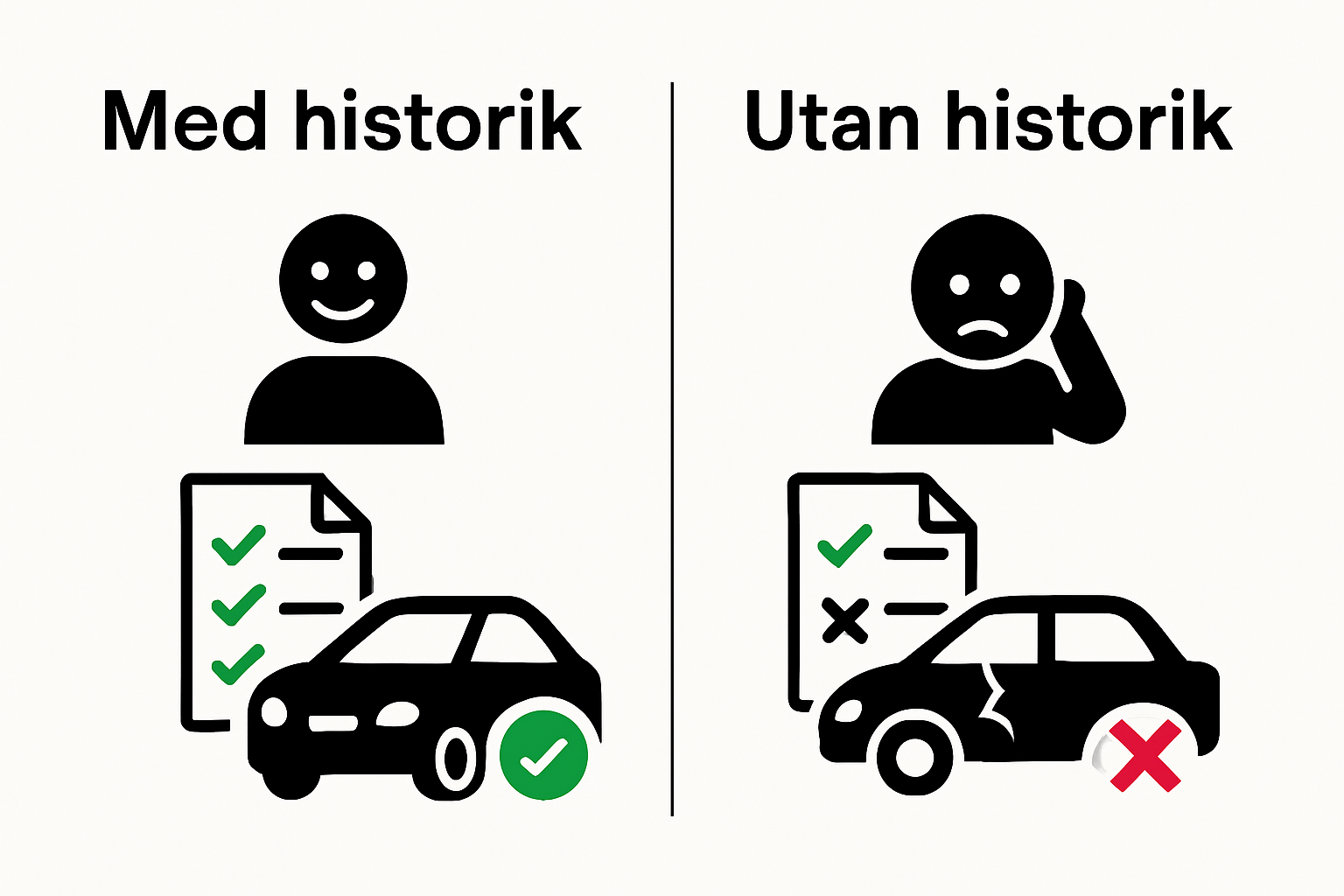
Buying a used car always involves some risk. Vehicle history is your primary defense against potential hidden problems that could result in extensive and costly repairs. A thorough review of the car's history provides you with crucial insights that go beyond a regular visual inspection.
Economic consequences of ignorance
Without complete history, you can expose yourself to significant financial risks. A car with a hidden damage history or systematically neglected maintenance can quickly turn into a financial nightmare. The cost of unexpected repairs can far exceed the original purchase price. Important economic aspects include:
- Hidden structural damage from previous accidents
- Unregistered repairs that may indicate serious underlying problems
- Recurring technical faults that are not immediately apparent
- Potential legal issues related to the vehicle's history
Investing time in investigating the history can save you thousands of kronor in future repair costs.
Safety and reliability
Vehicle history is not just about economics but also about safety. A car with a complex damage history may have hidden structural weaknesses that jeopardize your safety on the road. By carefully reviewing the car's history, you get:
- Confirmation of the vehicle's structural integrity
- Information about previous traffic accidents and their extent
- Documentation of regular maintenance that guarantees the car's functionality
- Peace of mind knowing the vehicle's true condition
A thoroughly reviewed history is thus your guarantee for both financial prudence and personal safety when buying a used car.
The table below highlights the main economic and safety-related consequences of neglecting the history check when buying a used car.
| Consequence | Description |
|---|---|
| Hidden structural damage | Damage from previous accidents not visible during normal inspection |
| Unregistered and inadequate repairs | Underlying problems that can lead to recurring faults and high repair costs |
| Systematically neglected maintenance | Indicates an increased risk of technical faults and a poorer car condition over time |
| Potential legal issues | Can cause difficulties with insurance or ownership registration |
| Reduced resale value | Unknown or negative history affects the car's future market value |
| Reduced safety | Hidden damages can compromise the vehicle's structural integrity and passenger safety |
How does a used car history check work in practice?
Checking the history of a used car is a systematic process that requires accuracy and the right tools. Vehicle history is collected through several coordinated information sources that give you a comprehensive picture of the car's past life and condition.
Information sources and data collection
When checking the history of a used car, there are several key information sources you can use:
- National vehicle registries
- Insurance companies' claims records
- Workshop service protocols
- Previous owners' maintenance reports
- Police traffic accident records
Each source contributes unique details that together create a comprehensive story about the vehicle's background. read more about diagnostic tools that can help you further verify the car's technical status.
Practical methods for history review
To effectively check the history of a used car, you need several concrete tools and approaches:
- Use the car's unique Vehicle Identification Number (VIN)
- Request official vehicle reports
- Contact previous owners for confirmation
- Conduct a professional technical inspection
- Verify documentation with the vehicle registry
This thorough process ensures that you get a transparent and reliable picture of the vehicle's history, protecting you from potential surprises and hidden problems when buying a used car.

Key concepts in history and used cars
When delving into the world of used cars, it is crucial to understand specific technical and administrative terms that shape vehicle history. These key concepts help you navigate the information and make informed decisions.
Technical key concepts
To effectively understand a car's history, you need to know key technical terms:
- VIN (Vehicle Identification Number): The car's unique identification number that reveals the year of manufacture, model, and origin
- Chassis number: Specific identification for the car's basic structure
- Service protocol: Documentation of the car's maintenance and repairs
- Mileage status: Verified mileage indicating the car's intensity of use
- Technical inspection: Professional review of the car's technical condition
Explore diagnostic tools that can help you further analyze and understand these technical aspects.
Administrative key concepts
Administrative terms are equally important for understanding a car's complete history:
- Salvage Title: Indicates that the car was previously classified as a total loss
- Clean Title: Confirms that the car has no serious damage history
- Ownership changes: Documentation of previous owners and their periods of ownership
- Insurance claims: Registered damages reported to insurance companies
- Origin report: Detailed description of the car's first registration and origin
Understanding these key concepts provides you with a solid foundation for interpreting and evaluating the history of a used car, which is crucial for a safe and wise car purchase.
To facilitate understanding of important concepts and their significance in the field, key technical and administrative concepts related to vehicle history are summarized here.
| Key Concept | Type | Explanation |
|---|---|---|
| VIN | Technical | Unique identification number for the car, shows manufacturing year, etc. |
| Chassis number | Technical | Specific identification for the basic structure of the vehicle. |
| Service protocol | Technical | Documentation of maintenance and repairs. |
| Mileage status | Technical | Verified mileage and intensity of use. |
| Technical inspection | Technical | Professional review of the car's technical condition. |
| Salvage Title | Administrative | Indicates that the car was previously classified as a total loss. |
| Clean Title | Administrative | Indicates that the car has no serious damage history. |
| Ownership changes | Administrative | Documentation of previous owners and their periods. |
| Insurance claims | Administrative | Registered damages reported to insurance companies. |
| Origin report | Administrative | Details of the car's first registration and origin. |
Real-world examples of the importance of car history
Vehicle history often reveals crucial details that can be the difference between a smart car purchase and a costly misjudgment. Real-world examples show how in-depth historical information can protect you from potential financial and safety risks.
Hidden damages and reconstructions
A real-world example illustrates the importance of thorough history review: A seemingly fresh used car can conceal serious structural damage from previous accidents. In a concrete case, a private individual bought a car that looked perfect, but after detailed history review, it was discovered:
- Previous total collision that was reconstructed
- Hidden chassis damage not visible during normal inspection
- Extensive repairs not officially reported
- Mileage status that did not match the car's true age
Learn more about diagnostic tools that can help you identify such hidden problems.
Economic consequences of ignorance
Another illuminating example deals with the financial risks of overlooking vehicle history. A small car owner bought a used car without investigating its history and later suffered from:
- Unforeseen repairs that cost more than the car's purchase price
- Recurring technical faults that indicated systematically poor maintenance
- Reduced resale value due to unknown damage history
- Insurance problems related to previously unclear damages
These real-world examples underscore how vehicle history is crucial for making an informed and safe car purchase. By carefully reviewing a car's history, you can avoid potential financial pitfalls and safety risks.
Make car buying safer with smart diagnostic tools
Investigating vehicle history is just the beginning when you want to avoid hidden risks and unexpected costs when buying a used car. Many pitfalls can be hidden in the car's previous damages, undetected faults, and incorrectly coded systems. It's frustrating not to know what awaits after the purchase, and it can feel risky to rely solely on the history report. With the right tools, you can examine the car's condition yourself and check if unknown fault codes or deficiencies that the history report misses are hidden.

Do you want to feel truly secure about your next car purchase? Explore how our fault code readers and diagnostic tools at felkodslasare.se can help you quickly detect hidden faults and verify the car's condition. See our guide on diagnostic tools for used cars and take control of your car's health today. Don't wait – every day without the right information can mean an unnecessary risk or unexpected extra cost. Visit felkodslasare.se and find the right diagnostic tool for your next car check.
Frequently Asked Questions
What does a history check for a used car entail?
A history check for a used car involves gathering and reviewing information about the vehicle's past life, including ownership changes, service history, and any accidents.
Why is it important to check the car's history before purchase?
Checking a car's history is crucial to avoid hidden problems, ensure the vehicle's condition, and protect against financial risks that may arise from hidden damage or lack of maintenance.
How can I access a used car's history?
You can access a used car's history by using the car's unique Vehicle Identification Number (VIN) and requesting official vehicle reports from registration authorities or other professional sources.
What components are typically included in a vehicle history report?
A vehicle history report typically includes information on previous owners, service and maintenance history, reported accidents, mileage status, and any registration issues or legal annotations.