

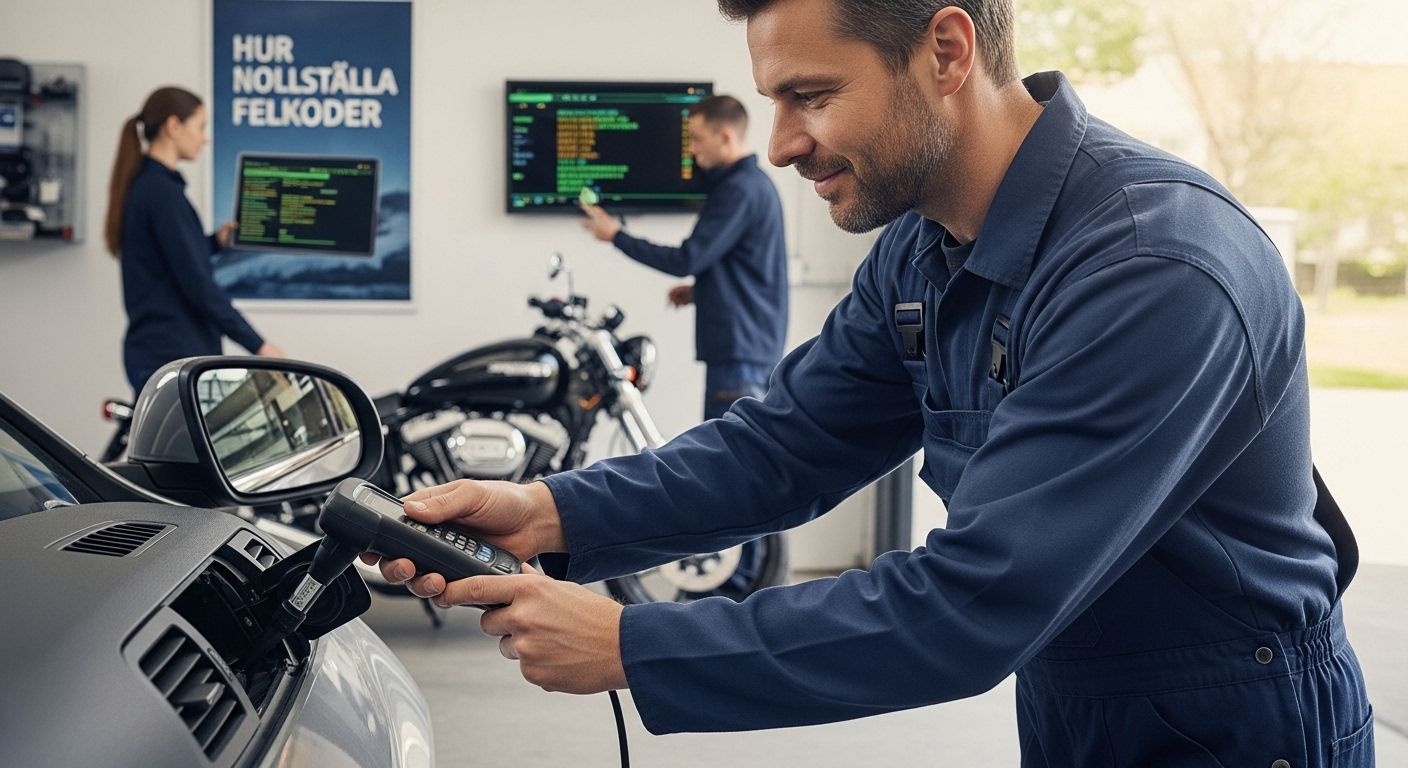
Error messages from cars or motorcycles often feel like Greek, yet statistics show that more than 70 percent of all engine-related fault codes can be reset independently with a simple OBD-II scanner. Many believe that expensive garage visits and advanced equipment are required to get rid of those annoying warning lights. The unexpected truth is that you can often solve it yourself in just a few minutes, avoiding both stress and unnecessary costs.
Table of Contents
- What are fault codes and when do they occur?
- Common methods for resetting fault codes
- Risks and important tips for resetting
- Equipment and tools that facilitate the work
Quick Summary
| Takeaway | Explanation |
|---|---|
| Understand fault codes for better maintenance | Interpreting fault codes is crucial to prevent expensive repairs and ensure vehicle safety. |
| Use an OBD-II scanner for resetting | An OBD-II scanner offers the most effective method for quickly and easily reading and clearing fault codes. |
| Document fault codes before resetting | By noting the fault code, you can track problems and address underlying causes in the future. |
| Be cautious with manual resetting | Disconnecting the battery can reset settings, so use this method with care. |
| Consult a mechanic if unsure | If you are unsure how to interpret or fix fault codes, seek help from a professional to avoid problems. |
What are fault codes and when do they occur?
A car's and motorcycle's electronic systems are complex networks that continuously monitor the vehicle's various components. Fault codes are digital signals that arise when something deviates from the normal operating parameters in these systems. They serve as an intelligent warning system that helps drivers and mechanics understand potential problems before they escalate into major damage.
How fault codes are generated in modern vehicles
Modern vehicles are equipped with advanced electronic control units (ECUs) that collect data from hundreds of sensors. These sensors monitor everything from engine temperature and fuel consumption to braking systems and exhaust emissions. When a sensor detects a value that falls outside predefined limits, the system generates a specific fault code.
Examples of common situations where fault codes can occur include:
- Electrical faults: Problems with the electrical system or sensor connections
- Mechanical deviations: Abnormal pressures or temperatures in various systems
- Sensor errors: Broken or miscalibrated sensors providing incorrect signals
The importance of understanding and managing fault codes
Ignoring fault codes can lead to serious consequences for the vehicle's performance and safety. Each fault code represents a specific diagnosis that provides valuable information about the vehicle's health. For car owners and motorcycle enthusiasts, understanding these codes means being able to take proactive measures.
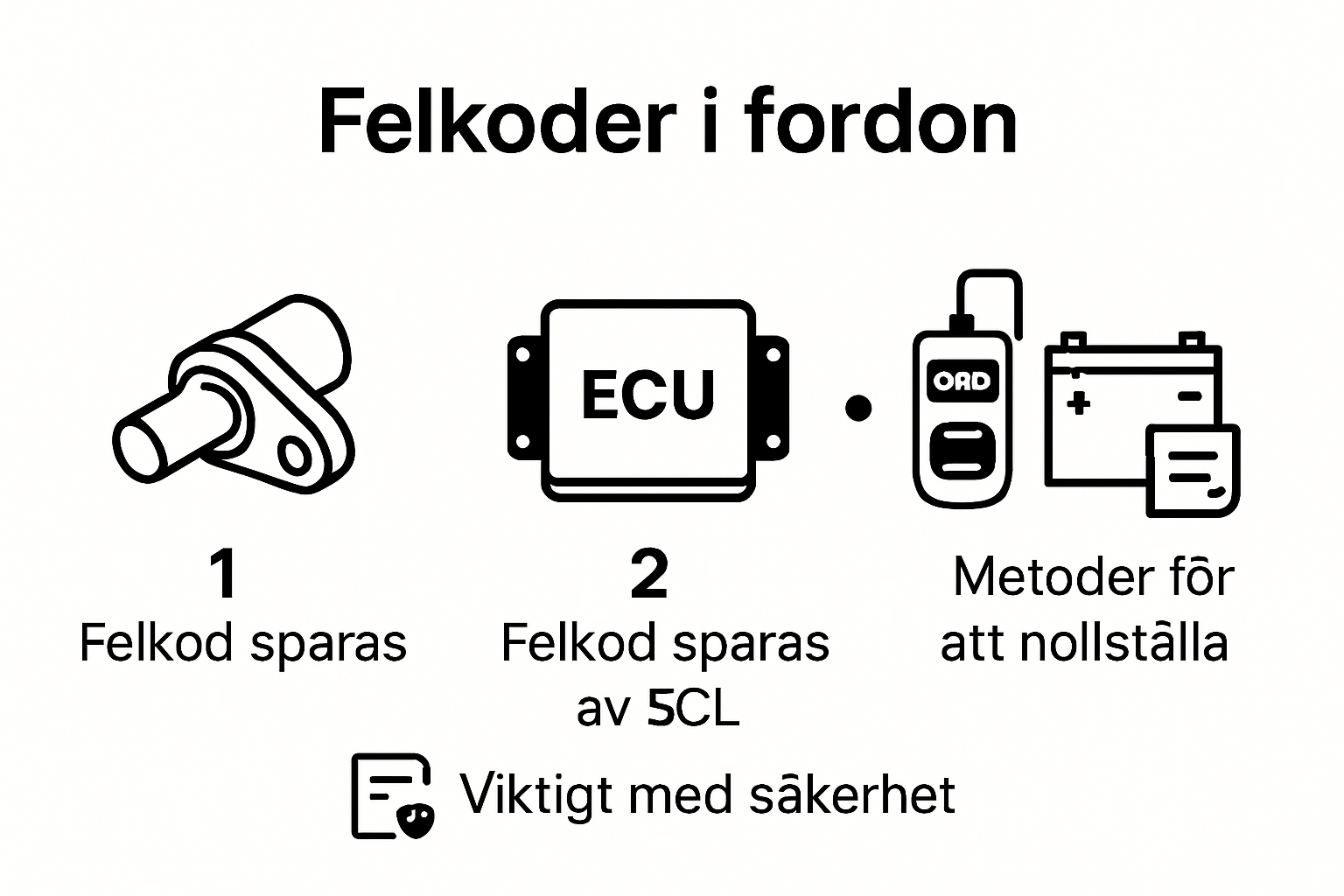
When a fault code is identified, it is crucial not only to read the code but also to understand its underlying cause. This can help you prevent more expensive repairs and ensure your vehicle continues to function optimally. By using the right diagnostic tools, you can quickly and easily read and interpret these codes.
Each fault code consists of a unique combination of letters and numbers that indicate the specific system component and type of fault. These codes can be generic (applicable to all vehicles) or manufacturer-specific (unique to a particular make or model). Having knowledge of how to interpret these codes can save you both time and money when it comes to vehicle maintenance.
Common methods for resetting fault codes
Once a fault code has been identified in your vehicle, there are several effective methods to reset it. Each method has its specific advantages and suits different situations depending on the vehicle type, electronic system, and the specific fault codes that have occurred.
Using an OBD-II scanner
The most professional and recommended method for resetting fault codes is through an OBD-II scanner. These diagnostic tools connect directly to the vehicle's diagnostic port and offer a range of troubleshooting functions. With an OBD-II scanner, you can not only read fault codes but also erase them with a few simple button presses.
Using an OBD-II scanner is relatively easy:
- Locate the diagnostic port: Typically located under the dashboard
- Connect the scanner: Insert the connector into the port
- Start diagnosis: Follow the device's instructions to read and clear codes
- Confirm clearing: Check that no remaining fault codes exist
Manual reset by battery disconnection
An alternative method many vehicle owners use is disconnecting the car battery. This method works by completely shutting down the vehicle's electronic system, which often clears less complex fault codes. To perform this method, you first need to disconnect the negative battery terminal and let the system rest for a few minutes.
However, it is important to be aware of the potential risks of this method. By disconnecting the battery, you can also reset other electronic settings such as the radio, clock, and potentially even the vehicle's control system. Therefore, this method is primarily recommended for simpler cases and when more advanced diagnostic tools are not available.
Note that modern vehicles with more complex electronic systems may require more sophisticated approaches to effectively reset fault codes. In such cases, a professional OBD-II scanner or consultation with a qualified mechanic is the best option.
Every vehicle owner should be aware that merely erasing a fault code does not necessarily solve the underlying cause of the problem. It is crucial to first diagnose and address the actual reason why the fault code appeared to prevent future problems and ensure optimal vehicle performance.
Here is a comparison of the two most common methods for resetting fault codes. This table will help you choose the right method based on your needs and circumstances.
| Method | Advantages | Disadvantages | Recommended use case |
|---|---|---|---|
| OBD-II scanner | Simple, fast, does not affect settings | Requires purchasing a tool | Modern cars and motorcycles, all fault codes |
| Manual reset (battery disconnection) | Inexpensive, no extra equipment required | Risk of resetting radio/clock, may fail on modern cars | Only simpler cases, older vehicles |
Risks and important tips for resetting
When working to reset fault codes in your vehicle, it is crucial to understand the potential risks and follow proper procedures. Incorrectly performed actions can lead to unintended consequences for the vehicle's electronic system and overall performance.
Preparation and basic safety measures
Before you begin the process of resetting fault codes, there are several critical preparations you must make. It's not just about deleting codes but doing so safely and systematically. The first and most important preparation is to understand why the fault code was originally generated.
Important preparatory steps include:
- Documentation: Note the original fault code before clearing it
- Thorough inspection: Check the physical components that may have caused the fault
- Safety equipment: Use appropriate protective gloves and safety glasses
Potential risks of incorrect resetting
Improperly performed fault code resetting can pose serious risks to your vehicle. One of the most critical risks is masking underlying mechanical or electronic problems that can develop into more extensive damage if not addressed correctly. Some vehicle manufacturers have built-in systems that record and store historical fault codes, meaning that simply deleting a code does not necessarily solve the problem.
The main risks include:
- Accidental impact on the vehicle's control system
- Loss of important diagnostic data
- Potential impact on vehicle warranty
Modern vehicles have complex electronic systems where each fault code represents a specific diagnostic signal. Simply deleting the code without understanding its origin can be compared to ignoring a warning signal in a machine. Professional diagnostic tools allow you to not only delete codes but also understand their origin.
A crucial tip is to always perform a thorough diagnosis before resetting. This involves using the correct diagnostic tool, understanding the specific meaning of the fault code, and taking appropriate repair actions. If you are unsure how to interpret or address a specific fault code, consultation with a professional mechanic experienced with your vehicle's make and model is recommended.
Remember that each vehicle's electronic system is unique. What works for one car may not be suitable for another. Be careful, document thoroughly, and do not hesitate to seek professional help when needed.
The following table summarizes the key preparations and risks mentioned in the article when resetting fault codes on your car or motorcycle.
| Item | Purpose / Importance | Risk/Disadvantage of inadequate action |
|---|---|---|
| Document the fault code | Enables tracking & future diagnosis | Troubleshooting is complicated, underlying problems are masked |
| Thorough inspection | Identifies actual fault | Increased risk of greater damage |
| Use safety equipment | Protects when working with electronics | Personal injury, damage to vehicle |
| Only clear fault code with action taken | Ensures resolution of the root problem | Problem persists or worsens |
Equipment and tools that facilitate the work
Having the right equipment when working with vehicle diagnostics is crucial for effective troubleshooting and resetting of fault codes. Modern diagnostic tools have revolutionized how vehicle owners and mechanics can identify and fix technical problems.
Basic diagnostic tools
The most fundamental equipment for vehicle diagnostics is the OBD-II scanner. This universal tool fits practically all modern vehicles and offers a direct channel to the vehicle's electronic control system. Modern scanners range from simple code readers to advanced diagnostic units with extensive functionality.
Key features to look for in an OBD-II scanner include:
- Compatibility: Support for various vehicle types and brands
- Interface: Clear and easy-to-navigate screen
- Data transfer: Ability to save and export diagnostic reports
Advanced diagnostic systems
For more complex diagnostic needs, professional tools are available that offer deeper insight into the vehicle's electronic system. Professional diagnostic tools can not only read fault codes but also perform advanced functions such as software updates, system calibration, and detailed system analysis.
These advanced systems often include:
- Ability for bi-directional communication with the vehicle's control system
- Live data streams showing real-time information
- Specific adapters for different vehicle manufacturers
The development of wireless technology has also introduced Bluetooth and WiFi-based diagnostic tools that can connect to smartphones and tablets. These mobile solutions offer flexibility and convenience for vehicle owners who want to perform basic diagnostics anywhere.
When choosing a diagnostic tool, it is important to consider your specific needs. A hobbyist car owner may get by with a basic code reader, while professional mechanics require more sophisticated systems with extensive functionality. Prices vary significantly depending on the complexity of the tools, from a few hundred to several thousand Swedish kronor.
Regardless of which equipment you choose, it is crucial to understand its functions and limitations. Read the user manual carefully, update the software regularly, and use the tool according to the manufacturer's recommendations. With the right equipment and knowledge, you can effectively diagnose and fix your vehicle's technical problems.

Frequently Asked Questions
What is a fault code and how does it occur?
Fault codes are digital signals generated by a vehicle's electronic control system when something deviates from normal operating parameters. They help identify problems before they develop into more serious damage.
How can I reset fault codes on my car or motorcycle?
You can reset fault codes by using an OBD-II scanner or by disconnecting the battery. An OBD-II scanner is the most efficient method for quickly reading and clearing codes.
What are the risks of manual resetting?
Manual resetting by disconnecting the battery can reset other settings and mask underlying problems. It is only recommended for simpler cases and when you are aware of the risks.
Why is it important to document fault codes before resetting?
Documenting fault codes is crucial for tracking and addressing underlying problems. It helps both to identify and prevent future faults.
Take control of fault codes and avoid unnecessary workshop costs
Are you facing flashing warning lights and unknown fault codes on your car or motorcycle? The uncertainty about what the codes mean and whether an expensive workshop visit is required frustrates many. With the right diagnostic tools, you can easily read and reset fault codes yourself and quickly regain peace of mind. The article shows how important it is to understand and manage fault codes – now you can take the next step yourself.
Choose wisely and save money by exploring affordable fault code readers and accessories at Felkodslasare.se. Here you'll find everything from ELM327 to advanced cables and guides for both cars and motorcycles. Equip yourself with the right technology and take back control. Visit Felkodslasare.se today and discover how easy it can be to solve problems and clear fault codes yourself.