


Car fault codes might sound like something only mechanics need to worry about. But in fact, these small digital signals can reveal hidden problems long before they become visible. Surprisingly, hundreds of different fault codes are generated on average every day in a modern car, and many car owners continue driving, unaware of the risks. It's not just advanced technology that signals when something is wrong. Fault codes actually serve as the car's own language to warn you in time and save both money and headaches.
Table of Contents
- What are fault codes and how do they work in a car?
- Why are fault codes important for car performance?
- How can fault codes identify problems in the vehicle?
- What do different fault codes mean and how are they interpreted?
- What actions should be taken for fault code diagnoses?
Quick Summary
| Key Insight | Explanation |
|---|---|
| Fault codes indicate car problems | Fault codes act as diagnostic signals to identify specific problems in the car. |
| Proactive maintenance is crucial | Responding to fault codes can prevent costly repairs and safety issues. |
| Document fault codes carefully | Carefully recording fault codes helps in later troubleshooting and repair. |
| Understand the structure of fault codes | Fault codes follow a standard structure that helps quickly identify problem areas. |
| Consult a mechanic for serious codes | Professional help is recommended for fault codes indicating serious system problems. |
What are fault codes and how do they work in a car?
A car's electronic system is like the body's nervous system, continuously monitoring and reporting the car's health. Fault codes are the digital signals that arise when something isn't working as expected within the vehicle's complex mechanical and electronic network.
The origin of the car's fault code system
Modern cars are equipped with advanced On-Board Diagnostic (OBD) systems that continuously analyze the vehicle's various components. When a sensor detects a deviation from the predefined parameters, a specific fault code is generated. These codes serve as a diagnostic language that translates technical problems into understandable messages.
The main components of the fault code system include:
- Sensors located in different parts of the car
- A central computer unit that interprets sensor data
- A communication protocol for reporting problems
How fault codes communicate the car's health status
Each fault code represents unique diagnostic information pointing to a specific problem. For example, a fault code might indicate issues with:
- The engine's oxygen sensor
- Fuel system performance
- Electrical connections
- Transmission functionality
When a fault code is generated, a warning light typically illuminates on the dashboard, signaling to the driver that something needs to be investigated. Our detailed fault code guide can help you understand and interpret these codes more thoroughly.
The fault code system is crucial for identifying potential problems early, which can prevent more extensive and costly damage to the car. By understanding and responding to these codes, car owners can take proactive measures to ensure optimal vehicle performance and safety.
Why are fault codes important for car performance?
Fault codes are crucial for ensuring the car's optimal function, performance, and safety. They act as a sophisticated warning system that helps car owners prevent potential mechanical problems before they escalate into more complex and costly repairs.
Early warning signals and preventive maintenance
Modern vehicle electronic systems are designed to continuously monitor and analyze component performance. Fault codes deliver immediate signals when something deviates from normal operating parameters. This enables proactive maintenance instead of reactive repairs, saving both time and money.
Key benefits of the fault code system include:
- Early identification of potential mechanical problems
- Prevention of major damage through early intervention
- Reduction of unplanned repair costs
- Improvement of the car's overall operational safety
Performance and fuel economy
Fault codes play a critical role in maintaining a car's performance and fuel economy. When sensors detect deviations in systems such as fuel injection, ignition, or exhaust gas purification, fault codes are generated, signaling the need for adjustments. Read our guide on advanced troubleshooting to understand how these codes can optimize your car's performance.
A well-maintained vehicle with regular fault code monitoring can achieve:
- Smoother engine performance
- Lower fuel consumption
- Reduced emissions
- Extended lifespan for critical components
By actively monitoring and addressing fault codes, car owners can ensure a safer, more efficient, and reliable driving experience. The fault code system is not just a technical feature but a crucial tool for maintaining and improving a car's overall performance.

How can fault codes identify problems in the vehicle?
Fault codes act as a sophisticated diagnostic language that allows car owners and mechanics to understand and interpret the complex signals continuously generated by the vehicle's electronic system. They are crucial for quickly and accurately identifying potential problems in the car's various mechanical and electronic components.
The role of sensors in problem identification
Modern vehicles are equipped with a network of advanced sensors located in critical systems such as the engine, transmission, brakes, and exhaust system. These sensors constantly monitor parameters such as temperature, pressure, electrical voltage, and mechanical movement. Each sensor is designed to record specific values and generate a fault code as soon as a deviation from the predefined normal parameters is detected.
Examples of sensors that contribute to problem identification:
- Oxygen sensors that monitor the fuel-air mixture
- Coolant temperature sensors that track engine temperature
- Lambda sensors that check exhaust emissions
- Yaw rate sensors that identify vehicle stability
Decoding the language of fault codes
Each fault code consists of a unique combination of letters and numbers that represent a specific problem. Our complete guide to fault code reading can help you understand these codes in detail. These codes can indicate anything from minor adjustments to serious system failures requiring immediate attention.
Some common categories of problems that fault codes can identify:
- Electrical system failures
- Mechanical component damage
- Fuel and emission system deviations
- Electronic control unit problems
By using a fault code reader, car owners can quickly interpret these codes and take appropriate action. This system represents critical technology that not only identifies problems but also prevents potentially serious damage through early diagnosis and intervention.
What do different fault codes mean and how are they interpreted?
Fault codes are a complex diagnostic language that requires specific knowledge to correctly interpret and understand the signals emitted by a car's electronic system. Each code represents unique communication about the vehicle's technical health and requires careful analysis for effective troubleshooting.
The structure behind the language of fault codes
Modern fault codes follow a standardized system where each code consists of letters and numbers that represent specific problem areas. These alphanumeric codes are designed to provide precise information about which part of the car is experiencing a malfunction.
A typical fault code has the following components:
- The first letter indicates the system category
- The following numbers specify the exact type of problem
- Further details may indicate the severity
Interpreting common fault code categories
Fault codes are organized into specific categories that help mechanics and car owners quickly identify the origin of the problem. Our detailed fault code interpretation template provides deeper insight into these categories.
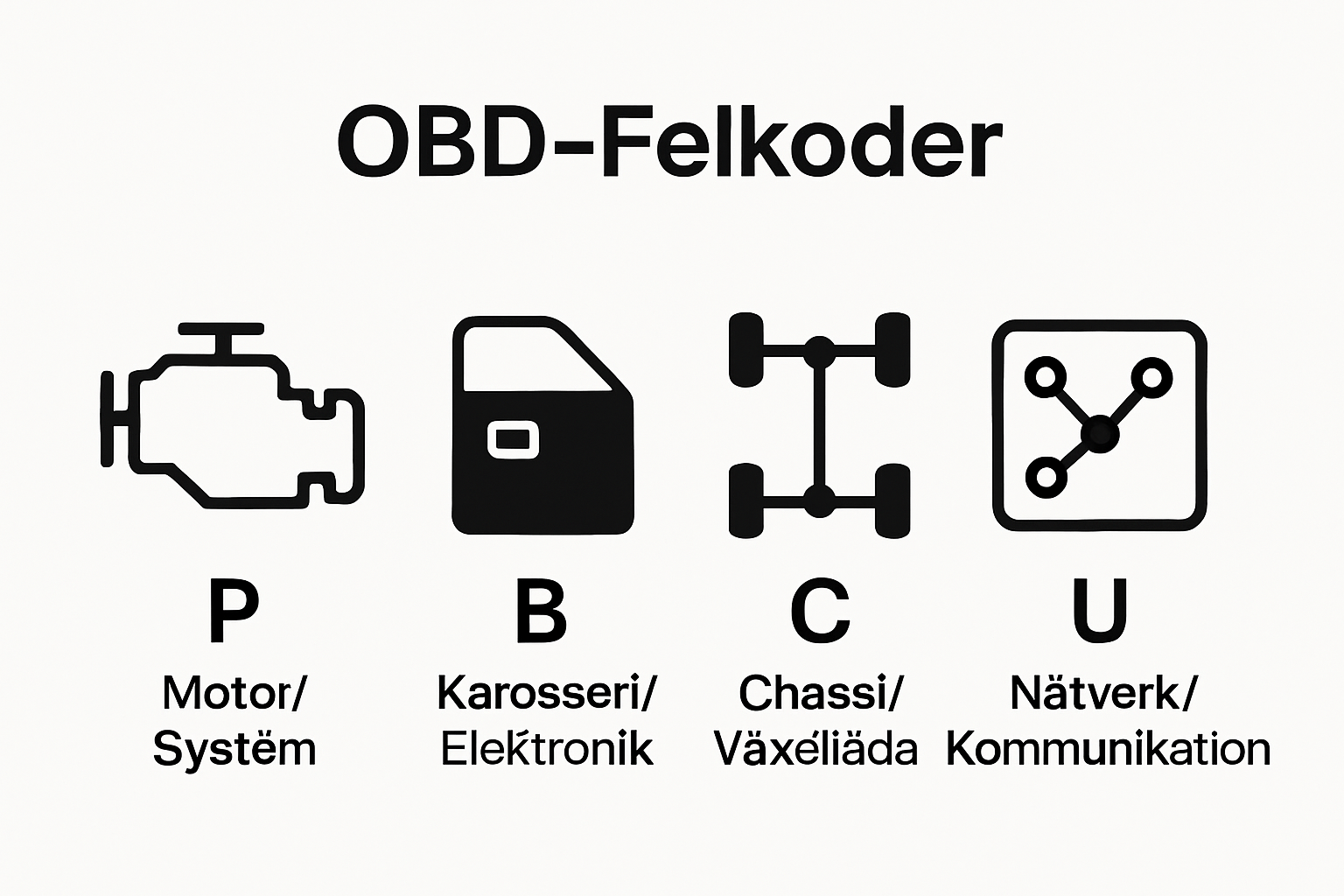
Some main fault code categories include:
- P-codes: Engine and powertrain problems
- B-codes: Body system electronic faults
- C-codes: Transmission system deviations
- U-codes: Communication and network problems
Each fault code represents a specific diagnostic signal that requires systematic interpretation. By understanding these codes, car owners and mechanics can quickly identify and address potential problems, preventing more extensive damage and ensuring optimal vehicle performance.
The following table summarizes the most common categories of fault codes and the systems they represent according to the article's description.
| Fault Code Category | System | Example Problem |
|---|---|---|
| P-codes | Engine and powertrain | Engine or fuel system problems |
| B-codes | Body system electronics | Electrical faults in the body |
| C-codes | Transmission system | Transmission deviations |
| U-codes | Communication system | Network and communication problems |
What actions should be taken for fault code diagnoses?
When a fault code is identified in the car, it is crucial to act systematically and methodically to prevent potential damage and ensure optimal vehicle performance. A well-planned strategy can be the difference between a simple repair and a costly mechanical reconstruction.
Initial diagnosis and documentation
As soon as a fault code is detected, the first step is to document the exact code and its origin. Modern fault code readers provide detailed information that helps you understand the specific nature of the problem. Our comprehensive guide to fault code management provides you with further insights into this process.
Important aspects to document include:
- The exact fault code
- The time the code first appeared
- The vehicle's current mileage
- Any observed symptoms
Assessing the severity of the fault code
Not all fault codes indicate urgent problems. Some may be minor adjustments, while others signal potentially serious system failures. A systematic assessment helps you determine if immediate action is required.
Categorization of fault code priority:
- Immediate action required: Warning codes affecting safety
- Prompt service recommended: Codes that can lead to component wear
- Continued monitoring: Less critical system deviations
After identifying and assessing the fault code, the next step is to consult a professional mechanic or perform the necessary repairs. By acting proactively, car owners can prevent more extensive damage and ensure the vehicle's long-term reliability and performance.
This table provides an overview of the basic steps recommended when a fault code is detected, based on the article's instructions.
| Step | Description |
|---|---|
| Document the fault code | Note exact code, origin, date, and mileage |
| Assess severity | Determine if the fault requires immediate action or can wait |
| Observe noted symptoms | Pay attention to any changes in the car's behavior |
| Consult a mechanic | Seek professional help in case of doubt or serious faults |
| Perform necessary repairs | Fix the fault to avoid further damage |
Gain control over fault codes – discover the solution that gives you answers directly
Are you worried about what fault codes actually mean for your car, and how they can affect everything from performance to safety? Facing flashing lights and unknown codes often creates uncertainty, especially when you don't know if the problem is urgent or a minor deviation. In this article, you've gained insight into why fault codes arise, how they help you find your car's weak points, and why quick action is crucial for your finances and safety on the road.

At Felkodslasare.se, you can go from worry to full control. With our reliable fault code readers and diagnostic tools, you get direct access to your car's own messages. Save time, avoid unexpected workshop visits, and understand for yourself what your car really wants to tell you. Explore our guides on efficient code interpretation and troubleshooting if you're looking for deeper understanding today. Make a smart choice – give yourself the security of detecting and resolving faults before they become costly problems. Visit Felkodslasare.se now and find the right tool for your car.
Frequently Asked Questions
How do fault codes work in a car?
Fault codes are digital signals generated by the car's electronic system when a sensor detects a deviation from normal operating parameters. These codes provide technical information about specific problems in the vehicle's mechanical and electronic components.
Why are fault codes important for car performance?
Fault codes are crucial for identifying potential mechanical problems in time. They enable proactive maintenance and can help prevent costly repairs, as well as improve the car's safety and fuel economy.
What should I do if I get a fault code in the car?
Make an initial diagnosis by documenting the fault code and its origin, assess the severity, and consult a professional mechanic if necessary. Acting proactively can prevent more extensive damage to the car.
How can fault codes help me save money on car maintenance?
By identifying and addressing problems indicated by fault codes early on, car owners can avoid expensive repairs, reduce unplanned costs, and optimize the vehicle's operation and fuel economy.