


Fault messages in the car make the hearts of many car and motorcycle owners beat faster, and in fact, more than 40 percent of all workshop visits are caused by electronic fault codes. One quickly thinks of costly repairs or being stranded by the roadside, but it sounds worse than it is. Many fault codes can be avoided with simple routines that most people forget.
Table of Contents
- Common Causes of Fault Codes in Vehicles
- Preventive Maintenance to Avoid Fault Codes
- Tools and Methods for Early Fault Detection
- Tips for Car Owners and Mechanics During Troubleshooting
Quick Summary
| Key Takeaway | Explanation |
|---|---|
| Perform regular maintenance | Follow the manufacturer's service intervals to prevent faults and ensure performance. |
| Check electrical systems | Inspect sensors and electrical connections to avoid fault codes. |
| Use diagnostic tools | Connect an OBD II fault code reader to detect problems early. |
| Learn from symptoms | Document symptoms and perform a thorough assessment for better diagnoses. |
| Be safe during troubleshooting | Follow safety procedures and document all tests for future reference. |
Common Causes of Fault Codes in Vehicles
Vehicle technology is constantly evolving, and with this evolution comes more complex electronic systems that can generate fault codes. Understanding the most common causes of these fault codes can help you prevent problems and save both time and money.
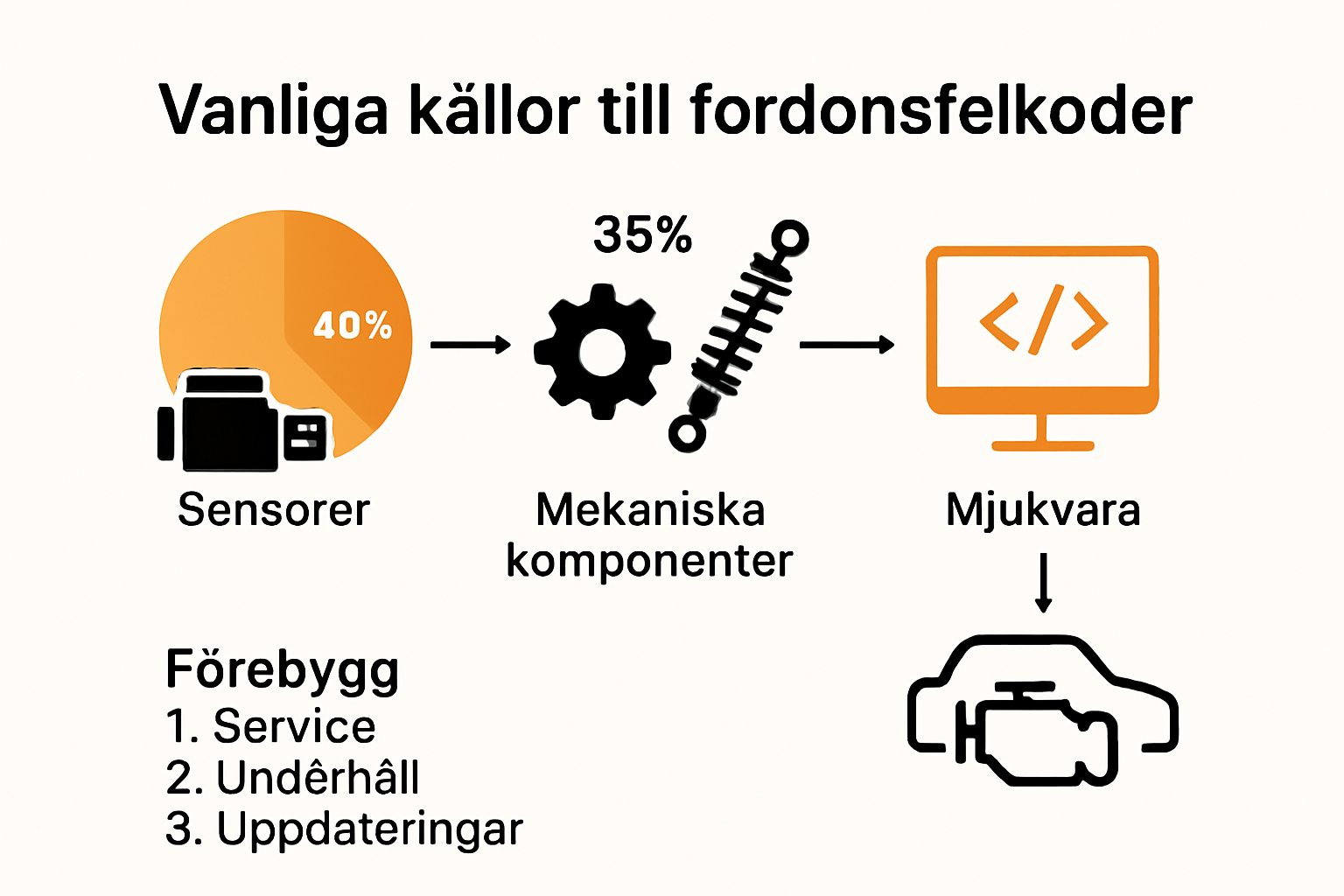
To provide a clear overview of the most common causes of fault codes in vehicles, we organize problem areas and examples in the table below.
| Cause Area | Examples of Faults/Problems |
|---|---|
| Sensor problems | Wear, electrical connection problems, electronic interference |
| Mechanical components and systems | Fuel pump, injectors, fuel filter, catalytic converter, lambda sensor, EGR |
| Software-related problems | Software bugs, incompatible modifications |
This table makes it easier to quickly understand which main areas can cause fault codes and provides examples for each category.
Sensor Problems and Electrical Interference
Many fault codes stem from problems with the vehicle's sensors. Modern vehicles are equipped with a network of sensors that monitor everything from engine performance to exhaust emissions. These sensors can suffer from various problems that lead to fault codes:
-
Wear and age-related faults: Over time, the precision of sensors can deteriorate. Temperature, vibration, and continuous exposure to the engine's extreme conditions affect their functionality.
-
Electrical connection problems: Loose or corroded electrical contacts can cause intermittent signals that generate fault codes. This can be due to moisture, heat, or mechanical stress.
-
Electronic interference: Sometimes external electromagnetic interference can affect sensor signals and create abnormal readings.
Mechanical Components and System Failures
In addition to sensor problems, mechanical components and system failures can be significant causes of fault codes. Here are some critical areas:
-
Fuel system components: Fuel pumps, injectors, and fuel filters can cause fault codes when they are not functioning optimally. For example, a partially blocked fuel injector can create uneven fuel delivery and trigger a fault code.
-
Exhaust system components: Catalytic converters, lambda sensors, and exhaust gas recirculation (EGR) systems are sensitive components that can generate fault codes at the slightest disturbance. Read more about diagnostic functions to better understand these systems.
Software-Related Problems
As vehicles become more dependent on advanced computer systems, the potential for software-related fault codes also increases:
-
Software bugs: Sometimes the vehicle's engine control unit (ECU) may have built-in software bugs that generate unnecessary fault codes. Software updates can often resolve such problems.
-
Incompatible modifications: Aftermarket accessories or improper modifications can create conflicts with the vehicle's original electronic systems and result in fault codes.
Understanding these common causes of fault codes is the first step towards effective troubleshooting. Regular maintenance, careful diagnostics, and proactive care can significantly reduce the risk of unexpected fault codes and ensure your vehicle operates optimally.
Preventive Maintenance to Avoid Fault Codes
When it comes to preventing fault codes and ensuring optimal vehicle performance, preventive maintenance is key.
Here is a summary table of preventive maintenance measures with examples from each category, so you can easily get an overview of what needs to be done regularly.
| Maintenance Measure | Examples of Tasks |
|---|---|
| Service intervals & inspection | Oil change, filter change, fluid level check, tire and brake check |
| Electrical system & sensors | Battery check, cleaning contacts, sensor maintenance (e.g., lambda sensor) |
| Software maintenance & diagnostics | ECU updates, use of fault code readers, avoid unnecessary modifications |
The table helps you prioritize and remember what is included in proactive maintenance to avoid future fault codes.
By being proactive, you can not only save money on expensive repairs but also extend your vehicle's lifespan and reduce the risk of unexpected problems on the road.
Regular Inspections and Service Intervals
The most basic step in preventive maintenance is to follow the manufacturer's recommended service intervals. Every vehicle has its specific needs, and by following the prescribed service plan, you can catch potential problems before they develop into serious faults:
-
Oil change and filter replacement: Regular oil changes are crucial for engine health. Old and dirty oil can cause increased wear and potential sensor failures.
-
Fluid levels: Regularly check and top up coolant, brake fluid, power steering fluid, and other critical fluids. Low fluid levels can lead to system failures and fault codes.
-
Tires and brakes: Regular checking of tire pressure, wear, and brake pads can prevent unnecessary strain on the vehicle's systems.
Electrical Systems and Sensor Maintenance
Electrical components are often the source of many fault codes. By paying attention to these systems, you can prevent potential problems:
-
Battery check: A weak battery can cause electrical interference and incorrect sensor readings. Check battery condition and clean corroded contacts.
-
Electrical connections: Inspect and clean electrical contacts and cables. Loose or dirty connections can cause intermittent fault codes. Explore more about vehicle diagnostic techniques to understand these systems better.
-
Sensor maintenance: Clean and inspect sensors such as lambda sensors, airflow meters, and temperature sensors. Dirt and corrosion can affect their accuracy.
Software Updates and Diagnostic Monitoring
Modern vehicles are essentially computers on wheels, which means software maintenance is as important as mechanical maintenance:
-
ECU updates: Manufacturers regularly release software updates that can fix known software bugs and improve system performance.
-
Regular diagnostic scan: Use a fault code reader for regular checks. This helps you identify potential problems before they become serious.
-
Avoid unnecessary modifications: Aftermarket accessories and unprofessional modifications can interfere with the vehicle's electronic systems and cause fault codes.
Preventive maintenance is not just about preventing fault codes, but also about ensuring safety, performance, and economy. By dedicating time and resources to regular care, you can avoid costly repairs and keep your vehicle in top condition.

Tools and Methods for Early Fault Detection
Technological advancements have made it easier than ever to detect and prevent vehicle problems before they escalate. With the right tools and methods, you can identify potential fault codes early and save both money and hassle.
Diagnostic Tools for Home Use
Modern diagnostic tools have made it possible for vehicle owners to perform basic troubleshooting themselves:
-
OBD II fault code readers: These compact devices connect directly to the vehicle's diagnostic port and provide immediate information about any system failures. They come in various price ranges, from simple models to advanced versions with detailed analysis reports.
-
Smartphone-based diagnostic tools: Many modern fault code readers can be connected wirelessly to mobile phones. Explore more about vehicle diagnostic techniques to understand how these tools work.
-
Professional diagnostic tools: For more comprehensive checks, advanced systems provide deeper insights into the vehicle's electronic systems.
Listening and Observational Methods
Sometimes manual inspection and attention can reveal potential problems before a fault code is displayed:
-
Sounds and vibrations: Unusual noises from the engine, brakes, or undercarriage can indicate incipient mechanical problems. Pay special attention to scratching, knocking, or whistling sounds.
-
Visual inspection: Regular checks of hoses, cables, tires, and other components can reveal signs of wear or damage long before they generate a fault code.
-
Driving characteristics: Changes in vehicle performance such as reduced fuel efficiency, rough running, or decreased acceleration can be early warning signs.
Digital Monitoring Systems
Advanced digital systems offer continuous monitoring of the vehicle's health:
-
Real-time monitoring: Modern vehicles have built-in systems that continuously check various components and can warn of potential problems.
-
Telematics systems: Some vehicle manufacturers offer apps and systems that provide detailed information about the vehicle's status directly to your smartphone.
-
Predictive maintenance technology: Algorithms and machine learning are being developed to predict potential faults based on historical data and driving conditions.
The key to effective troubleshooting is a combination of technology, regular inspection, and proactive thinking. By investing time and some resources in diagnostic tools, you can prevent major problems and ensure your vehicle remains reliable and safe.
Tips for Car Owners and Mechanics During Troubleshooting
Vehicle troubleshooting is a systematic process that requires methodical thinking, the right tools, and careful analysis. Both car owners and mechanics can improve their diagnostic skills by following certain basic principles and avoiding common mistakes.
Preparation and Initial Diagnosis
Successful troubleshooting begins long before any tools are brought out. Preparation and careful initial assessment are crucial:
-
Document symptoms: Write down exactly when and how the problem occurs. Details such as mileage, weather conditions, engine temperature, and specific noises can provide valuable clues.
-
Gather the right equipment: Always have basic tools available such as a multimeter, fault code reader, screwdrivers, and wrenches. Explore more about vehicle diagnostic techniques to understand which tools are required.
-
Systematic methodology: Follow a structured troubleshooting process. Start with simple checks and then move on to more complex tests.
Effective Troubleshooting Strategy
Once you have started the diagnostics, there are several critical approaches that can increase the chances of success:
-
Read and understand fault codes: OBD II fault codes provide important information. But remember that they are only the starting point, not the definitive solution.
-
Analyze history: The vehicle's previous maintenance and repairs can provide valuable insights into possible problem areas.
-
Test hypotheses methodically: Create a possible troubleshooting hypothesis based on symptoms and available information. Then systematically test each theory.
Safety and Professional Approach
Whether you are an amateur or professional mechanic, there are certain basic safety and professional principles:
-
Safety procedures: Always use safety glasses, gloves, and ensure the workplace is safe. Disconnect the battery during electrical inspections.
-
Document everything: Keep accurate notes of your observations, tests, and results. This can help with future troubleshooting.
-
Be cautious with interpretations: Do not rely solely on a single indication. Always confirm your suspicions through multiple tests and verification.
Successful troubleshooting requires patience, methodical thinking, and continuous learning. Every vehicle is unique, and every problem has its own complexity. By following these guidelines, both car owners and mechanics can improve their diagnostic skills and increase the chances of quickly and efficiently resolving vehicle problems.
Frequently Asked Questions
What causes fault codes in cars and motorcycles?
Fault codes can be caused by various issues such as sensor problems, mechanical component failures, or software-related issues. Common causes include worn sensors, poor electrical connections, and software bugs in the vehicle's control unit.
How can I prevent fault codes in my vehicle?
By performing regular maintenance, such as oil changes and inspection of electrical systems, you can reduce the risk of fault codes. Following the manufacturer's service intervals is crucial for keeping the vehicle in good condition.
What tools can I use to detect fault codes?
OBD II fault code readers are an important tool that connects directly to the vehicle's diagnostic port to quickly identify fault codes. Smartphone-based diagnostic tools can also be used to get information about the car's status.
How do I know if a fault code is serious?
Serious fault codes can affect the vehicle's performance, safety, and environmental impact. If a fault code indicates critical problems, such as engine or transmission failures, the vehicle should be checked by a professional mechanic as soon as possible.
Take control of fault codes – avoid unexpected stops
Worrying about fault codes and expensive workshop visits is common among both car and motorcycle owners. Many struggle with recurring problems such as a lack of information about fault codes, difficulties in understanding what triggers them, and the feeling of not being able to fix them on their own. The article shows how important diagnostic tools are for quickly detecting and rectifying problems, and that regularly using an OBD II fault code reader can make a big difference.
Make troubleshooting easier and safer with the right tools at home. At felkodslasare.se, you will find a wide range of modern fault code readers and accessories that help you prevent expensive repairs. Do you want to know more about exactly how an ELM327, Maxiecu, or other diagnostic products can suit your particular vehicle? Read our practical guides on the car's diagnostic functions or take the step directly and ensure safer driving by equipping yourself today. Start your journey towards less worry and faster troubleshooting directly at felkodslasare.se.
Recommended
- Behind the Scenes: The Technology Driving Modern Fault Code Readers – Felkodsläsare
- Numbers and Letters: Decoding Fault Codes with Your Reader – Felkodsläsare
- The Difference Between OBD-I and OBD-II Fault Code Readers – Felkodsläsare
- The Difference Between a Basic and Advanced Fault Code Reader for Cars – Felkodsläsare