

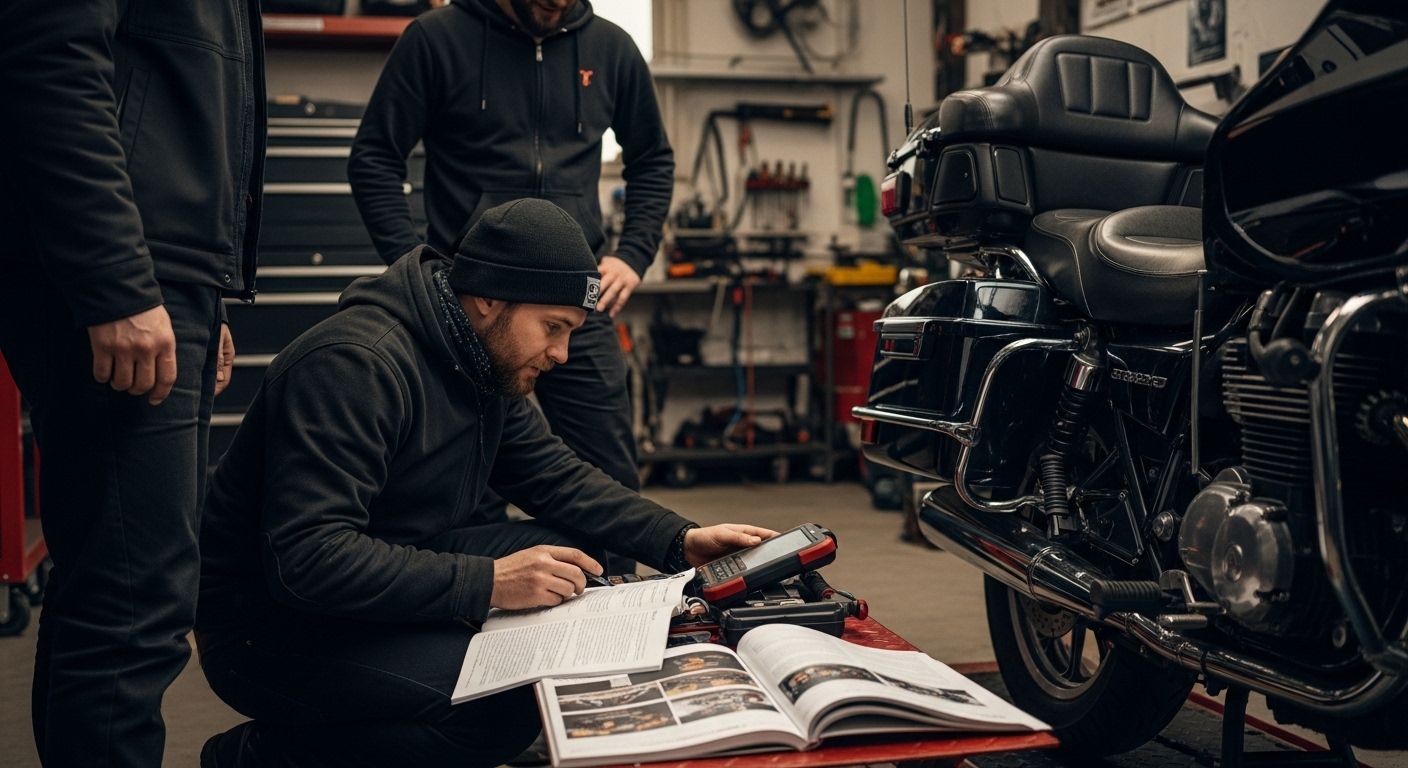
Motorcycle troubleshooting might sound like something only experts need to worry about, but the fact is that a small oil leak can lead to engine failure costing tens of thousands of kronor. Despite modern motorcycles being packed with technology, many riders miss the clear warning signs. The interesting thing is that basic troubleshooting skills not only prevent expensive repairs but can also increase your safety every time you get on your bike.
Table of Contents
- What is motorcycle troubleshooting and why is it important?
- The most common motorcycle problems and their causes
- How motorcycle components interact in troubleshooting
- Theoretical foundations for motorcycle troubleshooting
- Practical applications of motorcycle troubleshooting in reality
Quick Summary
| Insights | Explanation |
|---|---|
| Regular inspection prevents problems | Early symptoms like unusual noises can indicate problems before they become serious. |
| Troubleshooting increases driving safety | Identifying and fixing faults can prevent dangerous situations on the road. |
| Diagnostic tools are necessary | Use the right tools to identify motorcycle problems faster and more effectively. |
| Understand the interplay of components | Know how different parts affect each other to efficiently find persistent problems. |
| Proactive maintenance saves money | By addressing minor faults in time, you can avoid expensive repairs in the future. |
What is motorcycle troubleshooting and why is it important?
Motorcycle troubleshooting is a systematic process for identifying, analyzing, and resolving technical problems that can arise on a motorcycle. It involves understanding how different components work together and what symptoms might indicate underlying mechanical or electronic challenges.
Basic principles of motorcycle troubleshooting
Troubleshooting is more than just fixing something that's broken. It's a structured method for understanding the motorcycle's complex systems. Every motorcycle is a composite network of mechanical and electronic components that work in perfect harmony. When something goes wrong, a skilled troubleshooter must be able to trace the origin of the problem.
Some key principles include:
- Systematic methodical investigation
- Careful observation of symptoms
- Use of the correct diagnostic tools
- Understanding the motorcycle's specific technical specifications
Why troubleshooting is critical for motorcycle enthusiasts
For motorcycle enthusiasts, troubleshooting is crucial for several reasons. First and foremost, it's about safety. A faulty component can lead to dangerous situations while riding. Secondly, early identification of problems can prevent costly repairs later on.
A practical example: A minor oil leak that is ignored can eventually result in total engine failure, which would cost tens of thousands of kronor to repair. By understanding the basics of motorcycle diagnostics, enthusiasts can prevent such situations.
Furthermore, troubleshooting gives motorcycle owners a deeper understanding of their vehicles. It's not just a technical skill but also a form of respect for the machinery. Every problem solved increases one's knowledge and improves the ability to handle future challenges.
This table shows various basic troubleshooting principles and their importance for motorcycle enthusiasts.
| Principle | Importance |
|---|---|
| Systematic methodology | Structured troubleshooting ensures nothing is overlooked |
| Careful observation | Early detection of deviations reduces the risk of major faults |
| Correct diagnostic tools | Efficient and accurate identification of problems |
| Specific technical knowledge | Understanding the model's details provides better analysis |
| Holistic perspective | Identifies connections between different system failures |
The most common motorcycle problems and their causes
Motorcycles are complex machines that can suffer from several recurring technical problems. Understanding these common challenges is crucial for every motorcycle enthusiast who wants to keep their vehicle in top condition and prevent potentially costly repairs.
Mechanical system failures and electrical disturbances
Over the years, motorcycles are subjected to wear and tear that can lead to specific functional problems. Engine components such as brakes, clutch, transmission, and electrical systems are particularly prone to developing faults. Regular inspection and maintenance are key to preventing serious damage.
Some of the most common problems include:
- Brake pads wearing out too quickly
- Oil leakage from seals and gaskets
- Corroding electrical connections
- Battery losing capacity
- Fuel system clogging
Identification and prevention of motorcycle damage
Every motorcycle owner should be aware of early warning signs that may indicate upcoming mechanical problems. Unusual noises, vibrations, reduced performance, or rough running are signs that should not be ignored. See our detailed guide on troubleshooting methods for more in-depth information.
For example, a small oil leak, if left unattended, can lead to total engine failure. Similarly, a worn brake system can result in dangerous riding conditions. Proactive diagnosis and early intervention not only prevent expensive repairs but also ensure the motorcycle's optimal performance and safety.
With the right knowledge and regular maintenance, motorcycle enthusiasts can prevent most common problems and enjoy a safe and reliable riding experience.
Here are some of the most common mechanical and electrical problems on motorcycles and their typical causes, to facilitate quick identification.
| Problem | Type | Common cause |
|---|---|---|
| Worn brake pads | Mechanical | Normal wear, lack of maintenance |
| Oil leakage | Mechanical | Worn seals or gaskets |
| Corroded electrical connections | Electrical | Moisture, age, or poor insulation |
| Dead battery | Electrical | Age, short rides, charging system fault |
| Clogged fuel system | Mechanical/Electrical | Dirty fuel, infrequent use |
| Worn clutch | Mechanical | Age, aggressive riding |
| Rough engine running | Mechanical/Electrical | Injection or ignition system fault |
How motorcycle components interact in troubleshooting
A motorcycle is more than the sum of its parts. It is a complex ecosystem where every component is dependent on and affects the others.
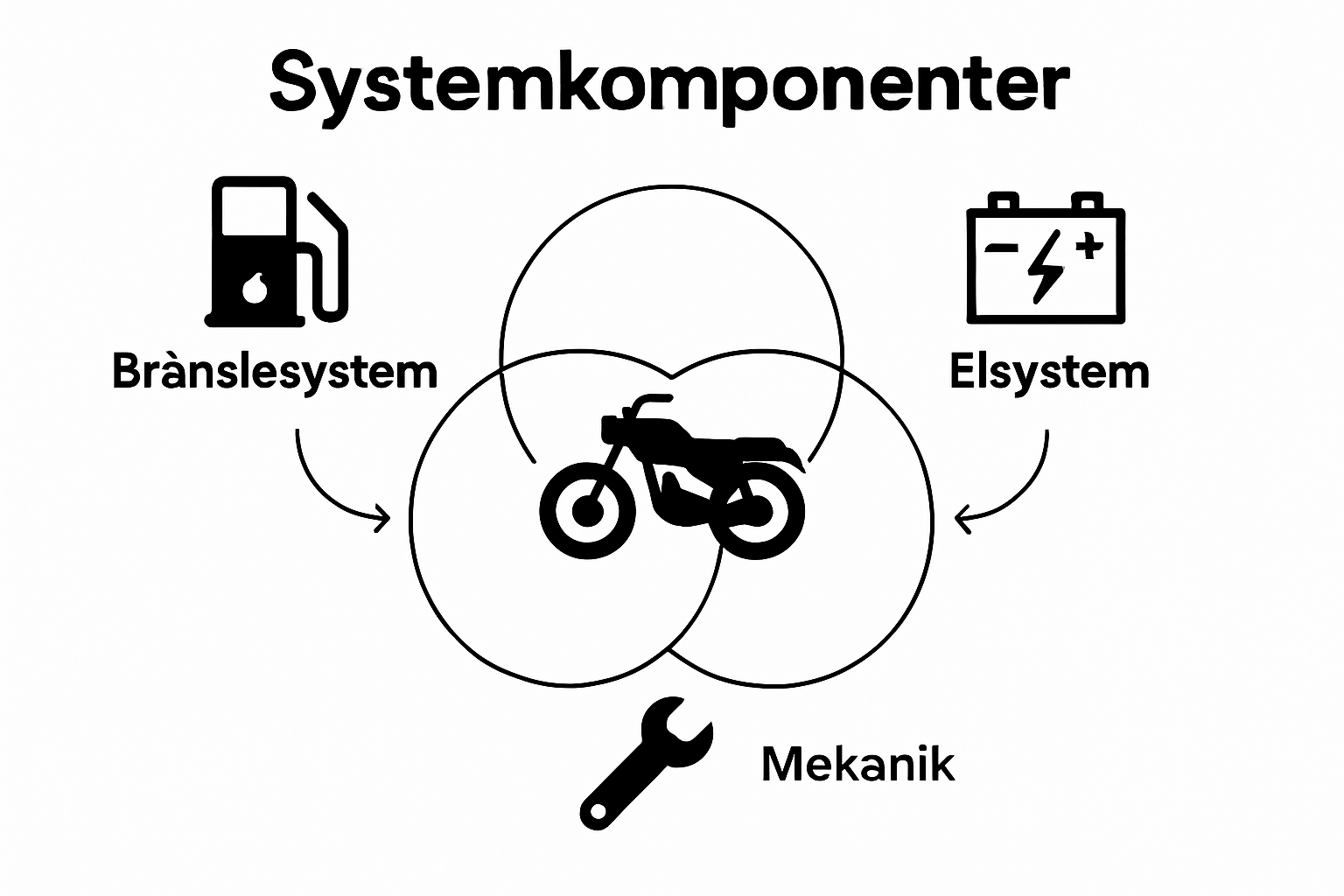 Understanding this interaction is crucial for effective troubleshooting and maintenance.
Systemic integration and communication
Modern motorcycles are sophisticated machines where mechanical and electronic systems work in perfect harmony.
The engine control unit acts as the brain that continuously monitors and adjusts the performance of various systems. Sensors strategically placed throughout the motorcycle send real-time information about temperature, pressure, fuel flow, and mechanical load.
Key interacting components include:
- Fuel system
- Ignition system
- Cooling system
- Electrical control system
- Mechanical transmission components
Diagnostic signals and interdependence
Every component failure sends specific signals that can reveal underlying problems. For example, a faulty sensor in the fuel system can affect the engine's fuel injection, which in turn impacts power and fuel economy. Explore advanced diagnostic techniques to understand these complex relationships.
A practical example is how a worn clutch can cause abnormal strain on the transmission, eventually leading to more extensive mechanical damage. By understanding how components communicate and affect each other, motorcycle enthusiasts can identify problems at an early stage and prevent costly repairs.
With deep knowledge of the motorcycle's systemic nature, troubleshooting becomes less of a guessing game and more of a systematic and precise diagnostic process.
Theoretical foundations for motorcycle troubleshooting
Motorcycle troubleshooting is a scientific process that combines technical knowledge, systematic thinking, and a deep understanding of the functionality of mechanical systems. It's not just about identifying problems but understanding the underlying principles that govern the motorcycle's complex mechanisms.
System theory and technical principles
At the foundation of motorcycle troubleshooting lies system theory - a perspective that views the vehicle as an integrated network of interconnected components. Every part affects and is affected by other parts, creating a dynamic and interdependent system. This holistic view is crucial for understanding how a fault in one component can cascade effects throughout the entire motorcycle.
Key principles include:
- Cause and effect relationships between components
- Energy transfer through mechanical systems
- Thermodynamic processes in the engine
- Flow and communication of electrical signals
- Material fatigue and wear mechanisms
Diagnostic reasoning and analytical approach
Successful troubleshooting requires more than technical knowledge. It's about developing an analytical reasoning that can systematically trace and isolate problems. Explore advanced diagnostic methods to deepen your understanding.
The diagnostic approach is similar to medical troubleshooting: identify symptoms, analyze possible causes, test hypotheses, and implement precise interventions. An experienced motorcycle troubleshooter can interpret subtle signals such as vibrations, unusual noises, or small performance changes, thereby predicting potential problems long before they become serious.
Theoretical knowledge combined with practical experience forms the basis for effective motorcycle troubleshooting - a balance between scientific precision and craftsmanship.
Practical applications of motorcycle troubleshooting in reality
Motorcycle troubleshooting is a dynamic process that requires practical experience, technical understanding, and a systematic approach. While theoretical knowledge provides a foundation, it is in real-world situations that true skill is developed and tested.
Field diagnostics and real-time analysis
Field diagnostics represents the critical point where technical knowledge meets practical problem-solving. Motorcycle enthusiasts must be able to identify and interpret symptoms quickly and efficiently, often under limited and challenging conditions. Modern diagnostic tools have revolutionized this process by providing real-time information about the motorcycle's performance.
Important aspects of field diagnostics include:
- Rapid identification of acute problems
- Use of portable diagnostic devices
- Interpretation of sensor data and fault codes
- Situation-adapted troubleshooting strategy
- Ensuring continued roadworthiness
Preventative maintenance and problem identification
Successful motorcycle troubleshooting is not just about fixing problems when they arise, but about anticipating and preventing them. Regular and thorough inspection is key to proactive maintenance. Explore advanced diagnostic techniques to deepen your understanding of preventative maintenance.
A practical example is how small vibrations or unusual noises can indicate upcoming mechanical problems long before they develop into serious faults. An experienced motorcycle owner learns to interpret these subtle signals, enabling early interventions that can save both money and potentially lives.
The true art of motorcycle troubleshooting lies in the ability to combine technical knowledge, practical experience, and intuitive judgment to keep the vehicle in optimal condition.

Take control of your motorcycle troubleshooting – quickly and easily
Do you recognize the frustration when unexpected fault codes or mysterious warning lights appear on your motorcycle? In this article, you will learn about the importance of systematic motorcycle troubleshooting, how problems can arise in both mechanical and electronic systems, and why early detection saves you both time and money. Many owners want to understand fault codes themselves and fix problems before they become serious, but lack convenient tools and clear guides.
Do as experienced enthusiasts and equip yourself with the right diagnostic equipment from Felkodslasare.se. Experience how easy it becomes to analyze fault codes and find out where the fault lies, whether it concerns ELM327 adapters or cables for BMW and other brands. Don't miss our current technical guides and troubleshooting tips that will help you understand every step. Discover how you can save money on your own and avoid expensive workshop visits – start by visiting Felkodslasare.se today.
Common Questions
What is motorcycle troubleshooting?
Motorcycle troubleshooting is a systematic process for identifying and resolving technical problems on a motorcycle by analyzing symptoms and understanding how different components interact.
Why is troubleshooting important for motorcycle owners?
Troubleshooting is crucial for safety, can prevent costly repairs, and increases the owner's understanding of the motorcycle's functionality.
What are the most common problems with motorcycles?
Common problems include worn brake pads, oil leaks, corroded electrical connections, battery issues, and fuel system clogging.
How can I identify early warning signs of motorcycle problems?
Early warning signs include unusual noises, vibrations, reduced performance, or erratic running, all of which can indicate underlying problems that should be checked.