

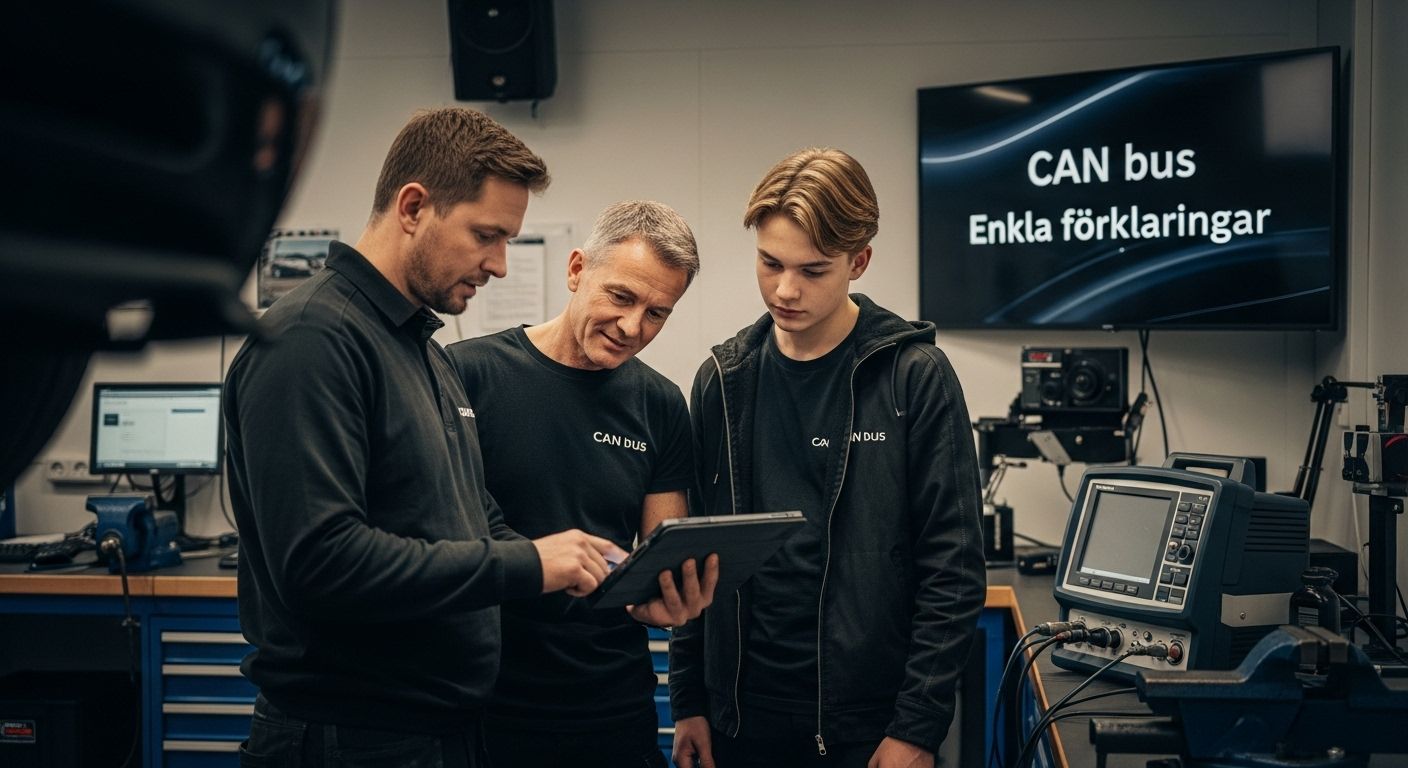
CAN bus is the system that has made modern cars act like smart, interconnected computers on wheels. It might sound obvious that everything in a car communicates with each other, but the fact is that up to 70 different electronic control units can send thousands of messages per second in a single vehicle. And yet, it's not the sheer volume of data that is most appealing about CAN bus. The truly unexpected thing is how this technology simplifies troubleshooting and makes it possible to find a fault in just a few minutes – something that previously could take hours.
Table of Contents
- How CAN bus works in vehicles
- Why CAN bus is important for car owners and workshops
- Common examples of CAN bus usage
- How to benefit from CAN bus as a technician or hobbyist
Quick Summary
| Conclusion | Explanation |
|---|---|
| CAN bus improves communication | It enables fast and efficient information exchange between many electronic components in the vehicle. |
| Simplifies troubleshooting and diagnostics | Technicians can quickly identify problems by reading fault codes from the vehicle's central system. |
| Improves system integration and performance | Different systems can cooperate to optimize fuel consumption and safety. |
| Enables customizations for technicians | Technicians can create their own modules and customizations to improve vehicle functions. |
| Requires the right tools and knowledge | Effective management of CAN bus requires specific tools and continuous training. |
How CAN bus works in vehicles
CAN bus is a sophisticated communication system that functions as a digital network for modern vehicles. Just like a complex nervous system, this system enables fast and efficient communication between various electronic components in a vehicle.
Communication principles in CAN bus
To understand how CAN bus works, one must first realize that modern vehicles contain up to 70 different electronic control units that constantly need to exchange information. These control units can include everything from the engine control unit and braking system to the climate control and entertainment system. CAN bus enables these components to communicate with each other in a standardized and efficient way.
Communication occurs when each control unit sends messages over a common line. These messages contain specific information that identifies the sender, priority, and the data packet itself. Each control unit can both send and receive messages, creating a decentralized communication system.
Data transmission and prioritization mechanisms
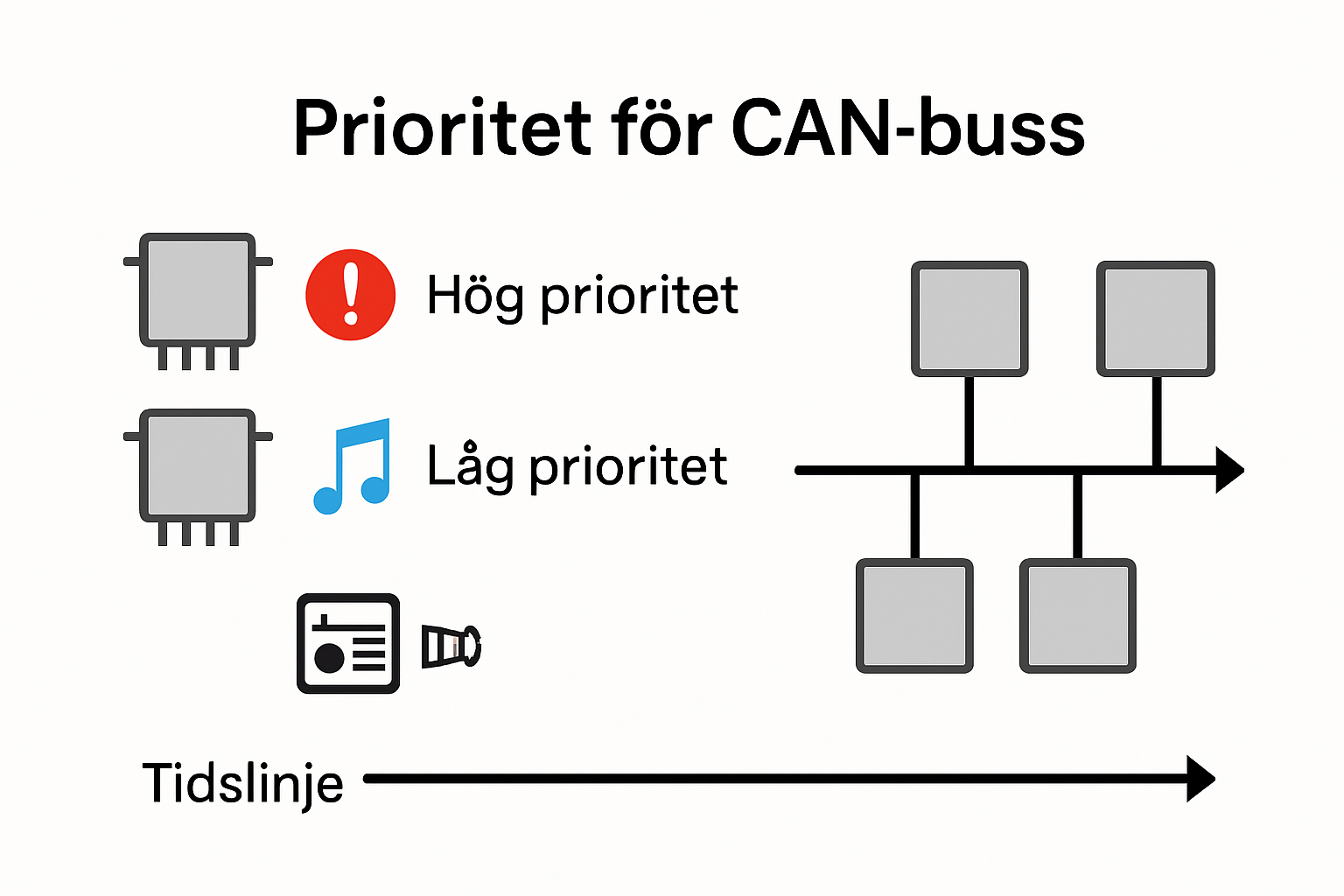
A unique feature of CAN bus is its prioritization mechanisms. Not all messages are equally important, and the system has a built-in method to handle this. Messages concerning safety-critical systems such as brakes or steering receive higher priority than less critical messages controlling the entertainment system.
Data transmission occurs extremely quickly, with speeds up to 1 Mbps (megabits per second) depending on the specific CAN bus version. This means that information can be sent and received virtually instantaneously between different electronic components in the vehicle.
The high reliability is achieved through advanced error identification and error correction mechanisms. If a message is corrupted during transmission, the system can automatically request that the message be resent, ensuring data integrity. Learn more about vehicle diagnostic systems to understand how this technology is used in practice.
In summary, CAN bus represents a revolutionary technology that enables fast, reliable, and efficient communication between vehicle electronic components. By acting as an intelligent network, CAN bus ensures that all systems can cooperate smoothly and contribute to a safer and more responsive driving experience.
Why CAN bus is important for car owners and workshops
CAN bus has revolutionized how vehicles communicate and function, creating significant benefits for both car owners and workshops. This intelligent communication system has transformed modern vehicle technology by offering more comprehensive diagnostic capabilities and improved system integration.
Simplified troubleshooting and diagnostics
For workshops and car owners, CAN bus represents a crucial technological innovation that simplifies troubleshooting and diagnostic processes. Previously, vehicle diagnostics was a time-consuming and complex procedure requiring manual inspection and separate systems for each electronic component. With CAN bus, technicians can quickly and accurately identify problems by reading digital fault codes directly from the vehicle's electronic system.
Modern diagnostic tools can now communicate directly with the vehicle's central system and retrieve detailed information about engine status, fuel efficiency, braking system, and other critical components. This means that workshops can perform more precision-based repairs in less time, resulting in lower costs and more efficient service for car owners. Explore modern diagnostic possibilities to understand how technology can optimize vehicle maintenance.
Improved system integration and vehicle performance
CAN bus enables seamless integration between different electronic systems in modern vehicles. This means that components that previously worked in isolation can now communicate and interact effectively. For car owners, this means an improved driving experience, better fuel efficiency, and more advanced safety features.
For example, the fuel system can communicate directly with the engine control unit to optimize fuel consumption, while safety systems like ABS and anti-skid can cooperate to ensure maximum driving safety. This integrated communication reduces the risk of mechanical failures and enables more sophisticated vehicle functions.
For workshops, CAN bus means they can offer more sophisticated services. Technicians can now perform more comprehensive diagnostic checks, anticipate potential problems before they arise, and provide more precise maintenance recommendations. This creates added value for both service providers and car owners through proactive vehicle management.
In summary, CAN bus has become a critical technology that improves communication, diagnostics, and performance in modern vehicles. For car owners and workshops, it represents an opportunity to work smarter, more efficiently, and with greater precision than ever before. By simplifying complex technical systems, CAN bus contributes to safer, more reliable, and intelligent vehicles.
Common examples of CAN bus usage
CAN bus technology has become fundamental in modern vehicles and is found in virtually all aspects of vehicle electronic systems. From safety features to entertainment systems, CAN bus demonstrates its crucial role in modern vehicle technology.
To help you quickly see typical CAN bus applications in modern cars, the table below provides an overview of examples from safety, comfort, and engine control.
| Area of Use | Example System | Benefits/Functions |
|---|---|---|
| Safety | ABS, anti-skid, electronic stability control | Coordinated protection, better control in emergencies |
| Comfort and entertainment | Climate control, GPS, audio system, smartphone integration | Improved user experience, smart features |
| Engine control and efficiency | Engine control, air and fuel sensors | Optimized fuel consumption, reduced emissions |
| Vehicle monitoring | Fault code monitoring, real-time data | Fast diagnosis, efficient maintenance |
Safety systems and vehicle monitoring
One of the most critical applications for CAN bus is within vehicle safety systems. Modern cars use CAN bus to coordinate advanced safety features such as anti-skid systems, ABS brakes, and electronic stability control. These systems continuously communicate with each other to ensure optimal driving and minimize accident risks.
For example, the braking system can immediately notify the control unit if a wheel loses grip, allowing the car to adjust brake pressure and stabilize the vehicle in fractions of a second. This rapid information exchange is crucial for preventing accidents and protecting drivers and passengers.
Comfort and entertainment systems
In addition to safety, CAN bus plays a central role in modern vehicle comfort and entertainment systems. Modern cars now integrate complex interconnected systems such as GPS navigation, climate control, audio systems, and smartphone integration. CAN bus enables seamless communication between these systems, creating a more cohesive and user-friendly experience.
Take, for example, how the climate control can communicate with the seat heaters and adjust the temperature based on ambient temperature and driver preferences. Similarly, multimedia systems can now seamlessly transmit navigation data to the dashboard and display directions directly in front of the driver. Discover more about vehicle diagnostic technologies to understand how these systems work together.
Engine control and fuel efficiency
At the heart of the vehicle's electronic system, CAN bus uses advanced algorithms to optimize engine performance and fuel efficiency. Through continuous communication between sensors that measure airflow, temperature, fuel pressure, and engine speed, the control systems can make real-time adjustments that maximize fuel economy.
For example, modern vehicles can automatically adjust the fuel-air mixture based on driving conditions, reducing fuel consumption and emissions. In addition, CAN bus enables more sophisticated hybrid and electric vehicle systems where energy management occurs with extremely high precision.
In summary, CAN bus has transformed modern vehicles from mechanical machines into intelligent, interconnected systems. By enabling fast, reliable, and versatile communication between different electronic components, CAN bus has become the backbone of modern vehicle technology, creating safer, more efficient, and more comfortable vehicles for today's drivers.
How to benefit from CAN bus as a technician or hobbyist
CAN bus technology offers a fascinating opportunity for technicians and automotive enthusiasts to understand and experiment with modern vehicle electronic systems. With the right knowledge and tools, you can explore the complex communication networks that power today's vehicles.
Diagnostic possibilities and troubleshooting
For technicians and enthusiasts, CAN bus represents a powerful entry into advanced vehicle diagnostics. With the right diagnostic tools, you can read and interpret fault codes, monitor vehicle parameters in real time, and identify potential problems long before they become serious. However, this requires a thorough understanding of the CAN bus protocol and the right equipment.

Modern diagnostic tools connected to the CAN bus system can extract detailed information about engine performance, fuel efficiency, electronic system status, and much more. For the technically interested hobbyist, this opens up a whole new world of insight into the vehicle's internal functions. Explore advanced diagnostic techniques to deepen your understanding of these systems.
Customization and modification of vehicle systems
CAN bus enables sophisticated system integration, allowing technicians and hobbyists to implement advanced customizations. Experienced experts can develop their own electronic modules that communicate directly with the vehicle's existing systems. This can include everything from custom display solutions and performance optimization systems to completely new safety features.
For example, a skilled technician can develop their own data logger that records detailed driving parameters, or construct an advanced dashboard with customized gauges and warning systems. Such projects, however, require deep knowledge of the CAN bus protocol, electronics, and programming.
Tools and competencies for CAN bus experts
To successfully work with CAN bus, technicians and hobbyists need specific equipment and competencies. Important tools include CAN bus adapters, diagnostic tools, oscilloscopes, and specialized software for protocol analysis. Programming languages such as Python and C++ are also useful for those who want to develop their own systems and software.
Below is an overview table of important tools and competencies that technicians and hobbyists need to work successfully with CAN bus.
| Tool/Competence | Area of Use |
|---|---|
| CAN bus adapter | Connects diagnostic tools to the car's CAN network |
| Diagnostic tools (e.g., OBD-II) | Reads and interprets fault codes/sensor values |
| Oscilloscope | Analyzes CAN signals and troubleshoots communication |
| Specialized software | Protocol analysis, data logging, development |
| Programming knowledge (e.g., Python, C++) | Create custom modules and customized solutions |
| Training/courses | Builds knowledge of CAN bus protocols and new technology |
It is crucial to understand the technical details, such as signal transmission speeds, message structures, and error handling mechanisms. Continuous education through courses, workshops, and practical projects is key to developing expertise in this rapidly changing field of technology.
In summary, CAN bus offers a fascinating opportunity for technicians and automotive enthusiasts to explore and experiment with modern vehicle electronic systems. By investing time in education, acquiring the right tools, and continuously updating their knowledge, you can develop impressive skills in vehicle diagnostics and system integration.
Frequently asked questions
What is CAN bus?
The CAN bus is a communication system that enables fast and efficient information exchange between various electronic components in modern vehicles. It functions as a digital network where up to 70 different control units can communicate with each other.
How does troubleshooting with CAN bus work?
Troubleshooting with CAN bus is simplified as technicians can read digital fault codes directly from the vehicle's central system. This allows problems to be identified quickly, often within minutes instead of hours.
What benefits does CAN bus offer car owners?
CAN bus improves the car owner's experience by enabling better system integration, increased fuel efficiency, and advanced safety features. This results in a more comfortable and safer driving experience.
What tools are needed to work with CAN bus?
To work with CAN bus, technicians and hobbyists need tools such as CAN bus adapters, diagnostic tools, and software for protocol analysis. Programming skills can also be beneficial for developing custom modules.
Take control of your car's hidden communication with CAN bus
Do you want to avoid long garage visits and uncertainty about what is actually happening in your car's electronic system? After learning how CAN bus enables quick troubleshooting and efficient communication between all control units in the vehicle, you surely know how important it is to have the right equipment to read and understand fault codes. Many car owners struggle with a lack of insight and unnecessarily expensive troubleshooting when they don't have access to good diagnostic tools and reliable information.
Start troubleshooting and analyzing your car's CAN bus system today. At Felkodslasare.se, you'll find expert-recommended diagnostic tools, cables, and accessories like ELM327 and BMW-specific solutions. With our modern fault code readers, you can interpret vehicle data yourself and save both time and money. Take the step towards safer and smarter car ownership – visit Felkodslasare.se and discover everything you need to understand and manage your car's CAN bus technology yourself.
Recommended
- Maximize Your Fuel Efficiency with a Fault Code Reader – Felkodsläsare
- Maximize Your Car's Fuel Economy with ELM327 Technology – Felkodsläsare
- Detective Work: Track and Solve Fault Codes with a Fault Code Reader – Felkodsläsare
- Safety and Privacy when Using ELM327: Make the Right Choice for Your – Felkodsläsare