


Toyota fault code readers – how to find the right tool on Felkodslasare.se
Is your Toyota's check engine light on and you don't know where to start? With a Toyota fault code reader, you can read your car's fault codes yourself, understand what's wrong, and determine if a simple fix is enough – or if it's time for the workshop. In this guide, we'll go through how OBD2 diagnostics work in Toyota, what types of fault code readers are available, and how to choose the right model for your specific car.
Based on insights from leading guides, we gather everything you need to know in one place. You'll get practical examples, clear step-by-step instructions, and a checklist of important functions. At the same time, we'll show you how Felkodslasare.se helps you filter between different fault code readers, compare price and function, and quickly find a tool that suits your Toyota, your budget, and your skill level.
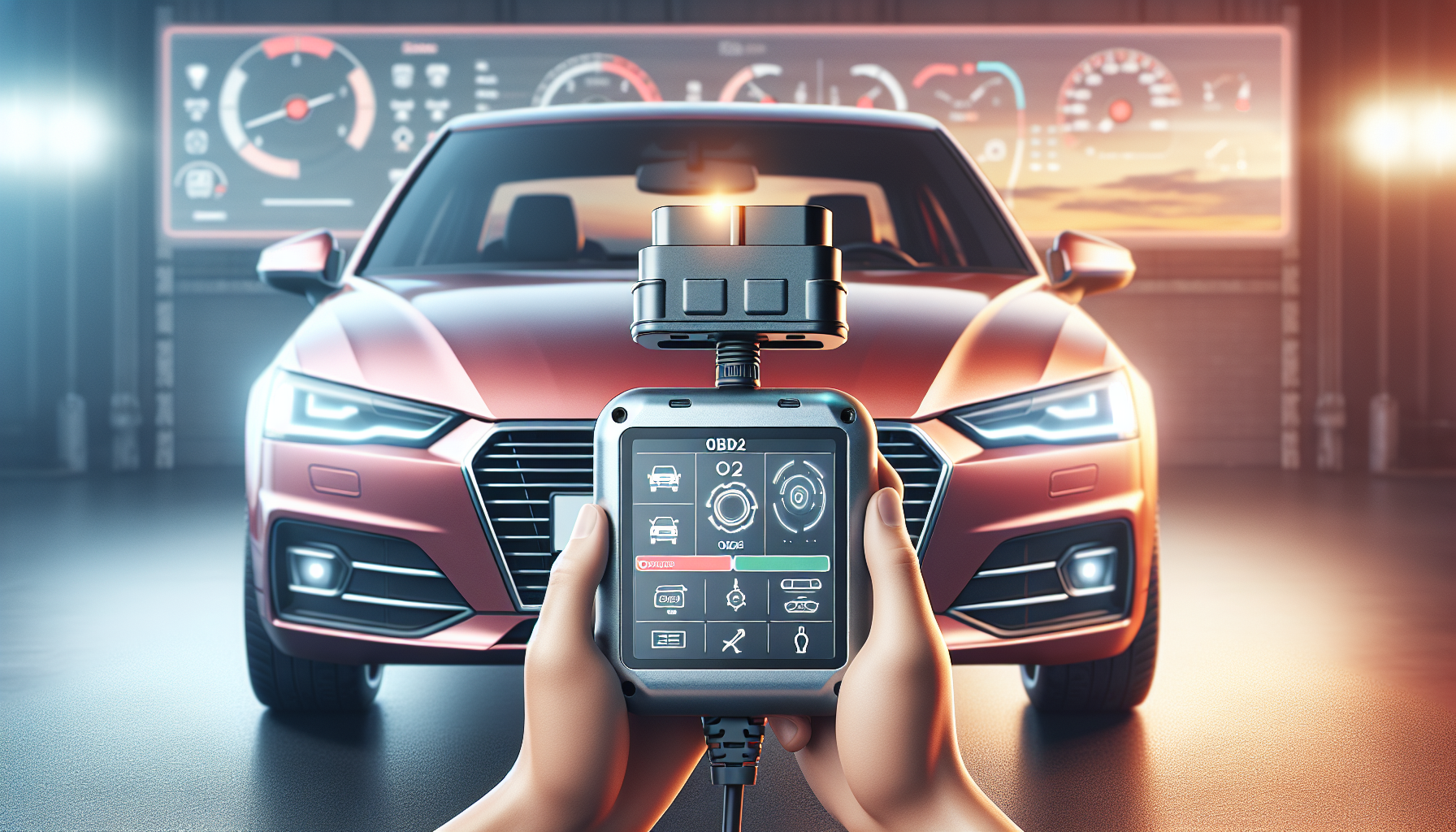
A Toyota fault code reader is a diagnostic tool that connects to the car's OBD/OBD2 port to read stored fault codes in the car's control system. When the check engine light comes on, the car runs unevenly, or the hybrid behaves differently, there is almost always a code stored in the system – and that's the code the fault code reader helps you find and understand. For Toyota owners, where a lot of electronics and hybrid technology are involved, a good diagnostic tool becomes even more valuable.
OBD/OBD2 and Toyota's diagnostic system – the basics you need
Modern Toyotas use OBD2 (On Board Diagnostics) as standard, which means that fault codes follow an international system. At the same time, Toyota has its own manufacturer-specific codes and systems – especially for hybrid, safety, and chassis. Here, the difference between simpler universal readers and Toyota-adapted fault code readers becomes clear:
-
Universal OBD2 readers: Primarily read engine-related codes (P0xxx) and are good for basic troubleshooting.
-
Toyota-adapted fault code readers: Can also read Toyota-specific codes (e.g., P1xxx, B-, C-, and U-codes), as well as systems such as ABS, airbag, VSC, hybrid battery, and 4WD.
-
Professional diagnostic tools: Often provide deep access to service functions, calibrations, and advanced data.
Many guides only mention that you can "read and erase codes," but miss how much difference the right type of reader makes on a Toyota, especially for Prius, RAV4 Hybrid, and other electrified models.
When is a fault code reader invaluable – and what do you gain from it?
In practice, a fault code reader becomes invaluable in several common situations: when the check engine light comes on before an inspection, when the car loses power on the highway, when an ABS or VSC light suddenly comes on, or when a hybrid feels unusually thirsty. By reading the codes yourself, you can:
-
Save money at the workshop by knowing more before booking an appointment.
-
Troubleshoot faster and rule out unnecessary repairs.
-
Monitor the car's health over time and detect problems early.
On Felkodslasare.se, you can filter for fault code readers that work well with Toyota and compare features, price, and reviews – something that many general articles about OBD2 don't go into detail about. This makes it easier to choose a tool that suits both your Toyota model and your skill level.
How OBD2 works in Toyota – the basics for car owners
To get the most out of a fault code reader for your Toyota, you first need to understand the basics of the OBD2 system. OBD stands for On-Board Diagnostics and is the standardized diagnostic system that allows your fault code reader to communicate with the car's control units. All gasoline-powered cars sold in the EU from 2001 and diesels from 2004 must have OBD2 – meaning that almost all modern Toyotas in Sweden are compatible.
OBD2 in different Toyota models and powertrains
In practice, the OBD2 standard means that you can use a fault code reader on most Toyotas, whether you drive a Yaris, Corolla, Avensis, RAV4, Hilux, Prius, or Proace:
-
Model years: Gasoline from approx. 2001, diesel from approx. 2004, hybrids (e.g., Prius, RAV4 Hybrid) from the start always have OBD2
-
Powertrain: Gasoline, diesel, hybrid, and plug-in hybrid share the same basic OBD2 connector
-
Imported cars: American and Japanese import Toyotas usually also have OBD2, but may use other protocols – always check compatibility on Felkodslasare.se
On most Toyotas, the OBD2 port is located under the dashboard, often near the steering column or fuse box. In some models (e.g., Prius), it may be a bit more hidden behind a plastic cover. A simple tip is to turn on your phone's flashlight and look for a small 16-pin connector roughly at your left knee when sitting in the driver's seat.
Generic codes vs. Toyota-specific codes
Once you've connected your fault code reader, you'll encounter two main types of codes. This is something many articles mention, but rarely explain clearly from a Toyota perspective:
-
Generic OBD2 codes (P0xxx): Apply to all car brands, e.g., P0420 (catalyst efficiency) or P0171 (lean fuel mixture). They can be read by almost all simple readers.
-
Manufacturer-specific Toyota codes (P1xxx, B-, C-, U-codes): Apply to Toyota-unique systems such as VSC, TRC, hybrid battery, 4WD, ABS, airbag, etc. This often requires a more advanced or Toyota-adapted fault code reader.
For you as a Toyota owner, this means that a cheap, simple reader is sufficient to read engine-related standard codes, but if you want to understand warning lights for e.g., stability control or hybrid powertrain, you need a tool that can read the manufacturer-specific codes. On Felkodslasare.se, you can filter for precisely such readers that explicitly support Toyota-specific systems, which is a great advantage compared to general retail solutions.
Types of fault code readers for Toyota – which one suits you best?
Once you understand the basics of OBD2, the next step is to choose the right type of fault code reader for your Toyota. Here, the needs differ greatly between someone who just wants to turn off a check engine light occasionally and someone who wants to monitor hybrid data in real-time or works professionally with service. By understanding the strengths and weaknesses of each category, it becomes easier to make a smart purchase via Felkodslasare.se.
Overview of main types of fault code readers for Toyota
- Simple OBD2 readers (handheld devices with display): Small, robust tools that connect directly to the port. They read and erase engine-related fault codes, often perfect for inspections and basic troubleshooting.
- Bluetooth/WiFi dongles + apps: An OBD2 adapter in the port and information is displayed on your mobile or tablet. Often provides more live data, graphs, and logging – popular among tech enthusiasts and hybrid owners.
-
Advanced Toyota-compatible diagnostic tools: More professional units that can access ABS, airbag, VSC, hybrid battery, etc. The right choice for small workshops, serious home mechanics, and those who want deep access to Toyota's own systems.
For many Toyota owners, a simpler reader goes a long way, but if you drive, for example, a Prius or RAV4 Hybrid, an adapter + app with support for hybrid data can provide completely different insights into battery health and energy flow.
Which type suits which Toyota owner?
To make the choice more concrete, you can consider how you use the car:
- Regular daily driver (e.g., Yaris, Corolla): A simple OBD2 reader is usually perfectly sufficient to check the engine light, prepare for inspection, and get basic diagnostics.
- Home mechanics and enthusiasts (e.g., Avensis, GT86, older Land Cruiser): A Bluetooth dongle with a good app or a mid-range handheld device provides more detailed data, the ability to log values, and follow trends over time.
- Hybrid and plug-in owners (e.g., Prius, RAV4 Hybrid, Corolla Hybrid): Choose a solution that explicitly supports Toyota hybrid systems, so you can see battery temperature, charge levels, and inverter data.
-
Business owners and small workshops (e.g., Hilux, Proace): A more advanced Toyota-compatible diagnostic tool that accesses ABS, airbags, and service functions quickly pays for itself in reduced workshop time.
On Felkodslasare.se, you can filter by type, price level, and functional scope. This means you don't have to guess – you can directly sort for fault code readers that are both compatible with Toyota and adapted to how you actually use the car. This is something often missing in general guides but makes a big difference when choosing the right tool for the first time.
Important functions in a fault code reader for Toyota (checklist before purchase)
When choosing a fault code reader for your Toyota, it's not just the price that matters – it's the functions that determine how much benefit you actually get from the tool. Many online guides mention "reading and erasing fault codes," but stop there. For Toyota owners, especially with hybrid or four-wheel-drive models, there are several other functions that make a huge difference in practice. This section serves as a concrete checklist you can keep next to you when comparing models on Felkodslasare.se.
Basic functions every Toyota fault code reader should have
-
Reading and erasing fault codes (DTC): Both generic OBD2 codes and manufacturer-specific Toyota codes for engine, transmission, and emissions.
-
Live data in real-time: Ability to see, for example, engine temperature, lambda values, fuel trim, boost pressure, and idle speed while the car is running.
-
Freeze frame data: Saves a "snapshot" of the engine's status when the fault occurred – invaluable for hard-to-find faults.
-
Readiness monitors before inspection: Shows if the car's self-tests are complete, so you avoid unnecessary re-inspections.
With these basic functions, you can not only turn off a check engine light, but also understand why it came on and if the fault has actually been fixed. Many simpler readers lack reliable live data or freeze frame – always check the specifications carefully on the product page at Felkodslasare.se.
Advanced functions – especially important for Toyota and Toyota Hybrid
-
Support for ABS, airbag, VSC/TRC, and 4WD: Important for models like RAV4, Hilux, Land Cruiser where chassis and stability systems are central to safety.
-
Toyota-specific hybrid functions: For Prius, Auris Hybrid, Corolla Hybrid, RAV4 Hybrid, etc., support for hybrid battery, inverter, MG1/MG2, and battery temperature is very valuable.
-
Service functions: E.g., resetting service intervals, EPB service (electronic parking brake) on newer models, and DPF-related data on diesel Toyotas.
-
Logging and export of data: Ability to save driving logs as PDF or CSV for your own analysis or to send to a workshop.
In practice, this means, for example, that you can:
-
Identify a weak lambda sensor by following its voltage curve in live data instead of just replacing parts on a whim.
-
Troubleshoot a stubborn ABS light by reading out exactly which wheel sensor or circuit fault is reported.
-
Check the health of the hybrid battery on a Prius or RAV4 Hybrid by seeing cell voltages and temperatures – something that can affect both resale value and peace of mind.
On Felkodslasare.se, you can filter products by precisely these functions. A smart approach is to first tick the systems you must have support for (e.g., hybrid + ABS), and then compare 2-3 models based on price, ease of use, and customer reviews. This way, you avoid both overpaying for professional equipment you'll never use, and underestimating your needs so that you soon have to upgrade again.
5. How to choose the right fault code reader for your specific Toyota model
Choosing a fault code reader for a Toyota is not just about price – it's about matching the right diagnostic tool with your specific car model, powertrain, and how you intend to use it. Here, we go through the most important choices so that you avoid guesswork and get a fault code reader that actually works fully with your Toyota. Felkodslasare.se also makes it easier with clear filters for model, year, and functional level.
Important factors: model year, powertrain, and usage
- Model year & protocol: Older Toyotas (late 90s/early 00s) can be more sensitive to compatibility than newer models. Ensure explicit support for your year range.
- Powertrain (gasoline, diesel, hybrid, plug-in):
- Gasoline/diesel often manage with a good OBD2 reader for the engine.
- Hybrid and plug-in often require a reader with support for Toyota's hybrid system and battery module.
- Swedish-sold vs. import: USA import (e.g., Camry, Tacoma) may use other protocols – choose a reader that indicates support for both EU and US markets.
- Usage level:
- Just read/erase engine faults → simpler OBD2 reader is sufficient.
- Read ABS, airbag, hybrid, service → choose a more advanced Toyota-adapted model.
A practical example: An older Corolla/Avensis gasoline 2005 often manages with an affordable OBD2 reader with an engine focus. A newer RAV4 Hybrid benefits more from a Bluetooth reader with an app that displays hybrid data and battery status. A Hilux or Proace as a work vehicle benefits from a robust tool with support for ABS, airbag, and service functions, so that you minimize downtime.
How to use Felkodslasare.se to hit the mark
On Felkodslasare.se, you can systematically sift through the options instead of guessing:
- Filter by car model and model year to only see fault code readers that have been tested or specified for your specific Toyota.
- Choose functional level:
- Basic – simple engine reading, perfect for "check engine light on."
- Intermediate – engine + certain support systems, live data, good for engaged car owners.
- Advanced – broad Toyota system coverage, ideal for workshop/enthusiast.
- Limit by price range and sort by customer ratings to see which models other Toyota owners are actually satisfied with.
By combining these filters with your own usage profile, you avoid both overbuying an expensive tool you won't use – and risking buying too simple a reader that can't communicate with Toyota's most important systems.
Step-by-step: how to use a fault code reader on your Toyota
Owning a fault code reader for your Toyota is one thing – actually using it correctly is another. Here, we go through a clear, practical step-by-step guide that follows the same workflow as many professional workshops, but adapted for you as a regular car owner. The goal is for you to feel confident, do it right from the start, and get the maximum value from your diagnostic tool.
Preparation and secure connection
Before connecting the fault code reader, you should always perform a few simple checks:
-
Park safely: Flat ground, parking brake engaged, gear in P (automatic) or neutral (manual).
-
Check battery: A weak battery can cause incorrect codes and interrupted readings, especially on hybrid Toyotas.
-
Select correct ignition position: Usually "ignition on" (ON) without starting the engine, unless the tool explicitly requires the engine to be running for live data.
-
Locate the OBD2 port: Typically under the dashboard on the driver's side, near the steering column or fuse box.
Once you've found the port, connect the fault code reader (or OBD dongle), wait a few seconds, and follow the instructions on the screen or in the app. On Felkodslasare.se, product images and manuals often show how your specific tool looks in practice.
Read, interpret, and manage fault codes correctly
Once the connection is established, the workflow usually looks like this:
-
Select car/"Auto detect": Many Toyota-adapted readers automatically identify the car via VIN.
-
Perform a system scan: Start with the engine control unit, but also scan ABS, airbag, and hybrid/EV systems if your reader supports it.
-
Read out fault codes (DTC): Note both the code (e.g., P0420) and description. Many apps offer Swedish text or a link to more information.
-
Document before erasing: Take a photo or screenshot of the codes – especially important for intermittent faults.
-
Erase codes thoughtfully: Only erase after you have checked or rectified the probable fault, and then perform a test drive to see if the code reappears.
Many car owners make the mistake of erasing all codes immediately "to turn off the light." This can hide important clues and make troubleshooting more difficult – both for you and for a potential workshop later.
Common pitfalls – and how to avoid them
Three things are particularly important with Toyota and modern diagnostic tools:
-
Don't confuse old and new faults: Some systems store historical codes. Focus first on "active" or "pending" codes.
-
Respect safety systems: Airbag and ABS codes should be taken seriously. If the same code reappears – book an appointment at a workshop.
-
Interpreting hybrid data?: On Prius, RAV4 Hybrid, etc., be careful with conclusions about high-voltage batteries. Feel free to use the fault code reader for an overview, but let an authorized workshop perform deeper tests.
By following this structure, you work methodically, save time, and avoid unnecessary mistakes. At Felkodslasare.se, you can also find readers with clear menus in Swedish and good documentation, which makes the entire process even easier – even if it's your first time plugging a fault code reader into your Toyota.
Common Toyota fault codes and how to interpret them
Once you have a fault code reader connected to your Toyota, the next step is to understand what the codes actually mean. Many Swedish Toyota owners encounter cryptic combinations like P0420 or C1201 and become unsure whether the car is drivable or if it needs to go to a workshop immediately. Here, we go through the most common Toyota fault codes in a way that allows you to reason structurally – instead of guessing.
Typical fault code areas for Toyota
-
Engine-related codes (P0300, P0301–P0304, P0171, P0420): Often indicate ignition problems, lean mixture, or catalytic converter efficiency. Common on, for example, Corolla, Avensis, and Yaris due to age or poor service history.
-
Fuel and exhaust systems (EGR, oxygen sensors, P0401, P0130–P0134): Often linked to soot, leaks, or worn sensors, especially on diesel and cars that are mostly driven short distances.
-
ABS/VSC/TRC codes (e.g., C1201, C1336): Relate to braking systems, wheel speed sensors, and stability control. Common on RAV4, Auris, and other models with VSC/TRC.
-
Hybrid-related codes (P0A80, P0A93, etc.): Concern high-voltage battery, inverter, or cooling of the hybrid system – typical on Prius and RAV4 Hybrid.
For many codes, combining the fault code reader's text explanation with a quick search is often sufficient. At Felkodslasare.se, you can often find links to guides, forum threads, and resources that delve deeper into the specific Toyota codes you see on the screen.
How to reason about an individual Toyota fault code
Always approach code interpretation with systematic thinking:
-
1. Note all codes: Write down or photograph all codes before doing anything. Multiple codes can be related and point to the same underlying problem.
-
2. Prioritize the first code: The first recorded code is often the one that triggered the chain reaction – address it first, especially on Toyotas where follow-up codes are common.
-
3. Combine code + symptom: Is the car running rough, consuming more fuel, or feeling normal? A P0420 without noticeable symptoms may be less urgent than a P0300 with severe jerking.
-
4. Compare with service history: Have spark plugs, coils, fuel filters, or EGR never been replaced? Then it's more likely that the fault lies there than in "exotic" components.
Example: If you get P0171 (System Too Lean) on a Toyota Corolla that runs well but has slightly less power in headwinds, you start by checking for vacuum leaks, a dirty mass airflow sensor (MAF), and possibly false air after the air filter – things you can often inspect yourself before a workshop visit.
When can you troubleshoot yourself – and when should you go to a workshop?
As a general rule, you can often handle simpler engine and exhaust codes yourself if you're a bit handy:
-
Suitable for self-troubleshooting:
- Codes related to oxygen sensor/catalytic converter when the car is running normally (e.g., P0420, P0130) – start by checking for leaks, wiring, and grounds.
- Ignition-related codes (P0301–P0304) where you can swap spark plugs or ignition coils between cylinders to see if the fault moves.
-
Minor ABS codes related to dirty sensors or damaged wires near the wheel arches, provided you can work safely around the brakes.
-
Should be left to a professional workshop:
-
Hybrid codes like P0A80 (Replace Hybrid Battery Pack) or inverter/cooling faults – these require specialized knowledge and high-voltage training.
- Brake and VSC codes where the car behaves unpredictably, warning lights flash intensely, or the brake pedal feels different.
- Recurring engine fault codes despite interventions – may indicate deeper mechanical problems (compression, valve issues, leaks).
A major advantage of having the right fault code reader for Toyota is that you can send the report (PDF, screenshots, or logs) directly to your workshop. This way, you avoid paying for an extra diagnosis just to read out codes. Via Felkodslasare.se, you can find models that support this – and that can also handle more Toyota systems than just the engine. This allows you to track the development of a fault code over time, instead of acting only when something really breaks.
Frequently Asked Questions (FAQ)
Q: Does a universal OBD2 reader really work on my Toyota, or do I need a Toyota-specific fault code reader?
A: All Toyotas sold in Europe from approximately 2001 (petrol) and 2004 (diesel) have OBD2 for engine management, so a simple universal reader can read basic engine faults (P0xxx). However, for systems like ABS, airbag, VSC/TRC, hybrid battery, AC, service reset, a more advanced, Toyota-adapted fault code reader is often required. If you just want to turn off the check engine light, a basic reader will work, but if you want a real diagnosis of the entire car, a Toyota-compatible model is a much better choice. On Felkodslasare.se, you can filter by both "OBD2 universal" and "brand-adapted/Toyota."
Q: Can I damage the car by using a fault code reader on my Toyota?
A: Simply reading fault codes and live data is practically risk-free as long as you use a reputable product. The risk only increases when you start performing advanced interventions (e.g., coding, calibration, resetting sensors) with workshop-level tools. If you choose a fault code reader for consumer use and follow the instructions, it is very difficult to cause damage. Always connect the reader with the ignition off, ensure the battery is okay, and do not disconnect it during an ongoing update.
Q: Why does the same fault code reappear after I clear it?
A: If a code reappears, it almost always means that the underlying problem still exists. Clearing only removes the symptom from the control unit's memory, not the physical fault. Example: a faulty oxygen sensor (e.g., P0130) will return as soon as the control system detects incorrect values again. Always document the codes with a photo/screenshot before clearing, address the cause (replace sensor, fix leak, etc.), and then use the fault code reader to check that the fault is truly gone after a test drive.
Q: Which fault code reader is best if I have a Toyota hybrid, such as a Prius or RAV4 Hybrid?
A: For Toyota hybrids, you should choose a tool that explicitly mentions support for hybrid and high-voltage battery systems. This means the reader can extract data from the battery pack, inverter, MG1/MG2, cooling, and sometimes even display battery temperature and charge status per block. On Felkodslasare.se, you can filter by both car model/year and by functions such as "hybrid system" and "battery monitoring." Avoid the simplest OBD2 dongles if you want real insight into the hybrid powertrain.
Q: Do I need an internet connection to use a fault code reader for Toyota?
A: The actual communication with the car takes place locally via the OBD2 port, so you don't need internet to read/clear codes or view live data. However, many mobile apps use online databases to provide better descriptions of codes, log drives in the cloud, or update software. If you often have poor reception (e.g., in a garage), a standalone reader with built-in code descriptions can be an advantage. On Felkodslasare.se, you can clearly see whether a product requires an app account, cloud connection, or works completely offline.
Q: Are cheap OBD2 dongles from the internet a good alternative for my Toyota?
A: Some cheap dongles work okay for basic engine readings, but the differences in stability, security, and Toyota support are significant. Low-cost products can lose connection during reading, provide incorrect values, or lack support for important protocols. There are also security aspects if the app collects data. By choosing a device that has been tested on specific Toyota models – and preferably recommended or reviewed by other users on Felkodslasare.se – you reduce the risk of problems and get more reliable diagnostic results.
Conclusion: Make your Toyota diagnosis easy, safe, and smart
You have now received a complete overview of how a fault code reader for Toyota works, what types are available, which functions really matter, and how to step-by-step use the tool on your own car. By understanding the OBD2 system, common Toyota fault codes, and the difference between simple and advanced diagnostic tools, you can make significantly smarter decisions than many car owners – and avoid unnecessary workshop visits and guesswork about what's wrong.
The next step is to put this knowledge into practice. Go to Felkodslasare.se, filter by your Toyota model, year, drivetrain, and desired function level, and compare a few selected fault code readers side by side. Choose a model that matches both your budget and your skill level, order it – and start using the fault code reader as a tool for preventive maintenance. With the right diagnostic tool in hand, you gain better control over your car's health, save time and money, and can drive your Toyota with greater confidence in everyday life.