
Has the engine light on your dashboard illuminated and you're wondering what it actually means? With today's advanced car diagnostic tools – sometimes called fault code readers or OBD2 tools – you can quickly identify hidden car problems yourself, interpret fault codes, and make informed decisions about the next steps. Many Swedish car owners have already discovered how these smart tools eliminate expensive workshop visits and provide increased control over their car.
In this guide, you'll learn how to save both time and money, interpret warning lights in no time, and choose the right diagnostic tool based on your specific needs. Whether you're a private individual or a small business owner in the automotive industry, this is your guide to a simpler, safer, and more economical daily car life – with the help of modern diagnostic technology.
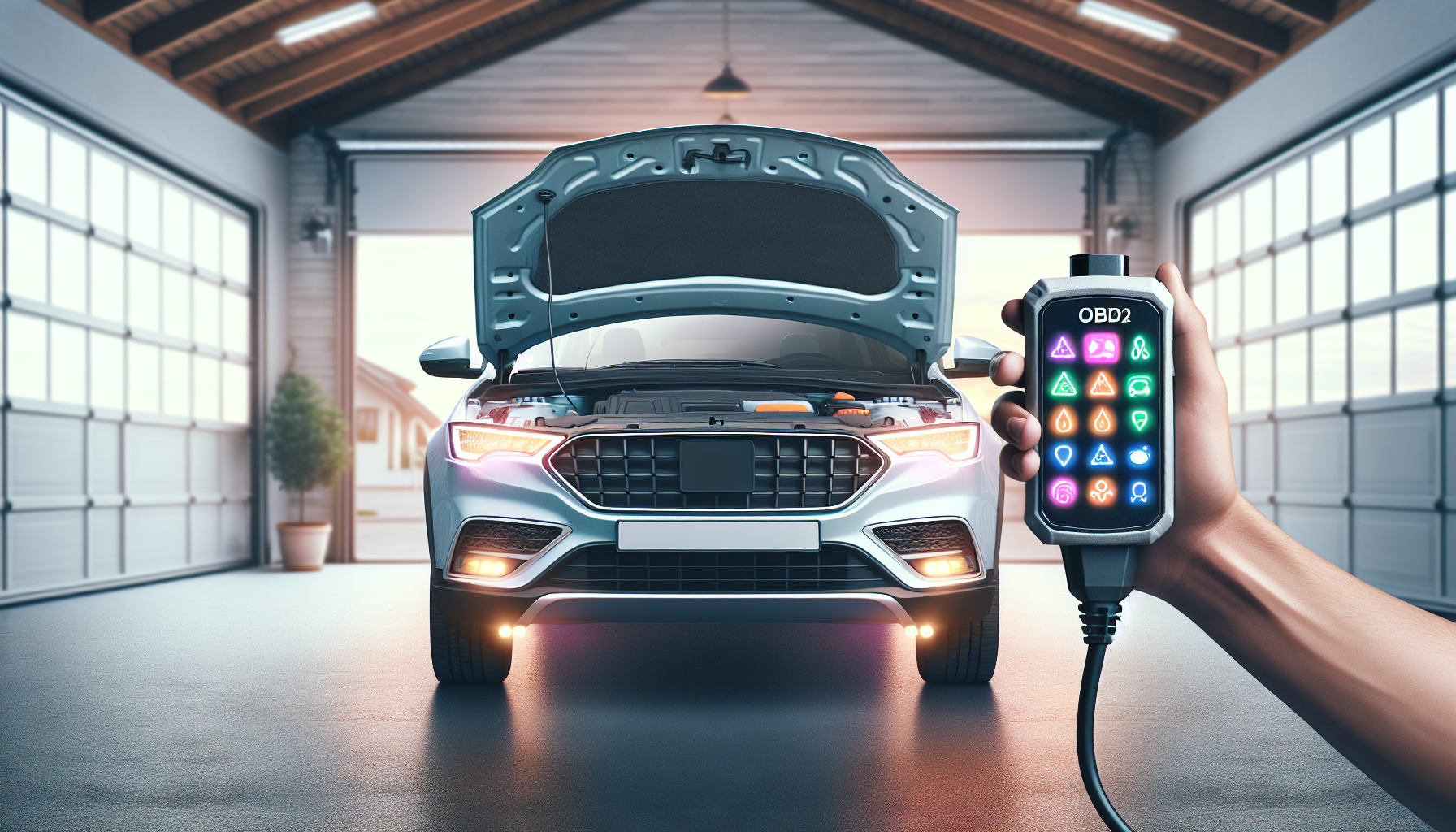
More and more car owners are discovering the benefits of using car diagnostic tools – also called fault code readers or OBD2 tools – to deal with sudden warning lights and fault codes in their cars. A car diagnostic tool is an electronic aid that connects directly to the vehicle's diagnostic port (OBD port) and automatically reads any error messages from the car's control units. The tool makes it possible to detect both obvious and hidden problems, long before they develop into costly repairs or risky breakdowns on the road.
Why is a car diagnostic tool invaluable for car owners?
- Quick fault identification: Instead of stressing over unexplained warning lights, a car diagnostic tool provides direct answers to what the problem actually is. This makes troubleshooting independent and efficient, saving both time and worry.
- Preventive measures: Many fault codes relate to incipient problems that can be easily remedied if detected early. This applies to everything from exhaust values to electronics and sensors.
- Tools for all situations: Whether you want to understand a simple engine warning yourself, or troubleshoot more advanced systems on a modern electric car, there are tailored tools for all needs and car types.
-
Adaptability: Modern car diagnostic tools range from compact, budget-friendly models for beginners to advanced instruments with deep analysis functions for professional users and workshops.
Interest in car diagnostic tools has increased significantly due to the development of more user-friendly and powerful products. Unlike in the past, when diagnostics were only available at authorized workshops at high costs, today almost every car owner can read and understand fault codes themselves. In addition, it is possible to directly inform the mechanic about the car's problems – which often leads to quicker and cheaper repairs.
The tool's role in both simple and complex faults
Whether it's a simple engine warning or more complex system faults, a car diagnostic tool is one of the most valuable tools in every car owner's daily life. Automated readings, the ability to erase fault codes, and access to live data from the car's sensors mean you can make better decisions – both during service and in case of acute malfunctions. This means safer car ownership, better control over your finances, and – not least – increased confidence when something happens on the road.
Economic benefits – save money through self-diagnosis
Owning your own car diagnostic tool is not just about access to technical information – it often means significant financial savings for car owners. Traditionally, it has been both expensive and cumbersome to have to visit a workshop just to read fault codes or interpret a warning light. With your own OBD2 tool, you avoid recurring fees and can easily identify what actually needs to be done.
Comparison: One-time investment vs. ongoing workshop costs
-
One-time investment: A modern car diagnostic tool often costs as much as only one or two fault code reading visits to an authorized workshop. The investment quickly pays for itself and can be used again and again without extra cost.
-
Avoid unnecessary workshop visits: Instead of paying for every troubleshooting session, you can check the car's system yourself at the slightest sign of a problem. Many problems can be solved yourself or described more precisely to the mechanic, which reduces the risk of overcharging or unnecessary measures.
-
Greater bargaining power: Knowing the nature of the fault before a workshop visit allows you to negotiate better regarding both measures and price. For smaller car companies, this also becomes a strategic advantage when servicing several cars.
In other words, it's not just about direct money saved but also about gaining control over the car's health and status. Many users testify how a simple warning light otherwise leads to expensive troubleshooting, even though the problem turns out to be an easily remedied minor issue – something a personal tool quickly clarifies.
Benefits in both the short and long term
Financial gains arise immediately, but also in the long term. With the right tools and knowledge, you avoid unnecessary repairs, long workshop times, and minimize the risk of consequential damages. In addition, good fault handling and quick diagnosis contribute to maintaining the car's value. Whether you are a private individual or run a small car company, self-diagnosis is not only a smart choice but a real investment in control and security.
The most important functions of modern car diagnostic tools
Modern car diagnostic tools have evolved far from the simpler fault code readers that only showed basic engine faults. Today, these tools offer a range of functions and possibilities that give the car owner or workshop control and complete insight into the car's systems. Whether you are a hobbyist or a professional mechanic, the right functions can make a big difference in troubleshooting, maintenance, and daily use of your car.
Functions that make a difference
- Read and erase fault codes: The most basic but also crucial function; quickly get an overview of faults and warning signals that your car has registered.
- Live sensor data (real-time diagnostics): Ability to monitor data directly from the vehicle's sensors, such as temperature, RPM, fuel pressure, etc. Perfect for analyzing problems that don't always trigger a fault code.
- Advanced service functions: For example, resetting service indicators, electric parking brake (EPB), battery replacement (BMS), DPF regeneration, and ABS system control. Tools like XTOOL E2S have up to 42 special functions and support over 85 car brands!
- Support for electric cars and hybrids: Control and testing of battery packs, individual cell monitoring, and the ability to diagnose components outside the car, which is invaluable for modern electric and hybrid vehicles.
-
Wireless connection to mobile/tablet/computer: With models like Vgate vLinker MC+ Bluetooth, you can easily connect to iOS, Android, and Windows, opening up new areas of use and applications.
In addition to basic functions, advanced tools offer the ability to create reports for further analysis, which is particularly valuable for car companies, service workshops, or the tech-savvy private individual. Some tools also offer topology maps for a quick overview of the car's entire communication network, something that was previously only possible at authorized workshops.
Updates, compatibility and future-proofing
When choosing a car diagnostic tool, the ability to update the software is crucial for long-term usability. Technology is evolving rapidly, and new car brands, models, and electric car features are constantly being added. Therefore, choose a tool where updates are included or easy to install. Also, check that the tool is compatible with your specific car – you can often find this information from Swedish retailers who provide clear support and warranty. By subscribing to newsletters and campaigns, you will also receive ongoing information about new functions and offers, and can maximize the value of your investment.
How to use a car diagnostic tool? Step-by-step guide
Using a car diagnostic tool may seem advanced at first, but with the right guidance, it is both simple and convenient. With today's technology, you don't need to be a mechanic or tech expert to quickly find out what your car is trying to tell you. Here, we guide you through the entire process, based on both top-performing sources and unique user tips, so that you get the most out of your OBD2 tool.
How to connect and start the diagnosis
- Locate the OBD2 port: The connection is usually under the dashboard, often near the driver's side.
- Connect the tool: Insert the OBD2 tool into the port when the car is off. Some modern models connect via Bluetooth, others via cable.
- Start the car and connect to the app or computer: Turn on the ignition and open the recommended app on your mobile or computer. Follow the instructions to connect the tool via Bluetooth or USB.
- Read fault codes: Let the tool scan for fault codes. You will now receive a list of any faults or warning codes.
- Interpret and fix: Many tools directly describe what the code means. Simple faults can sometimes be fixed yourself or by following instructions, while more advanced problems may require workshop assistance.
-
Erase fault codes: After addressing the issue, you can often erase fault codes to reset the system's status.
Interpret the results & when to seek help
Remember that not all fault codes always indicate an urgent problem. Mild deviations can occur, for example, due to poor refueling or temporary sensor responses. Interpret the result with the tool's guidance and research the fault code if uncertain – many apps and manuals offer explanations in Swedish. In case of more serious faults, or if the same code appears several times after deletion, you should book an appointment with a workshop for further diagnosis. A valuable strategy is to save the report digitally to easily share the information with your mechanic.
Get more out of your diagnosis – pro tips for best results
Try performing regular diagnostics, especially before longer trips or service. This way, you can detect hidden problems in good time, which provides security and can save both money and hassle. Also, take advantage of the live data monitoring capabilities if your tool supports it – it is particularly useful for monitoring engine data, battery status (for electric/hybrid cars), and other vital functions. Finally, if the tool has cloud storage or email functionality, store your diagnostic reports for easy follow-up and increased overview of the car's history.
How to choose the right car diagnostic tool for your needs?
Choosing the perfect car diagnostic tool is about finding the right balance between functionality, user-friendliness, and price, but also about ensuring that the tool is adapted to your specific car model and your requirements. Today there is a wide range on the market – from simple OBD2 readers to advanced workshop systems with support for electric cars, hybrid systems, and special functions. Regardless of whether you are a private individual, a small business owner, or an authorized workshop, the choice of the right diagnostic tool will be crucial for how smoothly and efficiently you can solve car problems.
How to make the right choice
To find the right diagnostic tool, you should first and foremost consider a number of important factors:
- Car model and year of manufacture: Check that the tool is compatible with your specific car, especially if you have a newer model, electric car, or hybrid.
- Functionality: Consider whether you need a tool that can only read and erase fault codes, or if you need more advanced functions such as live data, service reset, ABS/SRS diagnosis, and battery logging.
- User-friendliness and language: Choose a tool with a clear interface – preferably in Swedish – and support from a Swedish retailer.
- Price and warranty: Compare prices and investigate what warranties, updates, and customer support are included. It is often worth investing a little more for reliable support and future-proofing.
-
Extra tips: Subscribe to newsletters or offers from established retailers to receive information about new updates and exclusive campaigns.
Choosing a cheap universal tool may be sufficient for simpler needs, but more advanced troubleshooting or working with newer vehicles often requires a professional tool with broader support and capabilities. By seeking expert reviews and ensuring that the product is certified for Swedish conditions, you minimize the risk of compatibility issues and get more out of your investment.
The value of the right retailer and continuous updates
It's not just technical specifications that determine the choice of a car diagnostic tool – reliable support, good warranty, and recurring software updates are just as important. Swedish retailers who offer Swedish support, clear documentation, and fast delivery simplify the entire experience and make it safer to troubleshoot and maintain your car. Therefore, make sure to stay updated via retailers' newsletters and offer channels to always be one step ahead and easily be able to utilize new features and technological developments.
Frequently Asked Questions
Q: What is the most important thing to know about car diagnostic tools before investing in one?
A: The most important thing to understand is that a car diagnostic tool, especially a modern OBD2 fault code reader, gives you control over your car's health and can identify problems long before they develop into costly faults. With the right tool, you gain access to the car's hidden information, save money on workshop visits, and can make more informed decisions, whether you intend to fix the fault yourself or hand it over to a mechanic.
Q: How has the use of car diagnostic tools evolved in recent years?
A: In recent years, car diagnostic tools have evolved from being complicated and expensive devices, primarily for professional workshops, to user-friendly and affordable tools that all car owners can use. Trends such as smartphone integration, Bluetooth functionality, and the ability to read real-time data have increased accessibility and understanding of car systems, even for ordinary private individuals. Furthermore, the range of compatible tools for electric cars and hybrids has significantly expanded.
Q: What common mistakes do car owners make when using car diagnostic tools for the first time?
A: A common mistake is to blindly rely on basic fault codes without interpreting the context or checking the root cause of the fault. Many forget to check the compatibility between the tool and the car model, or miss important software updates. Another mistake is trying to erase fault codes before fixing the underlying problem – this does not solve the fault and can, in the worst case, complicate future troubleshooting.
Q: What tools or resources are recommended for a beginner?
A: For a beginner, it is best to choose a user-friendly OBD2 tool with support for Swedish cars, such as models from Vgate or iCarsoft. It's advisable to go for a fault code reader that has a Swedish manual, Bluetooth connection, and a clear app/support. Resources such as instructional videos on Youtube, the manufacturer's website, and contact with customer service at Swedish retailers further increase confidence.
Q: How can I get started with a car diagnostic tool today?
A: Start by choosing an OBD2 tool that is compatible with your car. Plug it into the OBD2 port, download the recommended app to your mobile or computer, and follow the installation guide. Read the car's fault codes, note them, and compare them with the app's descriptions. In many cases, you can turn off warning lights yourself after fixing the issue or go to a workshop with better information about the fault.
Q: Does buying from Swedish retailers offer any extra security, and why?
A: Yes, Swedish retailers often offer support in Swedish, warranties, and fast and secure delivery. In addition, extra services are sometimes offered – such as a customer club, newsletters, and guides – which gives you access to updates and exclusive offers on spare parts and accessories.
Q: Can a car diagnostic tool be used on multiple car models or only on specific cars?
A: Most modern car diagnostic tools, especially OBD2 fault code readers, work on virtually all cars from model year 2001 (petrol) and 2004 (diesel) onwards. However, it is wise to check that the tool also covers any special functions if you have an electric car, hybrid, or an unusual car model. Always check the tool's compatibility list before purchase.
Take control of your car and your finances with the right car diagnostic tool
Investing in a modern car diagnostic tool not only gives you insight into your car's health condition but also the ability to quickly and cost-effectively identify and rectify fault codes. You avoid unnecessary workshop visits, have the tools to make the right decisions, and can both save money and feel more secure as a car owner. Whether you are a private individual or have a small car company, you will become less dependent on the workshop's assessments and can manage more yourself.
Take the next step towards smarter car ownership by choosing a diagnostic tool that suits your needs – and don't forget to stay updated via newsletters or trusted retailers. This way, you get maximum value from your tool and are always ready for future challenges on the roads. Invest in knowledge and tools – for your car's best, and for your wallet.