
Have you ever wished you could understand what's really going on under the hood of your car? With today's advanced vehicle diagnostic systems, it's entirely possible – thanks to OBD2. Whether you're a car owner, a hobby mechanic, or just want to save on garage costs, OBD2 offers an efficient way to quickly identify problems and optimize your car's performance.
In this guide, you'll learn the basics of On-Board Diagnostics 2, how the system works in your car, the most important tools and apps, and how you can make the most of OBD2 for troubleshooting and servicing. We answer common questions, highlight safety aspects, and show why the right knowledge of this system is crucial for modern car ownership in Sweden.
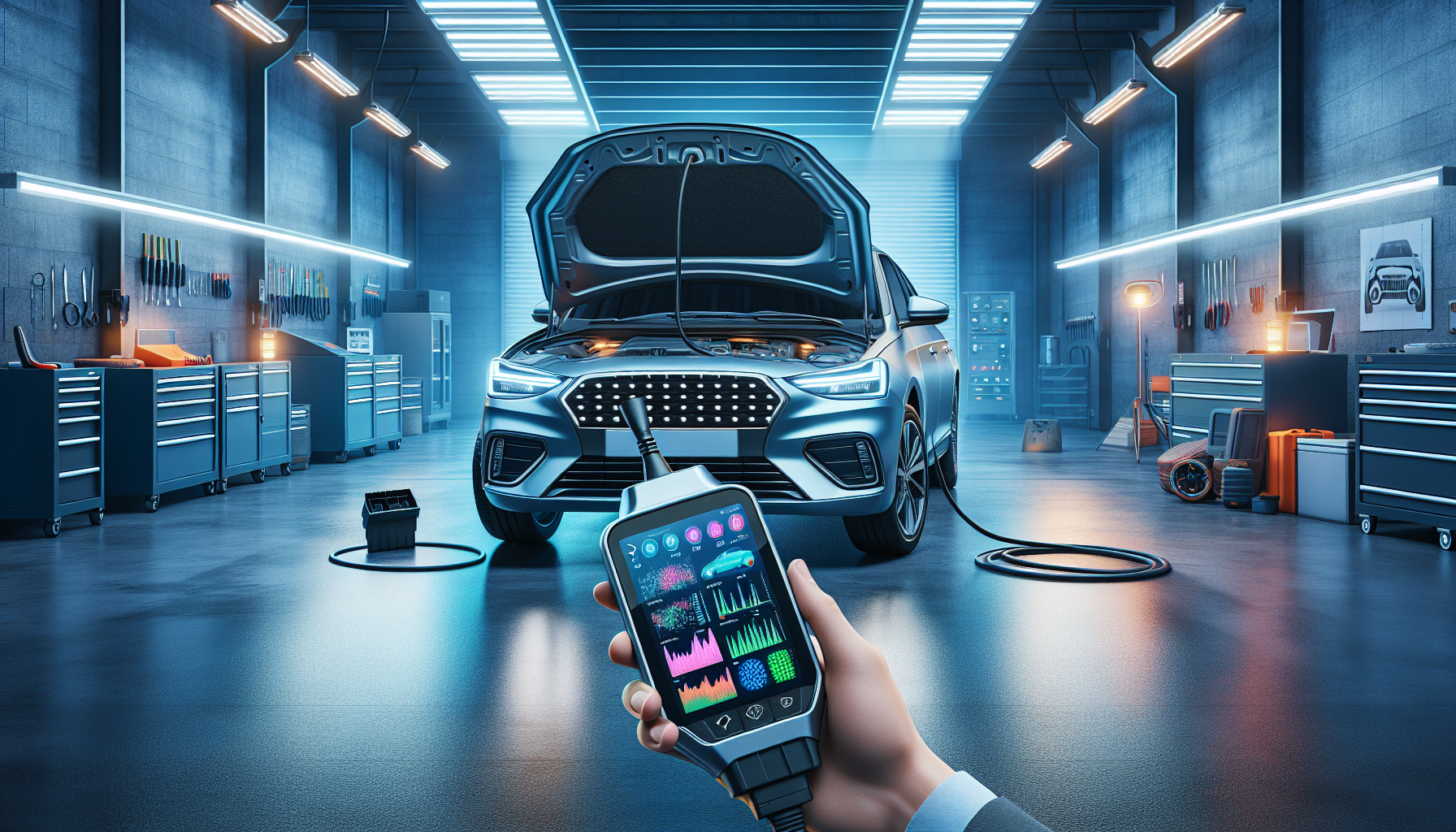
As cars today become increasingly technology-filled and sophisticated, the need for smart and efficient troubleshooting has grown dramatically. OBD2, or On-Board Diagnostics 2, is the answer to this challenge. The system enables direct insight into the vehicle's health via a standardized diagnostic port and has become an invaluable tool for everyone – from car owners and car mechanics to enthusiastic DIY fixers. With OBD2, you can not only detect faults early but also save money and contribute to a cleaner environment.
The evolution from OBD to OBD2 – A revolution in the automotive industry
- OBD2 is a global standard: Originally developed in the 1990s and a legal requirement in the USA from 1996, the OBD2 system has also been implemented in Europe (EOBD) and parts of Asia and Australia. This standardization means that almost all newer petrol and diesel cars, including those on the Swedish market, are equipped with an OBD2 port.
- From simple warning light to advanced data collection: First-generation OBD (OBD-I) was limited to illuminating a warning light in case of a fault. OBD2 goes significantly further and can both display specific fault codes and provide real-time data on the vehicle's condition.
-
OBD2 promotes environment and safety: Through continuous monitoring of emissions and vital systems, OBD2 ensures that the car meets legal requirements for the environment and that potential safety risks are detected quickly.
In practice, this means that OBD2 is more than a troubleshooting tool. It is a bridge between the car's hidden technology and user-friendly information. It provides both private individuals and workshops with the ability to identify faults before they lead to costly repairs or unnecessary emissions. The constant access to clear fault codes also enables more accurate measures, which in the long run benefits both the wallet and the environment.
OBD2 – The key to modern, proactive car care
By collecting and interpreting data in real-time, OBD2 contributes to making car ownership more predictable and sustainable. You avoid guessing when something is wrong, and can instead act on concrete information. Thus, OBD2 has become an obvious and invaluable component in today's motorized everyday life – whether you leave the car at the workshop or want to solve the problems yourself.
How does the OBD2 system work in the car?
To understand how OBD2 actually simplifies the car owner's everyday life, one needs to know how the system is structured and interacts with the car's electronics. OBD2 consists of a network of sensors, control units, and a specific connection port that forms the basis for the car's self-diagnostics. By continuously monitoring the engine, exhaust after-treatment, fuel system, and other important components, faults are identified and reported in real-time – and all this information can be easily accessed via the OBD2 port. This is precisely what makes troubleshooting both faster and more accurate for both workshops and private individuals.
Sensor network and control units – The car's digital nervous system
- Sensors placed throughout the vehicle collect data on, for example, exhaust temperature, airflow, fuel pressure, and engine temperature.
- ECU (Engine Control Unit) or other control units interpret all this information and can quickly detect deviations — which triggers fault codes (DTC) if something is outside predefined limits.
- The OBD2 port, usually located under the dashboard, is the vehicle's standardized connection point where diagnostic tools plug in.
- Examples of data that can be read include: engine speed, fuel consumption, lambda value, emission management, speed, and coolant temperature.
In addition to the structure itself, communication between the units is central to OBD2's functionality. The fact that all data is transmitted digitally and directly makes it possible to quickly detect everything from minor glitches to serious system failures. A common scenario is that the engine's "Check Engine" light illuminates, signaling that one or more fault codes have been registered — these can then be easily read with an OBD2 scanner.
From reading to practical benefit for car owners
In summary, the OBD2 system not only provides access to detailed information about the car's status but also makes it easier than ever to quickly assess the car's health. For Swedish car owners, this means an opportunity to anticipate larger problems and extend the car's lifespan through early detection. Unique insights can also be obtained through trend analysis of historical data, identifying recurring faults or inefficient driving patterns. This means that OBD2 is not just a tool for faults — but also for long-term, smart car ownership.
OBD2 standards and protocols – A global overview
The standardization of OBD2 has been crucial for creating a common basis for troubleshooting and diagnostics in cars worldwide. Far from being an isolated phenomenon, OBD2 is based on international standards and protocols that enable compatibility between different car brands, models, and even markets. This global consensus means that car owners, workshops, and DIY enthusiasts can use the same types of diagnostic tools and apps, regardless of the car's country of origin.
International standards and communication protocols
- SAE J1962: This is the standard that determines the appearance and function of the OBD2 port (diagnostic connector) – hence, the port is the same regardless of car brand.
- Most common protocols: Several communication protocols are used, including CAN-bus (Controller Area Network), ISO 9141, ISO 14230 (KWP2000), and SAE J1850 (PWM & VPW). CAN-bus is today the dominant protocol in new cars and provides fast and efficient data transfer.
- Regional variants:
- EOBD (European OBD) applies to all petrol cars sold within the EU from 2001 (diesel from 2004).
- JOBD (Japanese OBD) is used in the Japanese market.
-
ADR 79/01 & 79/02 are Australia's counterparts.
This standardization allows tools to easily read and interpret data, but it is important to check that your car model belongs to the correct generation and protocol before investing in an OBD2 tool. Some imported cars may have subtle differences even if the port looks the same.
What does standardization mean for Swedish car owners?
For Swedish car owners, this means that the majority of cars manufactured after 2001 (petrol) and 2004 (diesel) support OBD2/EOBD, which drastically simplifies the choice of diagnostic tools and enables smart fault reporting. It also means that environmental and safety requirements, such as emission controls, are implemented more reliably via a harmonized system.
In addition, the OBD2 standard provides a better basis for inspection, as authorities can electronically check cars and thus review both environmental impact and the vehicle's condition with the touch of a button.
As the automotive industry develops, OBD2 will play an even more central role in integration with new technologies such as electric cars and advanced driver-assistance systems – making standardization and global consensus more important than ever. By staying updated and understanding the differences between various standards and protocols, you as a car owner can avoid compatibility issues and make the most of all the smart technology that today's vehicles actually contain.
OBD2 equipment – Diagnostic tools and apps
To effectively use OBD2 and take advantage of the car's diagnostic functions, the right equipment is required. Today, there is a wide variety of OBD2 tools on the market, ranging from classic handheld scanners to smart Bluetooth dongles that work with apps on your mobile phone. Understanding the differences and choosing a device that suits you and your car is crucial for a smooth user experience.
Different types of OBD2 tools and their areas of application
- Handheld diagnostic tools: Traditional scanners with their own display are robust and do not require an external device. They are popular with workshops and serious DIY enthusiasts thanks to their wide range of functions and reliability.
- Bluetooth scanners and dongles: Small, cost-effective devices that connect to the OBD2 port in the car and then connect to your smartphone or tablet via Bluetooth or Wi-Fi. With the right app, you then get access to in-depth diagnostic data in a sleek interface.
-
Apps for iOS and Android: It is crucial to follow the manufacturer's instructions – especially on Apple devices where the connection often must be made directly via the app, not via the phone's Bluetooth settings. Many user reviews show that clear instructions provide a significantly smoother experience. For example, careful installation on an iPhone or iPad can be crucial for quickly finding and rectifying car problems.
Important functions to compare between different tools are compatibility with car models, the ability to access real-time data, updates, and user-friendliness. For those who want to work with multiple cars, broad support for different brands and protocols is particularly important.
Tips for best results and future-proofing
When choosing OBD2 equipment, consider the overall picture: access to updates, good customer support, and the possibility of warranty or return are advantages that can save both time and and money. Choose solutions from established manufacturers for best safety and functionality. Carefully following the instructions is an often underestimated piece of advice – in fact, the difference between failure and success can sometimes depend on small details in the connection process, something many users attest to.
Practical use of OBD2 – Troubleshooting, service, and smarter car ownership
The OBD2 system is not just a technical tool for workshops – it has become a given for today's car owners who want to gain greater control over their vehicle's health, costs, and environmental impact. Thanks to the ability to quickly read fault codes and obtain detailed information about the car's status, both private individuals and professional mechanics can identify problems early, prevent expensive repairs, and make better decisions regarding service and maintenance.
OBD2 as a key to effective troubleshooting and service
- Identification of fault codes (DTC – Diagnostic Trouble Codes): With a simple OBD2 tool or app, you quickly gain access to information about faults in, for example, the engine, exhaust after-treatment, or electrical system. The codes are often automatically translated in the app, making it understandable even for inexperienced users what needs to be fixed.
- Simplified service planning: By monitoring the status of components and systems via OBD2, you can prevent future faults, for example, by detecting reduced oil pressure in time.
- Reduced workshop costs: By reading the fault code yourself, you can determine if it is a problem you can fix on your own, or if professional help is needed. This can save both time and money – and give you greater confidence in discussions with the workshop.
-
Environmental awareness: The system helps you identify faults that may affect the car's emissions and thus its environmental impact, such as problems with the catalytic converter or lambda sensor.
Using OBD2 as a tool for planned maintenance also provides advantages when it's time to sell the car. With documented troubleshooting and a good overview of the service history, the vehicle's attractiveness to the next owner increases.
Smart advice for car owners who want to fully utilize OBD2
To truly benefit from OBD2, you should compare different types of tools – sometimes a simple phone app is enough, sometimes a more advanced scanner is required. Remember to always interpret fault codes in the correct context and not just randomly replace parts. Feel free to use the system's information to discuss actions with the workshop and plan necessary service. By regularly checking the car with OBD2, you can avoid unnecessary surprises, keep service costs down, and at the same time make an environmentally conscious choice.
Safety, integrity, and future development of OBD2
As OBD2 technology develops and becomes increasingly integrated into our vehicles, the need to understand the safety and integrity aspects that come with its use also increases. The OBD2 system enables smooth data transfer, troubleshooting, and status control – but at the same time entails new challenges regarding the management of personal vehicle data and protection against potential intrusions. Many car owners and mechanics wonder what happens to the information extracted via diagnostic tools and apps, and how safe it really is to use wireless devices.
Data security and protection of information
- With wireless OBD2 devices, such as Bluetooth scanners, new possibilities open up – but also vulnerabilities. Without proper safeguards, unauthorized parties could potentially access sensitive vehicle data if they manage to connect to the OBD2 port.
- Integrity issues have become particularly relevant as vehicle telematics systems connect to cloud services and third-party apps. It is important that users read the privacy terms for the apps and services they use, and always update the software to reduce the risk of security vulnerabilities.
-
Practical tips: Never leave OBD2 dongles or scanners permanently in the vehicle, especially if you are using wireless versions. Choose reputable tools and regularly check which apps have access to your vehicle.
The collaboration between the automotive industry, standardization bodies, and authorities means that security and integrity are continuously strengthened. For example, the EU is working to develop clearer guidelines for the handling of vehicle data, especially in light of the increased use of electric cars and self-driving vehicles.
Future-proofing – OBD2 in the world of the connected car
OBD2 will, as smart vehicles develop, be integrated even deeper with systems for autonomous driving, telematics, and advanced vehicle communication. Car manufacturers are already experimenting with new diagnostic standards adapted for electric cars, where even traditional fuel-related codes will give way to electricity-related monitoring parameters. In the future, smart algorithms will be able to predict faults, combine OBD2 data with big data and AI, and offer even more customized service.
For Swedish car owners, this means that it will become increasingly important to follow developments, choose the right equipment, and understand how OBD2 technology is integrated into modern car systems. Through conscious choices and personal knowledge, it is possible to use OBD2 as an effective and safe tool even in the future world of vehicles.
Frequently Asked Questions
Q: What is the most important thing to know about OBD2?
A: The most important thing to know about OBD2 is that it is a standardized system for all modern cars (often manufactured after 2001 within the EU) that enables quick and efficient troubleshooting through a common diagnostic port. OBD2 makes it possible to read fault codes, monitor engine and emission data, and ensure that the car stays within legal limits for environmental impact. This provides both car owners and workshops better opportunities to identify and rectify problems early, and contributes to sustainable driving.
Q: How does OBD2 keep pace with today's technological development and trends?
A: The OBD2 system is under constant development to meet future requirements, including integration with telematics, smart cars, and electric vehicles. Already today, OBD2 interacts with apps and cloud services, enabling car owners to receive real-time data via their mobile phones. Future trends point to even more advanced diagnostics, improved vehicle communication, and increased security around data transfer, especially as more functions connect to the internet.
Q: What are the most common mistakes users make when using OBD2?
A: A common mistake is not following the manufacturer's instructions, especially when it comes to app connection on iOS devices. For example, many OBD2 dongles require connection via a specific app instead of directly via Bluetooth. Another common error is not checking vehicle compatibility, which can lead to lack of function or misleading data.
Q: What tools and resources are recommended for OBD2 diagnostics?
A: Depending on your needs, there is everything from handheld OBD2 scanners to convenient Bluetooth dongles that work with apps. Popular brands often have user-friendly interfaces and well-established support. It is wise to choose tools that:
- Are compatible with both car model and operating system (Android/iOS)
- Have clear instructions and support
- Provide real-time data and the ability to log information
Recommended apps and tools can often be found through independent tests or on the manufacturers' own websites.
Q: How do I get started with OBD2 on my car?
A: Start by checking if your car has an OBD2 port (usually located under the dashboard on the driver's side). Then choose a suitable OBD2 scanner or dongle, install the associated app, and follow the instructions carefully to establish a correct connection. Once everything is in place, you can start reading fault codes, engine information, and analyzing your car's health on your own. Remember that regular use of OBD2 can help you detect problems early, which can save both time and money and contribute to more sustainable driving.
Concluding thoughts on OBD2 – your digital car maintenance
OBD2 has cemented its role as the heart of modern vehicle diagnostics – from quick troubleshooting to reduced environmental impact and increased safety. By understanding and utilizing the OBD2 system, Swedish car owners can solve problems efficiently, ensure their car's performance, and avoid unnecessary workshop costs. This article has shown the importance of standardization, various tools, and how both data security and future development are crucial for upcoming vehicle generations.
To fully benefit from OBD2, choose the right scanner, follow the manufacturer's instructions carefully, and explore the possibilities for smarter car ownership. Stay updated on developments to be prepared for the next generation of electric cars and connected vehicles. Start today by acquiring the right knowledge and tools – the future of car maintenance is digital, transparent, and accessible to everyone!